Something So Strong

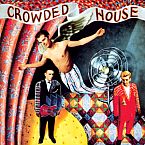
Album: Crowded House (1986)
Charted: 95 7
Play Video

Songfacts®:

  • "Something So Strong" is Crowded House frontman Neil Finn's treatise on the power of love. It can make you weep and leave you cold, but it can also carry us away. Finn had been married to his wife Sharon for a few years by this point and their son Liam (who later joined the band) was a toddler. Neil certainly drew from his life experience in crafting the song, but it's not one he's cited as being intensely personal. He has a talent for hitting on universal themes in unique ways, which is what he did here. You can frame it and hang it on the wall.
  • This song dates back to 1984, when Neil Finn wrote it and made a demo on a tape recorder in his bedroom. He was still in the band Split Enz, but when they split up in 1985, Finn and Split Enz drummer Paul Hester formed Crowded House. They made a more refined demo of the song to shop to record labels, and found a taker in Capitol. When they made the album in Los Angeles (living together in crowded conditions that inspired the band name), their producer, Mitchell Froom, made some significant changes. Finn had been living with the song for two years by this point but he knew Froom's suggestions were good ones - so good that he gave him a songwriting credit. For Finn, it was a lesson on keeping and open mind and letting go when something better presents itself.
  • The song is very compact, with two quick verses, a tidy bridge ("I've been feeling so much older..."), and three repetitions of the very singable chorus:

    Something so strong
    Could carry us away
    Something so strong
    Could carry us today


    The whole thing runs just 2:51, which means every word has to count. It's one of the songs that earned Neil Finn many fans in the world of songwriting, as it hits a sweet spot of meaning and popular appeal.
  • "Something So Strong" is part of Crowded House's self-titled debut album. The band is Australasian, forming when former Split Enz members Neil Finn and Paul Hester teamed with Nick Seymour. Finn is from New Zealand; Hester and Seymour from Australia. Thanks to Split Enz, they had a ready-made fanbase on their home continent, but the album proved popular worldwide. Different singles were released in various territories, but the big hit was "Don't Dream It's Over." "Something So Strong" was the follow-up and also did very well. Those two song ended up being the band's only significant hits in America, but in other parts of the world they had lots of others.
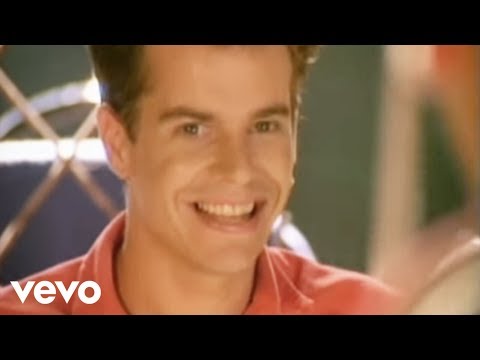
  • The music video, directed by Evan English, is goofy fun, with the band hamming it up in a barn. In the end, Paul Hester's drum kit is hauled away on the back of a tractor - with Hester still on it!

    The lighthearted video has the same tone as Hester and Finn's videos with Split Enz, which always had a touch of humor.

Comments

Be the first to comment...

Editor's Picks

Songs in Famous Movie Scenes: Tarantino Edition

Songs in Famous Movie Scenes: Tarantino EditionMusic Quiz

Whether he's splitting ears or burning Nazis, Quentin Tarantino uses memorable music in his films. See if you can match the song to the scene.

Martin Page

Martin PageSongwriter Interviews

With Bernie Taupin, Martin co-wrote the #1 hits "We Built This City" and "These Dreams." After writing the Pretty Woman song for Go West, he had his own hit with "In the House of Stone and Light."

Is That Song Public Domain?

Is That Song Public Domain?Fact or Fiction

Are classic songs like "Over The Rainbow" and "Take Me Out to the Ballgame" in the public domain?

Desmond Child

Desmond ChildSongwriter Interviews

One of the most successful songwriters in the business, Desmond co-wrote "Livin' La Vida Loca," "Dude (Looks Like A Lady)" and "Livin' On A Prayer."

Wang Chung Pick The Top Songs Of The '80s

Wang Chung Pick The Top Songs Of The '80sSongwriter Interviews

'80s music ambassadors Wang Chung pick their top tracks of the decade, explaining what makes each one so special.

Harold Brown of War

Harold Brown of WarSongwriter Interviews

A founding member of the band War, Harold gives a first-person account of one of the most important periods in music history.