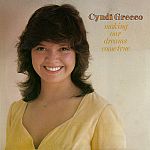
Making Our Dreams Come True

Album: Making Our Dreams Come True (1976)
Charted: 25
Play Video

Songfacts®:

  • This was the theme from the TV series Laverne & Shirley, starring Penny Marshall and Cindy Williams. It was written by Norman Gimbel and Charles Fox; they wrote a variety of songs together, including the themes from the TV shows Happy Days (Laverne & Shirley was a spin-off from this show) and Angie.

    In our interview with Charles Fox, he told us: "Happy Days, one episode had these two young women, Laverne DeFazio and Shirley Feeney. They were kind of brought on as love interests of the Fonz and Ron Howard. ABC had a lot of calls, cards, and letters about these two girls on the show, and they decided to make a quick pilot to see if that could go right behind Happy Days. Happy Days was already a number one show by that time, and our song was climbing up the charts, too. They shot not a whole pilot first; they just made a quick presentation, about 20 minutes that Garry Marshall came up with. Norman Gimbel and I were asked to write the song, but what we knew about the girls was very little. All we knew about them - because there wasn't even a pilot script yet - we knew that they were blue collar workers, they worked in a factory in Milwaukee in a brewery, and they had hopes and dreams and ambitions about getting out and seeing life and doing things. So we wrote kind of a gentle song that was called 'Hoping Our Dreams Will Come True.' And we played it for the producers, and they said, 'You know, it's really a nice song, but this is not our characters. Our characters are not going to 'wish and hope.' They're going to take the bull by the horns; they're going to make life happen. It's two strong-minded girls.' So we made a change, and Norman wrote instead of 'hoping our dreams will come true,' 'making our dreams come true.' And that, of course, is a whole different song. It required a different lyric; it turned a different melody, a different characterization. So there's just one example of something that was so new, the idea of the two girls, that it wasn't until the producers heard the song that they could tell that it did not personify these girls."

Comments: 3

  • Barry from Sauquoit, NyOn May 2nd 1976, "Making Our Dreams Come True" by Cyndi Grecco entered Billboard's Hot Top 100 chart at position #90; and on June 27th, 1976 it peaked at #25 (for 2 weeks) and spent 12 weeks on the Top 100...
    On August 7th, 1976, three weeks after it fell off the Top 100, Cyndi Grecco performed the song on the ABC-TV program 'American Bandstand'.
  • Charles Hollingswort from Leeds, AlIn the closing credits of the premiere episode only,the title of this song was shown as "We're Gonna Make It" and the title of the show in its first season in syndication was "Laverne DeFazio and Shirley Feeney."
  • Matthew from Melbourne, AustraliaI Love This Song, It's Brilliant!
see more comments

Editor's Picks

Jesus Christ Superstar: Ted Neeley Tells the Inside Story

Jesus Christ Superstar: Ted Neeley Tells the Inside StorySong Writing

The in-depth discussion about the making of Jesus Christ Superstar with Ted Neeley, who played Jesus in the 1973 film.
Name the Character in the Song

Name the Character in the SongMusic Quiz

With a few clues (Works at a diner, dreams of running away), can you name the character in the song?
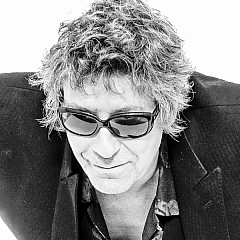
Richard Butler of The Psychedelic Furs

Richard Butler of The Psychedelic FursSongwriter Interviews

Psychedelic Furs lead singer Richard Butler talks about their first album since 1991 and explains what's really going on in "Pretty In Pink."
History Of Rock

History Of RockSong Writing

An interview with Dr. John Covach, music professor at the University of Rochester whose free online courses have become wildly popular.
Dean Friedman - "Ariel"

Dean Friedman - "Ariel"They're Playing My Song

Dean's saga began with "Ariel," a song about falling in love with a Jewish girl from New Jersey.
He Hit Me (And It Felt Like A Kiss): A History Of Abuse Pop

He Hit Me (And It Felt Like A Kiss): A History Of Abuse PopSong Writing

Songs that seem to glorify violence against women are often misinterpreted - but not always.