Mary Long

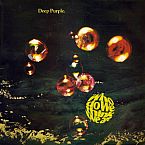
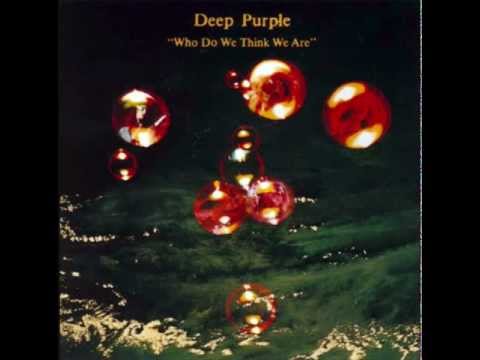
Album: Who Do We Think We Are (1972)
Play Video

Songfacts®:

  • Any uniformed person hearing this song might think it was about a groupie, a petty sadist, some sort of pervert, or just a plain old hypocrite, but Mary Long is actually a composite character.

    Mary Whitehouse (1910-2001) was the founder of the National Viewers' and Listeners' Association, whose remit was to clean up television which she perceived as corrupting the nation's morals.

    Lord Longford (1905-2001) was an eccentric aristocrat who was Christened Lord Porn after he visited a number of strip clubs as part of his research and walked out indignant at their displays of indecency.

    Mrs. Whitehouse began her campaigning in 1963 and founded her organization in November 1965, which by pure coincidence or no coincidence at all, was when the dreaded F word was first used on British TV, by Kenneth Tynan. In view of the deluge of filth that has emanated from the boob tube since, an objective critic might rightly claim she was unsuccessful. Her one resounding success came in 1977, four years after "Mary Long", when she initiated an action for blasphemous libel against the homosexual publication Gay News which had published a grossly blasphemous (and depraved) poem written by an academic which portrayed the violation of the body of Jesus Christ by a homosexual necrophiliac Centurion.

    If Lord Longford sparked ridicule for his campaigning against pornography, he inspired contempt by his campaigning for the Moors Murderess Myra Hindley. On the plus side, he worked for the rehabilitation of many other prisoners who unlike Hindley were not beyond redemption.
  • "Mary Long" is a group composition, but vocalist Ian Gillan, who wrote the lyrics with help from bass player Roger Glover, explained the reason for their attack on "the self-appointed guardians of public morals in England's early seventies" pointing out that "Roger and I clearly were not suggesting that either Whitehouse or Longford would stoop to drowning kittens or drawing a piece of graffito on a toilet wall [as in the song] but there is and always has been a sinister whiff of hypocrisy emanating from the pulpit of the pious."
  • The line "Mary told Johnny not to write such trash" is a parochial reference that needs some explaining. The scriptwriter Johnny Speight (1920-98) was the creator of Alf Garnett, a bigotted working class moron who was portrayed by Warren Mitchell in the BBC TV situation comedy Till Death Us Do Part. The series ran from 1965-75, and Alf Garnett would swear freely throughout, peppering his dialogue with the word bloody (and the occasional racial epithet). Although bloody was not a particularly strong word even then, and in the next millennium doesn't even raise an eyebrow, its constant use irked Mrs. Whitehouse, who complained on one occasion that she doubted if many people would use 121 bloodies in half an hour. >>>
    Suggestion credit:
    Alexander Baron - London, England, for all above

Comments: 3

  • Paul Saxby from BrisbaneStill resonates today, with the hypocritical religious right rising to political prominence. See also, PM Scott Morrison and the child abuse apologist leader of The Hillsong Church in Australia.
  • Vito from BrooklynFYI: U.S. sitcom "All In The Family" was based on "Till Death Us Do Part" created by Johnny Speight
  • Andy from Northampton, United KingdomHi "Mary Long" is from the Album "Who Do We Think We Are" not "Machine Head"
see more comments

Editor's Picks

Gentle Giant

Gentle GiantSongwriter Interviews

An interview with Ray and Derek Shulman of the progressive rock band Gentle Giant to discuss counterpoint, polyrhythms, and... Bon Jovi.
Chris Isaak

Chris IsaakSongwriter Interviews

Chris tells the story of "Wicked Game," talks milkshakes and moonpies at Sun Records, and explains why women always get their way.

Director Paul Rachman on "Hunger Strike," "Man in the Box," Kiss

Director Paul Rachman on "Hunger Strike," "Man in the Box," KissSong Writing

After cutting his teeth on hardcore punk videos, Paul defined the grunge look with his work on "Hunger Strike" and "Man in the Box."

Crystal Waters

Crystal WatersSongwriter Interviews

Waters tells the "Gypsy Woman" story, shares some of her songwriting insights, and explains how Dennis Rodman ended up on one of her songs.
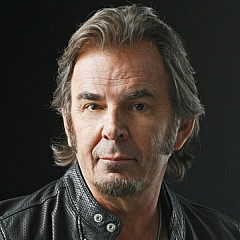
Jonathan Cain of Journey

Jonathan Cain of JourneySongwriter Interviews

Cain talks about the divine inspirations for "Don't Stop Believin'" and "Faithfully."

Mick Jones of Foreigner

Mick Jones of ForeignerSongwriter Interviews

Foreigner's songwriter/guitarist tells the stories behind the songs "Juke Box Hero," "I Want To Know What Love Is," and many more.