Perfect Strangers

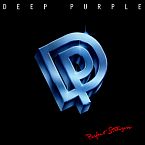
Album: Perfect Strangers (1984)
Charted: 48
Play Video

Songfacts®:

  • Deep Purple split up after releasing their 1975 album Come Taste The Band. When they returned in 1984, it was with the Mark II lineup of Ritchie Blackmore, Roger Glover, Ian Gillan, Ian Paice and Jon Lord - the team that brought us "Smoke On The Water." Only Lord and Paice remained from the Come Taste The Band album. This lineup last played together in 1973 and split under a torrent of internal dissent. When they returned, it wasn't the kind of warm-and-fuzzy reunion where all was forgiven, but more about learning to get along with a new maturity to guide them. The phrase "perfect strangers" seemed to fit.

    The song's lyric was written by lead singer Ian Gillan, who talked about the meaning in a Songfacts interview. "'Perfect Strangers' is a contradiction in terms, like an oxymoron," he said. "That was pretty much how we described it – there was a lot of suspicion and worry and nervousness about getting together again and having a reunion, and when we all sat around in the basement of this old house in Vermont, there was a log fire and three feet of snow outside.

    We had a couple of beers, and nobody started playing. Then, Paicey [Ian Paice] started tapping away and people started grooving, and a little shuffle came along. In five minutes everyone had a smile on their face.

    So, 'Perfect Strangers' was how we were before, and 'Perfect Strangers' are how we are afterwards – with two opposite meanings to the phrase."
  • For this album, the band agreed to dole out songwriting credits only to those who had a major role in composing the song, as opposed to previous albums where the whole band was credited. The writers on "Perfect Strangers" are Gillan, guitarist Ritchie Blackmore, and bass player Roger Glover.
  • In 1986, two years after this song was released, a TV series called Perfect Strangers debuted, starring Mark Linn-Baker and Bronson Pinchot as an odd couple type who share an apartment. The phrase has been around for a while though: there were movies called Perfect Strangers released in 1945 and 1950.
  • Ritchie Blackmore had to break up his band Rainbow to pull off the Deep Purple reunion - we was the only DP member who had been leading a band when they got back together. Blackmore was the most press-averse member of the band, which also made him the most intriguing subject for journalists. When he did consent to an interview, he answered questions with unfiltered honesty. Explaining to Sylvie Simmons the differences between Rainbow and Deep Purple, he said: "Rainbow is total self-indulging on my part. The Purple thing is almost self-indulging, not quite."

    Blackmore lasted three more albums with Deep Purple before leaving in 1993 to re-form Rainbow.

Comments

Be the first to comment...

Editor's Picks

Holly Knight ("The Best," "Love Is A Battlefield")

Holly Knight ("The Best," "Love Is A Battlefield")Songwriter Interviews

Holly Knight talks about some of the hit songs she wrote, including "The Warrior," "Never" and "The Best," and explains some songwriting philosophy, including how to think of a bridge.

Maxi Priest

Maxi PriestSongwriter Interviews

The British reggae legend tells the story of his #1 hit "Close To You," talks about his groundbreaking Shabba Ranks collaboration "Housecall," and discusses his latest project with Robin Trower.

Paul Stanley of Kiss, Soul Station

Paul Stanley of Kiss, Soul StationSongwriter Interviews

Paul Stanley on his soul music project, the Kiss songs with the biggest soul influence, and the non-make-up era of the band.

Second Wind Songs

Second Wind SongsSong Writing

Some songs get a second life when they find a new audience through a movie, commercial, TV show, or even the Internet.

Bob Daisley

Bob DaisleySongwriter Interviews

Bob was the bass player and lyricist for the first two Ozzy Osbourne albums. Here's how he wrote songs like "Crazy Train" and "Mr. Crowley" with Ozzy and Randy Rhoads.

Devo

DevoSongwriter Interviews

Devo founders Mark Mothersbaugh and Jerry Casale take us into their world of subversive performance art. They may be right about the De-Evoloution thing.