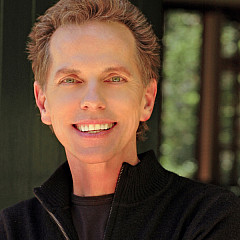
Dierks Bentley

Dierks Bentley Artistfacts

  • November 20, 1974
  • Dierks Bentley was born in Phoenix, Arizona. His father introduced him to music and he started playing the electric guitar when he was 13. However, he did not develop an appreciation for Country music until his parents sent him to boarding school in New Jersey when he was a teenager due to his inability to stay out of trouble. He turned to country music because it reminded him of home.
  • One of Bentley's first jobs in Country music was working as a researcher for The Nashville Network, which later became Spike TV. He played local clubs and parties until Capitol Records gave him a recording contract. His self-titled debut album was released in 2003 and he found immediate success with the #1 hit, "What Was I Thinkin'."
  • Bentley's 2010 release, Up on the Ridge, moved away from the Country-Pop that made him a star, focusing instead on Bluegrass. He was nominated for a Grammy for the album's cover of U2's "Pride (In The Name Of Love)," recorded with the Punch Brothers. He also covered Bob Dylan's "Senor (Tales of Yankee Power)" with the Punch Brothers and Chris Thiele. The album's last cut is a duet of "From the Bottle to the Bottom" with Kris Kristofferson, a song that won Kristofferson a Grammy with his wife, Rita Coolidge, in 1974.
  • A fan of NASCAR, Bentley's song, "Sideways," was commissioned by Fox Sports in 2011 and featured on televised NASCAR events. Bentley also narrated and appeared in the 2009 DVD biography of race car driver, Kasey Kahne. Bentley is also a hockey fan and takes his hockey equipment with him on tour, just in case he has time to hit the ice. The NHL used Bentley's song, "Am I the Only One," to promote its sport in 2011 and collaborated with Bentley on a special NHL edition of the song's video.
  • In a 2011 interview with NPR, Bentley talked about how he tried his hand at writing a patriotic anthem, which he admits was very difficult to do. He said that his motivation for the single, "Home," was the January 2011 shooting in Tucson that killed six people and injured 13 others, including Representative Gabriel Giffords. Like many, he was angry and confused about the shootings, but wanted to write a song that also encouraged healing.
  • Dierks Bentley gave some advice for male songwriters in a 2011 column for Esquire magazine. "Learn three chords: G, C, and D. If they're good enough for Bret Michaels and 'Every Rose Has Its Thorn,' they're good enough for you," he wrote.

    "And a really slow ballad is best. Hum out a little melody, get to the chorus quickly, and keep it simple. Whatever you're playing is merely supporting your clever, sincere, heartfelt and occasionally funny lyrics that she never in a million years expected you to sing. The right words are 90 percent of what you're going for."
  • One of Dierks Bentley's pre-fame jobs was emptying houseboat toilets after they'd been on the water for several days.

Comments

Be the first to comment...

Editor's Picks

Stephen Christian of Anberlin

Stephen Christian of AnberlinSongwriter Interviews

The lead singer/lyricist for Anberlin breaks down "Impossible" and covers some tracks from their 2012 album Vital.

Emilio Castillo from Tower of Power

Emilio Castillo from Tower of PowerSongwriter Interviews

Emilio talks about what it's like to write and perform with the Tower of Power horns, and why every struggling band should have a friend like Huey Lewis.

Art Alexakis of Everclear

Art Alexakis of EverclearSongwriter Interviews

The lead singer of Everclear, Art is also their primary songwriter.

Graham Bonnet (Alcatrazz, Rainbow)

Graham Bonnet (Alcatrazz, Rainbow)Songwriter Interviews

Yngwie Malmsteen and Steve Vai were two of Graham's co-writers for some '80s rock classics.

They Might Be Giants

They Might Be GiantsSongwriter Interviews

Who writes a song about a name they found in a phone book? That's just one of the everyday things these guys find to sing about. Anything in their field of vision or general scope of knowledge is fair game. If you cross paths with them, so are you.

Who's Johnny, And Why Does He Show Up In So Many Songs

Who's Johnny, And Why Does He Show Up In So Many SongsSong Writing

For songwriters, Johnny represents the American man. He has been angry, cool, magic, a rebel and, of course, marching home.