Blood Count

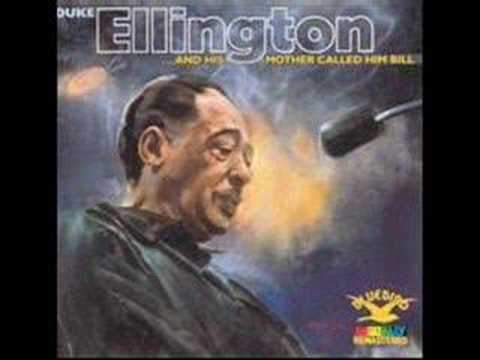
Album: And His Mother Called Him Bill (1967)
Play Video

Songfacts®:

  • This song was written by Hall of Fame songwriter Billy Strayhorn, who was a piano player in Ellington's band, and composed the classic songs "Take the A Train" and "Lotus Blossom."

    By the time that Billy Strayhorn finished the piece that was originally called "Blue Cloud" and sent it to Duke Ellington, Strayhorn was down to 80 pounds and in the final months of his life. Years of excessive use of alcohol and cigarettes had likely led to the cancer in his esophagus that ravaged his body. The song that became "Blood Count" was intended to be the first in a three-part arrangement for Ellington, but it was Strayhorn's final composition and was included on Duke Ellington's August 1967 tribute album, And His Mother Called Him Bill on RCA Victor. Ellington debuted "Blood Count" at a concert in Carnegie Hall in March 1967 with Johnny Hodges on the sax and Strayhorn confined to a hospital bed.
  • "Blood Count" sounds like sadness. Marian Logan, whose husband was a doctor that treated Strayhorn and, later, Duke Ellington, said, "That was the last thing he had to say. And it wasn't 'Good-bye' or anything phony like that." His last song plainly said that Strayhorn did not feel good.
  • Strayhorn did not write lyrics for the song, but Elvis Costello did and retitled it "My Flame Burns Blue," which appears on his album of the same name that was recorded live in The Netherlands in 2004. Costello captured the mood of "Blood Count" with lines such as "Even though the fire that once was desire doesn't look for trouble or dare to flare, look now and I won't be there."
  • As he did in the Carnegie Hall concert, Johnny Hodges plays the saxophone on And His Mother Called Him Bill and with his deep and low notes conveys the sadness, despair, and anger that Strayhorn put into the composition. The result is a piece of music that covers a wide range of emotions that is both moody yet dignified. It should come as no surprise that Strayhorn is able to put his feelings about his declining health and imminent death into his work. Lawrence Brown, who played trombone in Ellington's orchestra, said of Strayhorn's songs, "[they] have a deep feeling behind them. You hear him in his music, which to me is the mark of a real musician."
  • After Ellington recorded "Blood Count" he never played publicly played the song again. Those close to Ellington said that while he was devastated to hear the news about Strayhorn's cancer, he also rarely mentioned him after Strayhorn died. The tribute album was his farewell to his friend and colleague. Many other artists recorded "Blood Count," though, although perhaps none better than Stan Getz. He had never played it until it appeared on his album Pure Getz in 1982, but he recorded it many times after that. It is clear that Getz felt an affinity for the song and its origin. After conquering his own addictions, Getz was diagnosed with cancer in May 1987. Getz, who died in 1981, said, "I think about Strayhorn when I play the song. You can hear him dying. When it's in a minor key, you can hear the man talking to God."

Comments

Be the first to comment...

Editor's Picks

Stephen Christian of Anberlin

Stephen Christian of AnberlinSongwriter Interviews

The lead singer/lyricist for Anberlin breaks down "Impossible" and covers some tracks from their 2012 album Vital.

Emilio Castillo from Tower of Power

Emilio Castillo from Tower of PowerSongwriter Interviews

Emilio talks about what it's like to write and perform with the Tower of Power horns, and why every struggling band should have a friend like Huey Lewis.

Art Alexakis of Everclear

Art Alexakis of EverclearSongwriter Interviews

The lead singer of Everclear, Art is also their primary songwriter.

Graham Bonnet (Alcatrazz, Rainbow)

Graham Bonnet (Alcatrazz, Rainbow)Songwriter Interviews

Yngwie Malmsteen and Steve Vai were two of Graham's co-writers for some '80s rock classics.

They Might Be Giants

They Might Be GiantsSongwriter Interviews

Who writes a song about a name they found in a phone book? That's just one of the everyday things these guys find to sing about. Anything in their field of vision or general scope of knowledge is fair game. If you cross paths with them, so are you.

Who's Johnny, And Why Does He Show Up In So Many Songs

Who's Johnny, And Why Does He Show Up In So Many SongsSong Writing

For songwriters, Johnny represents the American man. He has been angry, cool, magic, a rebel and, of course, marching home.