Mood Indigo

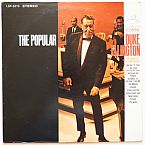
Album: The Popular Duke Ellington (1930)
Play Video

Songfacts®:

  • "Mood Indigo" was first recorded for Brunswick Records on October 15, 1930 but it has had so many arrangements that Duke Ellington said of the song, "We sometimes, or all of the time, practically have to compete with ourselves." Of course, in typical Ellington fashion, he downplayed the effort that went into creating the song when he said, "Well, I wrote that in 15 minutes while I was waiting for my mother to finish cooking dinner." The birth of the song was more complicated than that and his clarinetist, Barney Bigard, took exception to that account, ultimately suing for his share of the royalties.
  • The song was developed from an instrumental called "Dreamy Blues," written by one of the best musicians in New Orleans in the early 20th century, Lorenzo Tio, Jr. Bigard, one of Tio's former students, met with Tio in New York City earlier in 1930. Tio shared several songs he had written with Bigard, including "Dreamy Blues," which was also the theme song of Tio's band, Armand Piron's New Orleans Orchestra. According to Bigard, he had Tio's permission to rework the song, creating something that vaguely recalled the original, but would become famously known as the clarinet solo in "Mood Indigo." Within a year, critics would compare Ellington's jazz composition to George Gershwin's groundbreaking jazz recording, "Rhapsody in Blue."
  • The original arrangement of "Mood Indigo" offered something new to jazz. The way that Ellington blended instruments from different families, rather than block scoring the trumpets or the clarinets, was not typically done. Neither was the manner that he presented the instruments. Instead of arranging the instruments from highest pitch to lowest pitch, he turned that concept upside down and presented the clarinet at the bottom of its register and the muted trombone hit the high notes.
  • After the Cotton Club's live radio broadcast of the song called "Dreamy Blue" the that fall, Ellington was inundated with letters from fans. It was decided that lyrics should be added to the song. While the actual author of the lyrics was subject to debate for many years, there was little debate about who would get the first crack at adding vocals to the song now officially named "Mood Indigo." Ellington turned to the smooth voice of Ivie Anderson, and the record with Anderson's vocals was released on the Columbia label on February 14, 1940. Anderson may have been pleased to finally have a song from Ellington that was easy to sing, without the vocal gymnastics so often necessary for arrangements that were originally written for the piano.

    The lyric takes the song in a very melancholy direction: You ain't been blue until you've been through mood indigo.
  • "Mood Indigo" became a standard of not only Ellington's orchestra, but it has been recorded countless times by musical legends such as Dinah Washington, Frank Sinatra, and Ella Fitzgerald. In 1950, Ellington had the chance to break "Mood Indigo" free from the constraints of the 78 rpm record with the advent of the record album. The three-minute song was crafted into a 17-course, 15-minute mini-concert on the album Masterpieces by Ellington. The song's appeal lived on well beyond that recording. The year after Ellington's death in 1974, the song was given a spot in the Grammy Hall of Fame. In 2000, National Public Radio named "Mood Indigo" to its list of the 100 most important recordings in America in the 20th century.

Comments

Be the first to comment...

Editor's Picks

Stephen Christian of Anberlin

Stephen Christian of AnberlinSongwriter Interviews

The lead singer/lyricist for Anberlin breaks down "Impossible" and covers some tracks from their 2012 album Vital.

Emilio Castillo from Tower of Power

Emilio Castillo from Tower of PowerSongwriter Interviews

Emilio talks about what it's like to write and perform with the Tower of Power horns, and why every struggling band should have a friend like Huey Lewis.

Art Alexakis of Everclear

Art Alexakis of EverclearSongwriter Interviews

The lead singer of Everclear, Art is also their primary songwriter.

Graham Bonnet (Alcatrazz, Rainbow)

Graham Bonnet (Alcatrazz, Rainbow)Songwriter Interviews

Yngwie Malmsteen and Steve Vai were two of Graham's co-writers for some '80s rock classics.

They Might Be Giants

They Might Be GiantsSongwriter Interviews

Who writes a song about a name they found in a phone book? That's just one of the everyday things these guys find to sing about. Anything in their field of vision or general scope of knowledge is fair game. If you cross paths with them, so are you.

Who's Johnny, And Why Does He Show Up In So Many Songs

Who's Johnny, And Why Does He Show Up In So Many SongsSong Writing

For songwriters, Johnny represents the American man. He has been angry, cool, magic, a rebel and, of course, marching home.