Pictures At An Exhibition

Album: Pictures At An Exhibition (1971)
Play Video

Songfacts®:

  • This is Emerson, Lake & Palmer's adaptation of Russian composer Modest Mussorgsky's 1874 piano suite "Pictures At An Exhibition," which was first orchestrated in 1891 (10 years after Mussorgsky's death) by another Russian composer, Mikhail Tushmalov. The most popular orchestration of the song was done in 1922 by the French composer Maurice Ravel. The ELP arrangement, which is based on Ravel's, is adapted for the 3-piece band. It lasts 24 minutes and features Keith Emerson's distinctive technique on the Moog synthesizer and vocals courtesy of Greg Lake.
  • Emerson, Lake & Palmer wrote some original music that they wove into the piece, including a Greg Lake composition called "The Sage." The song begins with a Mussorgsky section called "Promenade," which is an interlude that recurs two more times. In addition to this interlude, parts of four movements from Mussorgsky's original were used.
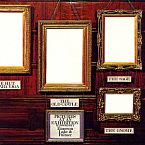
  • Mussorgsky's original "Pictures At An Exhibition" depicts a walk through an art gallery, with each movement representing a painting by the Russian artist Viktor Hartmann. ELP invokes this theme in the album artwork, which in the original gatefold cover shows blank canvases above the song titles. Inside, each canvas is filled with a painting with the exception of "Promenade," as that represents travel through the gallery, not a painting. The ELP artwork was done by the English painter William Neal.
  • Keith Emerson heard "Pictures At An Exhibition" for the first time when he saw an orchestra perform it at Royal Festival Hall in London. Intrigued, he went to the music publishers Chappell & Co. to purchase the orchestration so he could transcribe it to piano, at which point he learned that it was written as a piano piece and subsequently orchestrated.
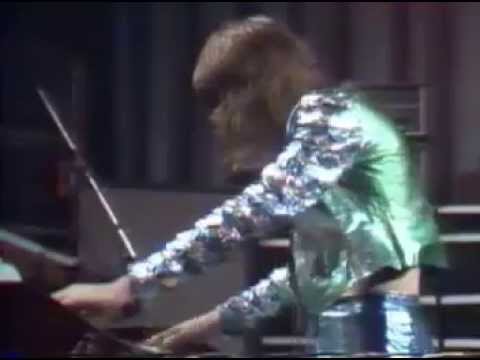
  • This song was the focus of the band's December 9, 1970 performance at the Lyceum Ballroom in London, which was later made into the concert film Pictures At An Exhibition. Directed by Nicholas Ferguson, the film was released in the UK in 1972 and in the US the following year.
  • Emerson, Lake & Palmer's self-titled debut album was released in November 1970. They planned to record "Pictures At An Exhibition" for their next album, but decided instead to make a piece called "Tarkus" the centerpiece and title track.

    On March 26, 1971 at stop on their UK tour at Newcastle City Hall in Newcastle upon Tyne, England, the group performed "Pictures At An Exhibition" and released the recording as their first live album (third overall). Released in November of that year, the album went to #3 on the UK charts in December, thanks in part to its budget price of £1.49 - the group figured that since it cost them very little to make, they shouldn't charge much for it.

    In America, their label Atlantic Records had no interest in the album because there were no sections that could be spun off as singles, making radio play very unlikely. Their UK label, Island, responded by shipping copies to America, which sold very well and prodded Atlantic into issuing it Stateside, where it climbed to #10.
  • Emerson, Lake & Palmer performed this song at the Isle of Wight Festival on August 29, 1970. The band made their live debut just six days earlier, but they were already seasoned musicians - Emerson came from The Nice, Lake from King Crimson, and Palmer from Atomic Rooster. Thus, they earned a slot at the prestigious festival, playing the same day as The Doors, The Who, and Joni Mitchell. this was the first song Emerson, Lake & Palmer played.

    ELP capped this song's performance with a bang, as Lake and Emerson each fired a cannon at the side of the stage, setting the tone for the theatrics that would become a hallmark of the band's stage shows.
  • On the album version, Keith Emerson began the piece by playing it on a pipe organ at Newcastle City Hall. Carl Palmer had to play to long drum section while Emerson made his way down the steps back to his organ.
  • Radio stations weren't in the habit of playing entire albums, but Scott Muni, a disc jockey at WNEW in New York City, played this one start to finish on his show. A big supporter of ELP, Muni introduced the band when they played Carnegie Hall on May 26, 1971.
  • According to Carl Palmer, this was the most challenging Emerson, Lake & Palmer song for him to play. "It's about 23 minutes, and it's not actually a time-keeping piece," he told Songfacts. It's more of a unison playing - unison rolls and fills and sections with melodic instruments. So it's a very strong supportive roll, but not in a time-keeping drummer-type roll. It's more as a fourth instrument, melodic instrument-type roll. So "Pictures at an Exhibition" to me really has a lot to offer and a lot to account for overall."

Comments: 4

  • George from Vancouver, Canada@Alan Curtis:
    SONG(n):
    1. singing or vocal music.
    2. a musical composition suggestive of a song.

    Yes, it is a song, especially as there are vocals all through it.
  • George from Vancouver, CanadaI just love how I can get lost5 in the journey, listening to the ebb & flow of orchestrated sound. . . These guys are GOOD! Not too long at all -- it actually feels to be 5 pieces played in a row, in the full 33-minute longplay version.
  • Alan Curtis from LondonIt's not a "song".
  • Stephanie from Wigtown, United KingdomWilliam Neal, an artist now in Wigtown Scotland, WWW.williamneal.cp.uk, did the album cover for
    "Pictures at an Exhibition".
    His limited edition CD "Marginal Movement" is introduced by Keith Emerson.
see more comments

Editor's Picks

Gary Lewis

Gary LewisSongwriter Interviews

Gary Lewis and the Playboys had seven Top 10 hits despite competition from The Beatles. Gary talks about the hits, his famous father, and getting drafted.

Joe Ely

Joe ElySongwriter Interviews

The renown Texas songwriter has been at it for 40 years, with tales to tell about The Flatlanders and The Clash - that's Joe's Tex-Mex on "Should I Stay or Should I Go?"

16 Songs With a Heartbeat

16 Songs With a HeartbeatSong Writing

We've heard of artists putting their hearts into their music, but some take it literally.

Creedence Clearwater Revival

Creedence Clearwater RevivalFact or Fiction

Is "Have You Ever Seen the Rain" about Vietnam? Was John Fogerty really born on a Bayou? It's the CCR edition of Fact or Fiction.

Country Song Titles

Country Song TitlesFact or Fiction

Country songs with titles so bizarre they can't possibly be real... or can they?

Cy Curnin of The Fixx

Cy Curnin of The FixxSongwriter Interviews

The man who brought us "Red Skies" and "Saved By Zero" is now an organic farmer in France.