All Coons Look Alike To Me

Album: Songs of the South (1896)
Play Video

Songfacts®:

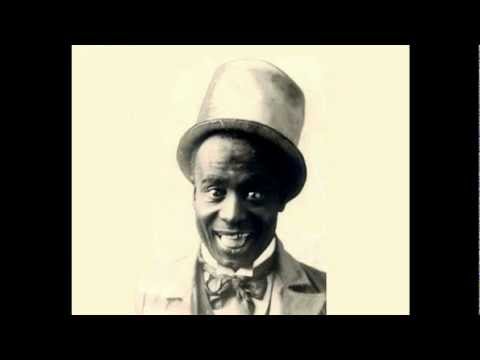
  • "All Coons Look Alike To Me" was written by the black performer Ernest Hogan. According to Arnold Shaw in his 1986 monograph Black Popular Music In America, this 1896 number was his biggest coon song hit, but he regretted writing it for the rest of his life, although this regret was undoubtedly ameliorated considerably by the financial rewards it brought him. When Hogan died from tuberculosis at New York in May 1909 at the young age of 44, the Chicago Record-Herald reported that he was born Reuben Crowdus in Bowling Green, Kentucky, was known as the father of ragtime, and had reputedly made $26,000 from this one song.

    Five years after his death, Henry Ford began paying his employees $5 a day, nearly twice the average for the automobile industry, which puts Hogan's royalties from this song into some perspective.
  • The best known of all coon songs in New York City, it was hated by blacks and loved by whites in equal measure. The title actually became a fighting phrase all over the city; as the publisher Edward Marks said, "Whistled by a white man, it was construed as a personal insult."
  • Although the song was Hogan's idea, the verse part was actually written by music publisher Isidore Witmark because the original melody did not fit in well with the refrain, so Witmark wrote a new melody together with some of the words for the second verse.
  • As Shaw points out, the song "remains one of the justly famous examples of true ragtime" and it "did not embody the prejudicial stereotype implied by its title", but was "a ballad of a broken love affair in which a woman, now possessed of a new lover who spends money on her, airily dismisses her old love with the comment."

    This is unquestionably true, and although this is both a coon song and a comic novelty song, it does have a serious message, and may even have been based on personal experience. It probably struck a chord because in spite of its characterization it has a universal message. The girl (or guy) you adored so much, who perhaps you wanted to spend the rest of your life with, was a freeloader, a false friend who has now found some other mug to milk. Even without the romantic angle, the message is the same: you thought this person was your true friend, well guess what, you were wrong, you were just a meal ticket, a shoulder to cry on, or someone to hang out with until a better heeled mark came along, and now you're yesterday's news. So long, sucker.
  • In 1896, the sheet music was published by Witmark of New York and Chicago, and by Whaley, Royce of Toronto, and it has to be said that if the song did not pander to racial stereotypes, the same cannot be said for the front cover of the sheet music.
  • Hogan's song was recorded by the white performer Arthur Collins (who performed in blackface) in 1902 on the Edison Bell Winner label accompanied by Vess L. Ossman. >>
    Suggestion credit:
    Alexander Baron - London, England, for all above

Comments

Be the first to comment...

Editor's Picks

Dave Alvin - "4th Of July"

Dave Alvin - "4th Of July"They're Playing My Song

When Dave recorded the first version of the song with his group the Blasters, producer Nick Lowe gave him some life-changing advice.

Second Wind Songs

Second Wind SongsSong Writing

Some songs get a second life when they find a new audience through a movie, commercial, TV show, or even the Internet.

Jack Blades of Night Ranger and Damn Yankees

Jack Blades of Night Ranger and Damn YankeesSongwriter Interviews

Revisit the awesome glory of Night Ranger and Damn Yankees: cheesily-acted videos, catchy guitar licks, long hair, and lyrics that are just plain relatable.

Waiting For The Break of Day: Three Classic Songs About All-Nighters

Waiting For The Break of Day: Three Classic Songs About All-NightersSong Writing

These Three famous songs actually describe how they were written - late into the evening.

Jimmy Jam

Jimmy JamSongwriter Interviews

The powerhouse producer behind Janet Jackson's hits talks about his Boyz II Men ballads and regrouping The Time.

Donnie Iris (Ah! Leah!, The Rapper)

Donnie Iris (Ah! Leah!, The Rapper)Songwriter Interviews

Before "Rap" was a form of music, it was something guys did to pick up girls in nightclubs. Donnie talks about "The Rapper" and reveals the identity of Leah.