Luck Be A Lady

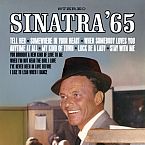
Album: Sinatra '65: The Singer Today (1965)
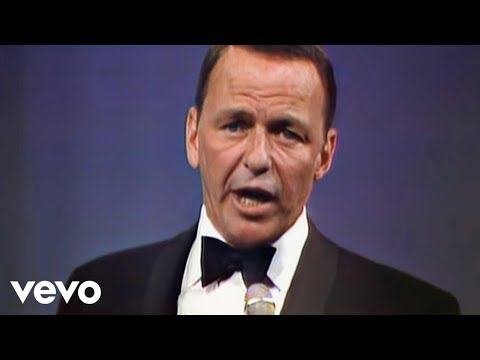
Play Video

Songfacts®:

  • Written by Frank Loesser in 1950 for the musical Guys and Dolls, this song was first performed onstage by Robert Alda as gambler Sky Masterson. Though Frank Sinatra would seem to be the obvious choice to play the lead role in the 1955 film version, he was assigned to Nathan Detroit, while Brando snagged the part of Masterson.

    "Frank always lamented that he didn't have the Marlon Brando role, which he should have had because the songs were more adaptable to Frank. Brando couldn't really sing," Charles Pignone, Senior Vice President of Frank Sinatra Enterprises, explained in a Songfacts interview.

    In fact, Sinatra was instrumental in adapting the song: "When you hear 'Luck Be A Lady' and how it's done specifically in the play, Frank was the one that told Billy May how to arrange it and changed the tempo a bit so it would be different. Of course, it fits Frank like a glove," Pignone added.
  • Sinatra included the song in his concert repertoire and was gracious when referring to the role he lost to Brando. He would introduce the number by saying Brando was "not a great singer, but probably the greatest actor ever."
  • Sinatra recorded this as a duet with Chrissie Hynde for his 1994 album, Duets II. Hynde never met Frank Sinatra when she laid down her vocals. She recalled to Q magazine: "I never do my homework, that's always been a problem for me. I thought I would figure it out when I got there. He'd already recorded his parts, so when I started singing - and I didn't really know the song because I never watch musicals - I realized it was in an odd key for me. I would rather have done it with him but when you're asked to be on a record with Frank Sinatra you're not going to say no, are you?"
  • This was prominently featured in the 1993 comedy Mrs. Doubtfire as Robin Williams first dons his disguise as a woman.
  • Sky Masterson had his money and his love life staked on a bet during "Luck Be a Lady," accompanied by an elaborate production number set in a sewer. But the musical's choreographer, Michael Kidd, had to convince director George S. Kaufman first. He recalled (as quoted in Susan Loesser's A Most Remarkable Fella):

    "Now George was a very acerbic character. He examined everything with a dry sense of humor. He didn't particularly like musicals. When you did a song he would look at his watch. He said, 'Mike, I don't understand. How are you going to do a dance here? Do you mean to tell me we're going to have a scene where these tough gamblers will be standing around the stage while a bunch of dancers get up and do a dance?'

    I said, 'I'll incorporate all the members of the cast into the crap game. I'll have Nathan taking a cut of every pot, I'll have Big Julie rolling. I'll have all the different characters participate.' George said, 'Well, I can't see it. It beats me.'

    So I worked out the dance and came to show it to everybody, knowing that George was dead set against it. We did the number and George sat there with no sign of emotion. When it was over he turned to me and said, 'Mike, I hardly have to tell you you've done something very remarkable here. Okay, let's go on.' That was the biggest accolade you could get from George."
  • Loesser clashed with Sinatra during the making of the Guys and Dolls movie as Sinatra insisted on singing Nathan Detroit's numbers in his smooth signature style rather than adopt the gritty, tough-as-nails swagger Loesser had envisioned. According to Loesser's daughter, Susan, the songwriter refused to see the film and he and Sinatra never spoke again.

Comments

Be the first to comment...

Editor's Picks

Tommy James

Tommy JamesSongwriter Interviews

"Mony Mony," "Crimson and Clover," "Draggin' The Line"... the hits kept coming for Tommy James, and in a plot line fit for a movie, his record company was controlled by the mafia.

Steely Dan

Steely DanFact or Fiction

Did they really trade their guitarist to The Doobie Brothers? Are they named after something naughty? And what's up with the band name?

David Gray

David GraySongwriter Interviews

David Gray explains the significance of the word "Babylon," and talks about how songs are a form of active imagination, with lyrics that reveal what's inside us.

JJ Burnel of The Stranglers

JJ Burnel of The StranglersSongwriter Interviews

JJ talks about The Stranglers' signature sound - keyboard and bass - which isn't your typical strain of punk rock.

Tim McIlrath of Rise Against

Tim McIlrath of Rise AgainstSongwriter Interviews

Rise Against frontman Tim McIlrath explains the meanings behind some of their biggest songs and names the sci-fi books that have influenced him.

George Clinton

George ClintonSongwriter Interviews

When you free your mind, your ass may follow, but you have to make sure someone else doesn't program it while it's wide open.