One Bourbon, One Scotch, One Beer

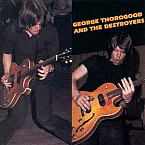
Album: George Thorogood and the Destroyers (1977)
Play Video

Songfacts®:

  • This song was written by Rudy Toombs and first recorded by Amos Milburn as "One Scotch, One Bourbon, One Beer" in 1953. Toobs went on to write the widely recorded "One Mint Julep."

    Milburn sang jazz and blues, and found a niche with drinking songs - one of his most popular is called "Bad, Bad Whiskey."

    Blues great John Lee Hooker covered the song in 1966, changing the title to "One Bourbon, One Scotch, One Beer." Hooker added a spoken section where he looks at the clock on the wall (10:30) before placing his order.

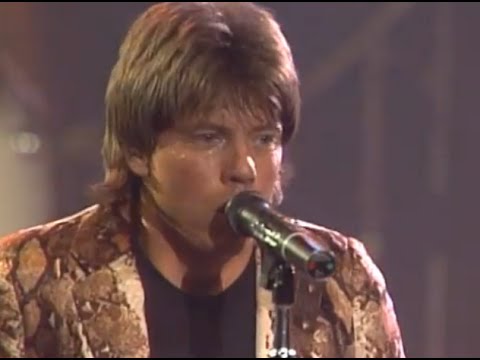
    George Thorogood reworked it with a narrative about getting kicked out of his apartment for not paying his rent. He solves this problem by going to the bar to get blackout drunk.

    This narrative is lifted from a 1951 John Lee Hooker song called "House Rent Boogie."
  • This is one of Thorogood's earliest and most popular songs, released on his debut album, George Thorogood And The Destroyers, in 1977. It was a good fit for his audience. Thorogood and his band played all over the East Coast, usually at clubs and bars where drinking was a primary activity. These crowds could be inattentive and/or hostile, but Thorogood would win them over with this tune, which he could stretch to over 10 minutes (the recorded version runs 8:20). The owners liked it as well, as it had a tendency to boost bar bills.
  • Thorogood did mostly blues covers like this one early in his career, rocking them up and bringing them to a new (mostly white) audience. His first album also includes cuts by Robert Johnson, Elmore James, and Bo Diddley. One of his most popular songs is a cover of Diddley's Who Do You Love?, released on his next album in 1978.
  • We don't recommend it, but you can order a "Thorogood" at some bars and get yourself a bourbon, scotch and beer. If that doesn't do the job, you can try a Chumbawamba, which will get you a beer (preferably a lager), a whiskey, a vodka and a cider.
  • The lazy lush in this song is very much a character. Thorogood is a hard worker known for playing lots of shows and always giving it his all. In real life, he's likely to pay his rent on time and drink responsibly.
  • Thorogood was signed to a small Boston label called Rounder Records, which didn't have the distribution or clout of the big labels but gave him lots of support. He made his mark by touring in the '70s, and in the '80s he started getting airplay for songs like "Bad To The Bone" and another of his drinking songs, "I Drink Alone." "Bad To The Bone" even got him on MTV.

    As he got more popular, his older songs like "One Bourbon, One Scotch, One Beer" found new fans. These were great songs for rock stations to play every now and then for something unusual. And with a running time of 8:20, the song gave DJs a chance to grab a smoke.

Comments

Be the first to comment...

Editor's Picks

Graham Nash

Graham NashSongwriter Interviews

Graham Nash tells the stories behind some of his famous songs and photos, and is asked about "yacht rock" for the first time.

Ralph Casale  - Session Pro

Ralph Casale - Session ProSongwriter Interviews

A top New York studio musician, Ralph played guitar on many '60s hits, including "Lightnin' Strikes," "A Lover's Concerto" and "I Am A Rock."

Rob Halford of Judas Priest

Rob Halford of Judas PriestSongwriter Interviews

Rob Halford dives into some of his Judas Priest lyrics, talking about his most personal songs and the message behind "You've Got Another Thing Comin'."

Corey Hart

Corey HartSongwriter Interviews

The Canadian superstar talks about his sudden rise to fame, and tells the stories behind his hits "Sunglasses At Night," "Boy In The Box" and "Never Surrender."

Incongruent Opening Acts

Incongruent Opening ActsSong Writing

Here's what happens when an opening act is really out of place with the headliner, like when Beastie Boys opened for Madonna.

Edwin McCain

Edwin McCainSongwriter Interviews

"I'll Be" was what Edwin called his "Hail Mary" song. He says it proves "intention of the songwriter is 180 degrees from potential interpretation by an audience."