Moonlight Serenade

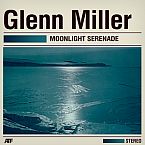
Album: Moonlight Serenade (1939)
Charted: 12 3
Play Video

Songfacts®:

  • This dreamy ballad was Glenn Miller's breakout hit, but it was years in the making. Miller wrote the melody in 1935 when he was a trombone player in Ray Noble's band. The lyricist Eddie Heyman added words, and the song was titled "As I Lay Me Down To Weep." It went:

    Weep for the moon
    For the moon has no reason to glow now
    Weep for the rose
    For the rose has no reason to grow now
    The rivers won't flow now
    As I lay me down To weep


    Miller didn't record or publish the song with these lyrics, but in 1938 used the instrumental as theme music for his radio broadcasts on the NBC network. In 1939 the publisher Robbins Music bought the melody and had Mitchell Parish ("Stardust") write a new set of lyrics for it, which were given the title "Wind In The Trees."

    By this time, Miller had his own band and was set to record a song called "Sunrise Serenade," written by Frankie Carle. Someone at Robbins suggested that Parish write the lyrics as "Moonlight Serenade" instead, which could be used as the B-side of the single, forming a theme. Parish did just that, but Miller recorded the song as an instrumental. When the single was released, "Sunrise Serenade" charted, but it was soon outdone by "Moonlight Serenade," which rose to #3 and became Miller's signature song.
  • There were a few performances where Miller used a vocalist on this song, but it wasn't until 1959 when the doo-wop group The Rivieras recorded it that a version with lyrics became popular. Their rendition charted at #47 in the US, but the most popular vocal version was by Frank Sinatra, who recorded it in 1966 on his album Moonlight Sinatra. Bobby Vinton took the song to #97 in 1978, and Tuxedo Junction to #103 that same year.
  • The lyric is about two lovers spending a romantic night together. It's a very seductive song where the singer serenades his lover in the moonlight on a June evening. Sung by Sinatra, it's very effective.
  • With this song, Miller created a new sound with a high-leading clarinet leading over the saxophone section. That kind of sound made Glenn Miller's orchestra famous. If you listen the song you'll hear that there are actually two melodies (clarinet and saxophone), and together they're creating the whole song.
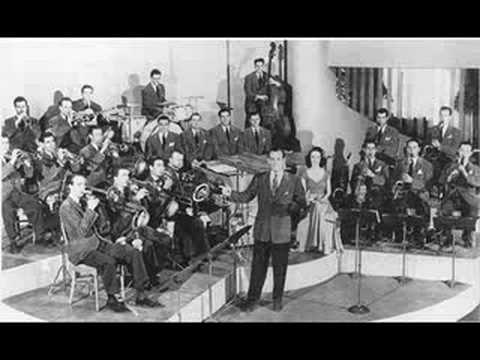
  • Miller and his orchestra recorded this song at RCA's studios in New York City while they were on a seven-week live engagement at the Meadowbrook Ballroom in Cedar Grove, New Jersey.
  • Wilbur Schwartz played the clarinet solo on this track and also played alto sax. The other musician were:

    Trumpets: Clyde Hurley, Dale McMickle, Leigh Knowles, Johnny Best
    Trombones: Glenn Miller, Al Mastren, Paul Tanner, Tommy Mack
    Alto sax: Hal McIntyre
    Tenor sax: Tex Beneke and Al Klink
    Alto and baritone sax: Jimmy Abato
    Guitar: Richard Fisher
    Bass: Rowland Bundock
    Drums: Maurice Purtill
    Piano: Chummy MacGregor
  • After this song hit, Miller became one of the most popular bandleaders in America, with seven #1 hits, including "That Old Black Magic," "Chattanooga Choo Choo" and "In The Mood." In 1942 he joined the Army and formed the Glenn Miller Army Air Force Band. He died in 1944 when his plane disappeared en route to Paris.

Comments: 6

  • Anthony S. Esposito from Lake Geneva, WisconsinThis is such a meaningful, tender song, that is such a classical piece of music. Glen Miller & his wonderful music has bridged across many generations & each time it is played, is as fresh & heartfelt, as the first day it was played & heard, by rest of the world....absolutely a song for all the world.
  • Barry from Sauquoit, NyOn April 25th 1976, Bobby Vinton's covered version of the "Moonlight Serenade" entered Billboard's Hot Top 100 chart at position #99; the following week it was at #97 and that was also its peak position on the chart and its last week on the Top 100…
    It reached #15 on Billboard's Adult Contemporary Tracks chart...
    And nine days ago on April 16th {2015} Bobby Vinton, born Stanley Robert Vinton, Jr., celebrated his 81st birthday.
  • Barry from Sauquoit, NyOn February 17th 1959, the Rivieras performed "Moonlight Serenade" on the ABC-TV program 'American Bandstand'...
    Two weeks earlier on February 3rd it entered Billboard's Hot Top 100 chart; eventually it peaked at #47 and spent 11 weeks on the Top 100.
  • Barry from Sauquoit, NyOn February 10th 1954, the movie "The Glenn Miller Story" starring James Stewart and June Allyson had its U.S.A. premier in New York City...
    "Moonlight Serenade" was one of Glenn Miller's songs that was featured in the movie...
    The movie was originally to be released with the title 'Moonlight Serenade' but was changed to 'The Glenn Miller Story'
    The film received three Academy Award nominations; 'Best Screenplay', 'Best Musical Score, and won for 'Best Sound Recording'...
    On March 7th, 1954 the movie's soundtrack album peaked at #1 (for 10 weeks) on Billboard's Top Albums chart; the album that knocked it out of the top spot was 'Glenn Miller Plays Selections from The Glenn Miller Story' by Glenn Miller (it was #1 for 3 weeks)...
    In 1959 the Rivieras released a covered version, it peaked at #47 on the Top 100; and in 1976 Bobby Vinton took it to #97.
  • Mike from Franklin County, PaJackie Gleason onced used this song as the theme song to "The Honeymooners" . ..He even performed this song with his own band .
  • Steve Dotstar from Los Angeles, CaWish I could've been at the Glenn Island Casino
    in the 40's, standing by the bandstand to hear this great arrangement.
    It defined part of the big band era!
    Hello to Paul Tanner, Miller trombonist.
see more comments

Editor's Picks

Director Mark Pellington ("Jeremy," "Best Of You")

Director Mark Pellington ("Jeremy," "Best Of You")Song Writing

Director Mark Pellington on Pearl Jam's "Jeremy," and music videos he made for U2, Jon Bon Jovi and Imagine Dragons.

Why Does Everybody Hate Nu-Metal? Your Metal Questions Answered

Why Does Everybody Hate Nu-Metal? Your Metal Questions AnsweredSong Writing

10 Questions for the author of Precious Metal: Decibel Presents the Stories Behind 25 Extreme Metal Masterpieces

Greg Lake of Emerson, Lake & Palmer

Greg Lake of Emerson, Lake & PalmerSongwriter Interviews

Greg talks about writing songs of "universal truth" for King Crimson and ELP, and tells us about his most memorable stage moment (it involves fireworks).

Paul Williams

Paul WilliamsSongwriter Interviews

He's a singer and an actor, but as a songwriter Paul helped make Kermit a cultured frog, turned a bank commercial into a huge hit and made love both "exciting and new" and "soft as an easy chair."

Harry Wayne Casey of KC and The Sunshine Band

Harry Wayne Casey of KC and The Sunshine BandSongwriter Interviews

Harry Wayne Casey tells the stories behind KC and The Sunshine Band hits like "Get Down Tonight," "That's The Way (I Like It)," and "Give It Up."

Tony Iommi of Black Sabbath, Heaven And Hell

Tony Iommi of Black Sabbath, Heaven And HellSongwriter Interviews

Guitarist Tony Iommi on the "Iron Man" riff, the definitive Black Sabbath song, and how Ozzy and Dio compared as songwriters.