The Knife

Album: Daughter from Hell (2026)
Charted: 109
Play Video

Songfacts®:

  • "The Knife" is about heartbreak that refuses to fade, a wound Gracie Abrams deliberately keeps instead of letting it heal. Though others are "daring" her to pull the knife out, she refuses, even taking it along for a "joy ride." It's an unsettling image, but a deliberate one: letting the knife go would mean letting go of the last tangible connection to what was lost.
  • As the third track on Daughter From Hell, "The Knife" arrives early in the album's sequence, following "Hit The Wall" and "Death Wish," and coming immediately before the title track. It acts as an early emotional anchor, establishing the album's interest in the complicated, unglamorous interior of heartbreak rather than the more cinematic drama that usually accompanies it. Abrams isn't interested in simply showing us she is hurt; she wants to examine why she keeps the wound open.
  • The knife is a recurring image throughout Daughter From Hell, creating a visual language that connects the album's songs. Other examples of the blade imagery include:

    On "Death Wish," the lyric about twisting "the knife with a smile while you kill me" uses the same weapon imagery for a toxic relationship.

    On "Good Reason" the "sharp knife" is a metaphor for the way the relationship was repeatedly damaged, even though the partner was kind and would "bleed" to spare her feelings.

    On "Men Like You," Abrams sings about blades "embedded in her back, poised to be turned by a duplicitous companion," extending the knife-in-the-back betrayal image to a friendship rather than a romance.

    This threading of blade and wound imagery across multiple tracks gives the album a unifying visual language for heartbreak, betrayal, and self-inflicted emotional stasis.
  • Abrams has not identified the ex who inspired "The Knife," and there is no official confirmation that it refers to any particular former partner. She was previously in a five-year relationship with producer Blake Slatkin, which provided inspiration for much of Good Riddance, and was later linked to Hayes Bradley. It is possible that the song draws on the lingering aftermath of one of those relationships, but Abrams has kept the subject anonymous. Instead, the knife becomes a broader symbol for the kind of heartbreak that remains embedded long after the relationship has ended, whether the person holding the blade is a careless lover, a two-faced friend, or, occasionally, oneself.

Comments

Be the first to comment...

Editor's Picks

Graham Parker

Graham ParkerSongwriter Interviews

When Judd Apatow needed under-appreciated rockers for his Knocked Up sequel, he immediately thought of Parker, who just happened to be getting his band The Rumour back together.
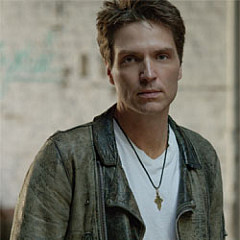
Richard Marx

Richard MarxSongwriter Interviews

Richard explains how Joe Walsh kickstarted his career, and why he chose Hazard, Nebraska for a hit.
Bob Dylan Lyric Quiz

Bob Dylan Lyric QuizMusic Quiz

Think you know your Bob Dylan lyrics? Take this quiz to find out.

Bill Medley of The Righteous Brothers

Bill Medley of The Righteous BrothersSongwriter Interviews

Medley looks back on "Unchained Melody" and "You've Lost That Lovin' Feelin'" - his huge hits from the '60s that were later revived in movies.
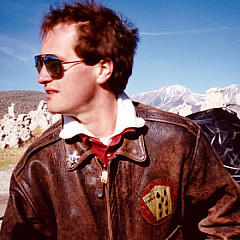
Director Nick Morris ("The Final Countdown")

Director Nick Morris ("The Final Countdown")Song Writing

Nick made some of the biggest videos on MTV, including "The Final Countdown," "Heaven" and "Don't Know What You Got (Till It's Gone)."
Lace the Music: How LSD Changed Popular Music

Lace the Music: How LSD Changed Popular MusicSong Writing

Starting in Virginia City, Nevada and rippling out to the Haight-Ashbury, LSD reshaped popular music.