One More Saturday Night

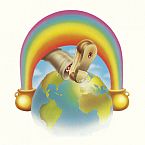
Album: Europe '72 (1972)
Play Video

Songfacts®:

  • Dead co-founder Bob Weir is credited with the lyrics and music for this song, but the seed came from words by Dead lyricist Robert Hunter. The story of this collaboration was told differently by Weir and Hunter, but the essence is that Hunter gave a lyrical sketch to Weir, who then spent a night tinkering and coming up with something very different from how the sketch started.

    As Weir recalled in a March 2, 2004 interview with David Gans, he took a verse by Hunter and wrote "One More Saturday Night" around it. When he took it to Hunter for feedback, Hunter decided the song was now Weir's baby and so should have Hunter's name removed.

    Hunter's recollections were a little less congenial. In 1978, he said he was so unhappy with Weir's rewrites that he didn't want anything to do with the song and asked his name to be removed.

    A Long Strange Trip by Dennis McNally favors Hunter's version, as McNally describes them clashing over the issue and Hunter thinking Weir's rewrites were just plain bad.

    Consistent across all accounts is that Weir wanted to name the song "U.S. Blues." Hunter refused and decided to write his own "U.S. Blues," which led to the Dead song of that name.
  • Hunter sent a verse of lyrics to Dead.net. David Dodd, who writes extensively on the site, reports that's he's not sure it is the verse Hunter shared with Weir so many years before - the one that spawned "One More Saturday Night." From the looks of it, though, it certainly may be.

    Dynamitin' depot, bricks are pourin' down
    Cost your reputation if they catch you hangin' round
    Ev'ry choice you look at serves but to confuse
    Reckon you could call it the United States Blues
    Oh baby, One more Saturday night
    Unhuh, One more Saturday night


    The verse contains the term "United States Blues," which would explain why Weir initially wanted "U.S. Blues" to be the title.
  • The song is about as straightforward a rock and roll tune as the Dead have, which has caused divisions among Deadheads over the years. Some love it, while others find it trite and unrepresentative of what the Dead are supposed to be about.
  • Ironically (for a song titled "One More Saturday Night"), the tune was first played live on a Tuesday. It was October 19, 1971, at the University of Minnesota's Northrop Auditorium.
  • Bruce Springsteen has covered the song during some live shows.
  • From 1966 to 1967, the Dead frequently played at the Santa Venetia Armory in Marin County, California. The line, "Now everybody's dancin' down the local armory," almost certainly refers to this time.
  • The Dead's final performance of the song was on July 8, 1995. All told, they played it 340 times.
  • Bob Weir (with the Dead backing him in the studio) recorded the song again for his Ace solo album released in May 1972. He released it as a single with "Cassidy" as the B-side.

Comments

Be the first to comment...

Editor's Picks

Dwight Twilley

Dwight TwilleySongwriter Interviews

Since his debut single "I'm On Fire" in 1975, Dwight has been providing Spinal-Tap moments and misadventure.

Lita Ford

Lita FordSongwriter Interviews

Lita talks about how they wrote songs in The Runaways, and how she feels about her biggest hit being written by somebody else.

Best Band Logos

Best Band LogosSong Writing

Queen, Phish and The Stones are among our picks for the best band logos. Here are their histories and a design analysis from an expert.

Jimmy Jam

Jimmy JamSongwriter Interviews

The powerhouse producer behind Janet Jackson's hits talks about his Boyz II Men ballads and regrouping The Time.

Charlie Benante of Anthrax

Charlie Benante of AnthraxSongwriter Interviews

The drummer for Anthrax is also a key songwriter. He explains how the group puts their songs together and tells the stories behind some of their classics.

Adam Young of Owl City

Adam Young of Owl CitySongwriter Interviews

Is Owl City on a quest for another hit like "Fireflies?" Adam answers that question and explains the influences behind many others.