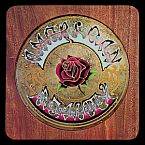
Truckin'

Album: American Beauty (1970)
Charted: 64
Play Video

Songfacts®:

  • The '60s was a time for traveling and discovering your place in the world. Sometimes what you found was an empty existence that just keeps repeating itself day to day. Having to deal with everyday life when you were always waiting for some kind of revelation to expand your consciousness was often depressing. In this song, The Grateful Dead deal with the banality by continuing their search for epiphany. They just keep truckin' on.
  • "Truckin'" is the Grateful Dead's coming-of-age story.

    In Anthem To Beauty, a documentary covering the making of the American Beauty album, Dead guitarist/vocalist Bob Weir talks about the romance of striking out on the road. He says it was a rite of passage for young people in the 1960s - as it perhaps still is to some degree today, though the internet has robbed much of the mystery of the road. "Truckin'" covers the Dead's navigation through that rite of passage.
    "We were starting to become real guys," Weir says, "and really enjoying the hell out of it."

    For the Dead, that rite became a way of life. The band never made a ton of money from record sales, and their unique legacy was made by touring.

    Also in Anthem, Phil Lesh talks about how the Dead's touring in 1970 preceded the "rock and roll bubble," when groups were isolated from fans and regular folks. The Dead were flying coach, riding busses, and staying in modest hotels. There were no handlers to protect them from the public or from the authorities.

    That manner of living was exciting in its way, but it could also get downright boring after a while, with long hours spent in hotel rooms and waiting for transportation to the next show. This is why the song has a line going, "Get tired of travelin' and you want to settle down."

    Even though the song is autobiographical for the Dead, it also means a lot to the lives of many Deadheads and children of the '60s in general. Part of what defined that generation was the thirst for freedom and adventure, which led to lives on the road (and some people staying there too long).
  • Grateful Dead members Jerry Garcia, Phil Lesh and Bob Weir are the credited writers on this track along with their lyricist, Robert Hunter. During recording, Hunter fed Weir one line at a time.
  • The line, "Busted, down on Bourbon Street" refers to an incident on January 31, 1970 when members of the band were arrested in a drug bust that netted 19 people in New Orleans. The group was in town to play two shows at a club called the Warehouse, and the raid happened the morning after their first show at the French Quarter hotel where they were staying. Lesh, Weir and drummer Bill Kreutzmann were all arrested along with crew members and fans of the band who had joined them at the hotel.

    The story made the front page of the New Orleans Times-Picayune the next day, and drew national attention, with Rolling Stone running an article on the incident. Owsley Stanley, a Dead associate known for his pioneering work with LSD, was also arrested and labeled the "King of Acid" in the Times-Picayune piece. According to the Rolling Stone article, the band paid for bail and legal fees for all 19 arrested.
  • In its original conception, the song was supposed to evolve as the band progressed. Robert Hunter envisioned them adding verses for significant events as time went on, but then came to realize that it simply wasn't going to work that way. The song ended up staying the same, though the band would improvise jams during live performances.
  • In Behind the Hits by Bob Shannon and John Javna, Hunter said he started writing the song in the band's home base of San Francisco, wrote some more in Houston, and then wrapped it up in Florida, which would bring the song all the way from West Coast to East.

    In the same book, Hunter mentions that the line "sometimes the light's all shining on me" came from the rest of the Dead, not from himself, and that the band tinkered with his melody a bit so the final product sounded less like Chuck Berry than he had originally written.
  • Over at Dead.net, David Dodd reports a rumor that the lyric "arrows of neon and flashing marquees out on Main Street" originally started with "garlands of neon," and that Hunter had chosen the word "garlands" as a prank to tongue-tie Weir. Weir eventually gave it up and went with the more singable "arrows of neon."


    Despite the emblematic "what a long, strange trip it's been" line, the band had only been together for five years when "Truckin'" was recorded. The band members were also in their 20s or early 30s, hardly the grizzled old veterans that the line implicates.

    In Skeleton Key: A Dictionary for Deadheads, Hunter says that the "long strange trip" referred also to his decade of performing that preceded his time with the Dead.

    The line has become almost a cliché today, but it originated in "Truckin'," and it meant a lot not only to the band but to the '60s generation. The hippie counterculture flung its participants through five years of transformation and madness that were very rare. With tens of thousands of young people slinging on backpacks and hitting the road, they lived a lot of life in a short span of time, and came out feeling the road had been longer than mere chronology might suggest.
  • The Dead first played "Truckin'" as the opening song for their August 18, 1970 performance at the Fillmore West in San Francisco. They also debuted American Beauty songs "Operator," "Brokedown Palace," and "Ripple."
  • The final performance was at Maryland Heights Missouri's Riverport Amphitheatre on July 6, 1995. Dead frontman Jerry Garcia died a little over a month later.
  • The Dead released the song as a single, backed with "Ripple." It reached #64, making it the highest-charting single on the album. "Sugar Magnolia" hit #91.
  • Dallas - got a soft machine

    Beat writer William S. Burroughs wrote a novel titled The Soft Machine in 1961. It's the first part of his Nova Trilogy and is wild and bizarre even by the standards of Burroughs, who was one of American literature's wildest, most bizarre writers. How this book (too winding and strange to even attempt to summarize coherently here) would be used to represent Dallas is truly a mystery, but the connection seems pretty certain. Burroughs and the Beats were the precursors to the hippies, and Hunter was a well-read fellow.
  • Truckin', got my chips cashed in
    Keep truckin', like the doo-dah man


    A person cashes chips in at casinos and similar gambling venues. You get money for your chips. People cash in their winnings.

    In the book Skeleton Key, Hunter states that the "doo-dah man" refers to "Camptown Races" by Stephen Forster, which contains the refrain "doo-dah, doo-dah."
  • Once told me you got to play your hand
    Sometime - the cards ain't worth a dime


    These gambling allusions refer back to the opening line about having chips cashed in. Gambling has been used as a metaphor for life so much in popular culture that it's become a trope all its own. The peak was probably in 1978 with Kenny Rogers' "The Gambler."
  • What in the world ever became of sweet Jane?
    She lost her sparkle, you know she isn't the same
    Livin' on reds, vitamin C, and cocaine
    All a friend can say is, "Ain't it a shame?"


    Mary Jane is a common phrase for marijuana, which has led many to see this as a reference to the drug and possibly to the way that the '60s counterculture went sideways and destroyed itself. The hippies started out using weed, mushrooms, and LSD - "head drugs" seen by the culture's proponents as being harmless or even spiritually and psychological beneficial - but by 1970 many had veered into hard drug territory. Cocaine, speed, and heroin turned the good times bad for many casualties of the era.

    Robert Hunter said the verse was meant to parody commercials of the 1940s, which frequently used jingles, specifically mentioning a Pepsodent commercial.
  • The Golden Road, a Dead quarterly that ran from 1984 to 1993, mentioned that "truckin'" was a dance step popular in the 1920s and '30s. Others have note that "truckin'" used to be slang for sex. Interesting stuff, but there doesn't seem to be any evidence from the Dead themselves that these things apply to the song. The band members discussed the meaning of "Truckin'" pretty openly and without ambiguity, and none of those hidden meanings were ever hinted at.
  • "Truckin'" is an upbeat song on a generally melancholic album. Phil Lesh was still mourning the loss of his father, and Jerry Garcia's mother was in critical condition following a car accident. That grief is palpable on most of American Beauty, but it doesn't touch "Truckin'" so much.

    According to Hunter's account in Skeleton Key, American Beauty was also the Dead's attempt to flow with the times. They'd made their name in the psychedelic era (embodying that moment in music history more indelibly than any other act) and had then followed the "back to roots" call of The Band, Dylan, CSN&Y, and The Byrds with Workingman's Dead in June 1970. With American Beauty, they were trying to rise with the tide of "commercially safe" music. "Truckin'" turned out to be the most salable tune of that effort, which is kind of funny considering that it specifically mentions the rather "unsafe" Bourbon Street drug bust.
  • The song is played in the key of E with a 12/8 time signature.
  • The "reds" in the line "Livin' on reds, vitamin C, and cocaine" are Seconal brand barbiturate pills, which were of course red. That according to Bob Weir, who said so in a Wall Street Journal story. The band would often take the pills to treat insomnia.

Comments: 42

  • Jeff from Lacey, WashingtonThe band originally meant for the song to keep evolving as the band went along. Hunter meant to keep adding and rearranging verses, but it didn't quite work out. Hunter: "I thought, we all thought, that maybe we'd just keep adding to Truckin' over the years. But the funny thing is, once you get it down, it is down, you don't go back to revisit it."
  • Rotunda from Tulsa, OkBack in '70 I bought the album when I was a grad student at University of Kansas. A controversial album at the time. However. I loved most of The Dead's music. It was a time of the hippy & druggie cultures spreading across the U.S. Yes, I was caught up in it all. I'm lucky to have survived. Back when I first heard this song was when I visited a friend in his dorm room, thru clouds of heavy incense. And I mean Clouds of it! To mask the odor of weed. The album was playing. Two of his pals were hidden under piles of clothes & they had passed out. I was fascinated by the song so I had to buy my own copy of the album. What strange times they were.
  • Hugh Mcphee from Wick, United KingdomPass that joint me mate. Lol. Not sure Garcia even sang lead on this. It doesn't sound like him. Oh well. Still a rather rippingly good tune. Of course this would have been banned by the BBC. The dear old BBC. Guess they objected to drug references. Not that I partake of the smoking of pot but I do feel it should be legalized. Oh wait didn't Bill Clinton smoke at Oxford? I guess since he did not inhale it doesn't count. Lulz.
  • Gregmon from Intelbuquerque, NmYes, lots of loose references in the dead lyrics. My thoughts have always been along these lines. By 1970, the Haight-Ashbury scene had changed for the worst. Everybody and his sister had moved to the area bringing no money, of course. Many people were selfish assholes, crime was getting out of hand. Stronger drugs were in use. It was a drag. Sweet Jane was no longer enough. Reds are certainly Seconal vitamin C is acid. It was a bad scene. Cassidy 1967, Garland 1969, and Hendrix 1970, amongst others died from reds. "A friend" refers to a friend of weed.
  • Robert from Elgin, TxR from Seattle asked about the lyrics Dallas, got a soft machine, in the line Dallas, got a soft machine, Houston (not Dallas as mentioned by Johnny from LA) too close to New Orleans...
    As a Texas resident I recongized the description of the city's business/political operations immediately. Dallas was known for trying to project an image that was very efficient and businesslike [machine] but also deliberate about showing itself as relatively classy and gracious [soft], at least in contrast to other cities of the region. Hence a soft machine. Houston was too close to New Orleans (which was disliked by the Dead due to the bust) geographically at least but possibly also in the well-known problems with the actions of the police of both cities exhibiting disdain for the civil rights of persons for whom they had a dislike, such as hippies, including planting drugs and guns on persons that they arrested and/or shot.
  • Jake from Los Angeles, CaGetting back to "Sweet Jane"

    In 1982, they changed the lyrics. I beleive it was April 6, 1982 in Philadelphia (Because on April 2, 1982, in Durham NC they sang the regular lyrics)

    ANyway, on 4/6/82 (and any time in 1982 after that, when they sang Truckin') they changed it to:

    "What in the world ever became of Sweet Jane / She lost her sparkle, you know she isn' the same / Ever since she went and had a Sex change / All her friends can say is Ain't it a Shame"


    So, what was THAT all about?
  • Pepper from Liverpool, United KingdomThis song sounds like the song School Days by Chuck Berry. Any thoughts on this? Lol. And lololol at that last comment James, from New York. xDDD

    "I love you." "you're so beautiful." xD
    I've seen chicks and guys do s--t like that. Lololol. I must've seen acid trippers!
  • Pat from Houston, TxDon't recall how I found this, but felt compelled to comment. Yes, I'm an old and aging Deadhead - first concert in March 1967 at Winterland, the last (for the full band) 1995 at Soldier's Field. (In between, every concert I could manage to get to, across America and Europe.) Psychedelics and other substances were sometimes part of it, sometimes not. Anyway, the Dead's music has been analyzed, ripped apart, put back together, examined under a microscope, and then re-examined, all in the search for some deep philosophical "meaning" to it. Ponderous tomes have been published, giving this or that opinion as the real meaning. The true meaning of any song is known only to the artists that created and performed it.For the rest of us, the 'meaning' of the song is what we make of it, how we perceive it, what we believe it to be. That is found only in our minds and souls. What I believe "Truckin' " or "Box of Rain" means is mine, and mine alone, and it is the "real" meaning. Others will have different meanings and interpretations that are just as valid. The Dead had moments of transcendence, yes. But sometimes (ok, more than sometimes), they were out of tune, with unclean harmonies and thythms out of synch. The energy, the vibes tho were intense. It started well before the actual concert, in the parking lot, and built and built, then exploding and washing over everyone as the first chords were struck, transporting those that would accept it into another space and time. Even now, as I listen to the New Orleans concert of Jan 1970, I can still feel and know the energy, the transport, the sheer joy of the Dead. Indeed, it has been a long strange trip. Peace.

    PS. James, yes old Deadheads have tried X - after all, its been around a good 25 years or so, if not more.
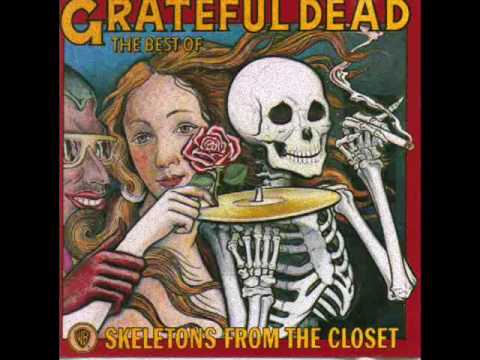
  • Russell from Corona, CaI don't believe James knows what he's talking about or ever really went to a Dead concert. First off, Skeletons from the Closet didn't come out until '74 - the band only tripped as a unit in the '60's according to the 3 Biographies I have read. They still took drugs and drank but the days of LSD Experimentation were over. Second - the line about the smooth harmonies live definately does not sound like the Dead unless you were on some sort of Halucinegetic. Bob Weir is horrible at harmonizing (I've listened to hundreds of shows and attended 20 in my life). The Dead were not very good at harmonizing live but we forgave them for that because their hearts were there & Jerry's voice was so sincere I always believed him. Three - all of the Deads "Deep Meaning" tunes? What songs is he talking about? "Mason's Children" is not deep meaning and thats the only one I can think of not available at the time - some songs were not released on Studio albums but they were released on live ones. Fourth - Sound levels off, Out of tune instruments? I have never heard this - true, they did not always play well, but their instruments were tuned. This guy is probably a Born Again Christian as they are well known to lie and make up stories to support their particular point of view (all for some greater good in their head) - nothing personal & not directed at all Cristians, I just see this behavior a lot on the Internet. lastly, Truckin is about the band touring period. There used to be a Annotated Site for the Grateful Dead's lyrics that was based on research and insight to the band and Lyricist Robert Hunter - maybe it still exists - I would go there for further insite.
  • Bill from Rensselaer, NyNobody mentioned that "Sweet Jane" was Janis Joplin
  • R.h. from Pauls Valley, OkJames from NY... there is absolutely no way you can even remotely comprehend what "tripping" is like without actually doing it. In the 70s I did EVERYTHING! blotter, microdot, orange sunshine, window pane, pure LSD(L-25), mescaline (the best!) peyote, mushrooms. I could talk until I was blue in the face trying to descibe in as much detail as possible and I can assure you that you STILL would not be able to grasp the mindset. Trust me!!! Am I right people or am I right? LOL
  • Guy from Boulder, CoTrying to figure out the meaning of this song, or any song, from a single line or phrase completely obscures the obvious. Simply, this song is about life on the road. In this case, a rock band. Beneath that come the thrills, weird people, bad situations, longing for home, maturing, burnout and, once home, the longing to "get back Truckin on." Hunter is huge on metaphors. The line about Sweet Jane probably reflects a broader view of the folks the Dead would see time and time again as they toured the country. Just replace "Sweet Jane" with "young people" and Hunter sounds like a disappointed parent getting down on "these kids today." The Dead saw early and clear the dark side of the hippie movement, and it wasn't pretty. By 1970 it was a complete charade to them. Look how the Dead all but abandoned their attempt at psychedelic music and returned to their roots of bluegrass, country and Americana music. Out of many of the Dead songs, this one is pretty straight forward. The road at top, then the toll, the excitement, disappointment and a view into the world of a touring rock band - the Grateful Dead no-less!
  • Paul from Staten Island , NyGrateful Dead songs are known by their family to be full of abstract musical imagery and visual lyricism, to be interpreted individually and correctly by anyone that listens to them. Another words, there is no absolutely correct interpretation of any Grateful Dead lyric, their beauty and meaning is truly and correctly in the eye, and ear, of the individual beholder. It amazes me how many postings here are conceived by ignorant and uninformed "critics". How can one possibly interpret lyrics when they are completely uneducated and ignorant about the artist in the spotlight? I might as well give my insight to Einstein about his theories...I would probably be more correct than most of the folks here attempting to analyze this song. I miss Jerry Garcia, his song was of love, brotherhood, and beauty... unlike today, where the "hit" pop songs are of greed, lust, and intolerance. WAKE UP AMERICA
  • Elbert from Ocala, FlI'm now 70 years old and saw the Dead two times in the early 1970's and loved their music. I'm a Christian, never have done drugs or gotten high. I just enjoy the music without reading ANYTHING into it, just the raw energy. Still have a large collection of their music and still listen to it.
  • Pete from Buffalo, NyIn the stanza about "sweet Jane", i believe that they are referring to the song by the Velvet Underground, Sweet Jane, and Lou Reed. they say "what in the world ever became of sweet Jane," which means what ever happened to Lou Reed after he was using red, cocaine and vitamin c, they wanted the old Lou back. They also say that sweet Jane lost her sparkle, meaning Lou was never the same after we used and kept using.

    tell me what u think, im only 15
    thanks
    -pete from buffalo
  • Robert from San Francisco, CaIn the mid-60's, Jerry Garcia and Pigpen used to sit on the front stairs of their Ashbury Street flat in the afternoons. Their flat was about one block from the corner of Haight and Ashbury St. I went to High School three blocks from Haight Street from 1965 to 1968. On occasions, Haight Street would have so many people strolling around that the police closed the street to cars. The Dead and the Airplane, amongst a myriad of others, would play free concerts at Speedway meadows in the Park. My take on certain lines in this song is this: the group had the money to afford all the drugs they want on a daily basis. They also know that these drugs can be the end to their lifestyle, so they find a way to take them but also maintain their health with large amounts of vitamin C. Coke to take them up, reds to bring them down, and vitamin C to restore health.
  • Simon from Northeast, NyFirst, let me say that while I happen to really like this song, particularly because of the line talked about, and also (and this is from memory, and I've never looked at the actual lyrics), "I like to get some sleep before I travel. But if you've got a warrant I guess you're gonna come in. Busted down on Bourbon Street... (while there may be numerous Bourbon Streets in the U.S., the most noted one IS in New Orleans, thus the comments about the group actually being busted rings true).

    But here are some facts: Reds are without any doubt a reference to Seconal Sodium (C-II) (Secobarbital Sodium, Ranbaxy). But the reference is so old that not very many people are familiar with it. I am because I was always fascinated by such references when I was a kid. The drug used to be manufactured by Eli Lilly & Sons. Of course, the two companies have a good relationship, but that's a different story. The drug was off the market for around two (beginning around 2002), but is now commercially available again. The drug is primarily prescribed for insomnia, and used in hospitals for sedation. I should know!!!

    Another pharmaceutical/chemical fact: Vitamin C POTENTIATES secobarbital. It was even used in some combination drugs (e.g., Curbetite L.A Tablets). If you've never heard of Curbetite L.A., don't worry, it's been off the market for decades. Vitamin C may have effects on illicit drugs, with which I'm unfamiliar, but the fact that it's mentioned in the lyrics immediately after the reference to secobarbital suggests, at least to me, the possibility that the songwriter may have used it, or known of its use in this capacity.

    I don't know who Robert Hunter is. But the slang term "reds" did not come into existence until the 1960's. So, I don't know how it could be a parody of commercials from the 1940's. Anyway, he's quoting from another site. In life, sometimes if something is said enough it BECOMES the truth, even if it's not. The Internet is a great place for information, but if posted information isn't correct, misinformation could spread like wildfire. I do think sites like Winkipedia are very good, because they allow for addition to and correction of information.

    As for secobarbital being a cure for a "bad trip"... well, I've never taken LSD. However, it is my understanding that Thorazine (chlorpromazine, Smith Kline Glaxo) was predominantly used for this purpose.

    Like many lyrics, I think the lines are open to interpretation. Certainly Sweet Jane is a slang reference to marijuana. My personal interpretation is that the songwriter is saying that marijuana used to be just great, but after all the touring they've done, they're now using secobarbital, Vitamin C and cocaine (and ain't it a shame).

    One last comment. I am of the opinion that secobarbital is also alluded to in the song, "Casey Jones" ("trouble ahead the lady in RED, take my advice you'd be better off dead").

    Simon

  • David from Wilson, NyIt sounds like bob weir says sweet jane lost her "sparkle", not her "spot". it means weed wasnt as fun with lsd and cocaine and reds available.
  • Tristan from Philadelphia, Pawell james, you've admitedly never dropped acid before, so why are you telling people what needs to be done in order to have a "safe" trip. Acid doesn't usually work in the way of moodswings, such as your example of a young girl. Without drugs there never would have been so much great music in the sixties, it was a new thing and many artists were just trying it out, it was inspirational.
  • Barb from Virginia Beach, VaDwight Yoakam did a twangy cover of this song on the 1991 Grateful Dead tribute album called Deadicated.
  • N.i. from Baltimore, MdOkay, as someone admittedly ignorant of most Dead music, I have the following question: is Garcia the singer of the verses? Whoever it is, his vocals seem like a direct imitation of Chuck Berry. I suspect it was intentional, for I just found out that this song was used as a B-side to their version of "Johnny B. Goode."
  • Rachel from Fort Smith, Ari think that part also refers to how pot lost a lot of its spiritual value, and became more of a fad in some cases.
  • Max from New Brunswick, NjOk, the line as mentioned abover,

    What in the world ever became of sweet Jane?
    She lost her sparkle, you know she isn't the same
    Livin' on reds, Vitamin C, and cocaine,
    All a friend can say is, "Ain't it a shame?"

    Its talking about how people, usually, use marijuana as one of the first drugs they try. they try it and like it but after a while it no longer does what it used to, ur body gets used to it and it isnt as much fun any more. "What in the world ever became of Sweet Jane (marijuana) she lost her sparkle you know she aint the same (not as good as it used to be).

    therefore, people turn to other drugs such as acid (reds, seconal), mushrooms, (vitamin c is a catalyst for a mushroom trip), and cocain. (obviously stated).

    all a friend can sa is "aint it a shame"
    people never realize that pot will eventually turn them onto other drugs and as time goes by you slowly but surely realize that you had no intention of doing what you do now, but since pot no longer works for you, u choose something else. EVERYONE CHOOSES THEIR OWN POISON, some more dangerous than others.
  • Don from Pownal, VtDave is right- "Reds" are Seconal, the pharmaceutical cure for a bad acid trip.
  • Honest Abe from Raleigh, NcI believe the term reds in this song is refering to what truck drivers call bennies to keep them awake for days at a time. I didn't know I would become a truck driver from listening to grateful dead when I first heard this.
  • Patrick from Tallapoosa, GaAt my old high school the Senior class that graduated before mine had shirts made up with the line "What a long strange trip it's been." I always thought someone was a Deadhead and contributed the phrase.
  • R from Seattle, WaThis is an interesting page, "The Annotated 'Truckin'"
    http://arts.ucsc.edu/gdead/AGDL/truckin.html

    It explains some of the obscure references, but does not fully explain the one I have always wondered about, e.g. "Dallas, got a Soft Machine..."

    Soft Machine is a novel by WS Burroughs and a British band named after the novel. What either has to do with Dallas, no one seems to know...
  • Joe from Buffalo, NyThe first guy was wrong...the dead were playing new orleans with fleetwood mack...after the show the dead were parting in the hotel when the cops came for noise and busted everyone in the band for weed...they all spent the night in jail and mickey harts father had to bail them out. They didnt go back to new orleans until ten years later. That is why the dead wrote truckin...the bust in new orleans.
  • Mike from Warwick, RiJames, you'd be a better person today if you had dropped a hit or two during a GD show. Has anyone seen Molly? The Dead rules and following them around attending their shows is a great way to spend a week, or two, or a few months. Sorry Mom, school was boring and the Dead were in town so I went for a few trips. Long Live Jerry. Wall of Sound tour was the best. Drugs don't provide answers - they provide questions. I love you!
  • Michael from Idaho Falls, IdJames of "Ragin' Rochester" whats going on with you man? You obviously don't know what you're talking about. The most spontaneous trips are invariably the best. Same thing with the music, you were too sober to appreciate the spontaneity and you mistook it for "The whining screech of bad guitar slide work" and "a dueling drums solo that didn't stay in time or even try to flow into any rhythm." And what's all this about drugs not solving our problems? As if you would know. If that's really what you believe, then you don't know what you're talking about.
  • Johnny from Los Angeles, CaHal is right, this drug part of this song is the Grateful Dead drug bust in New Orleans. I think the line "Dallas, too close to New Orleans" has something to do with that. But this song is mainly about touring: "Sometimes the lights are shining on me, other times I can barley see, lately it occurs to me, what a long strange trip it's been." And truckin is goin' around on tours. Hope I provoked some thoguht
  • Dave from Baltimore, Mareds=seconals
  • Scooter from San Francisco, Careds = barbituates (how quickly we forget)
  • Ali from East Lansing, Mireds = marlboro reds, not amphetamines
  • Amanda from New York City, Nythe songs central message is that yeah, life is hard sometimes but you just have to get through it.
  • Trebor from Seoul, Korea - SouthAs another poster said, this song WAS about an actual bust.

    Robert Hunter said that the "Whatever happened..." line was a PARODY of coomecials from the 40s:

    http://arts.ucsc.edu/gdead/agdl/truckin.html

    And to me it seems the sense of the line is not anti-drug, but a lament about people movie from mild drugs (Sweet Jane being marijuana) to harder ones: reds=amphetmanines, vitamin C used to enhance LSD, and cocaine.
  • Barry from New York, NcThe song made its live debut on August 17, 1970 at Fillmore West in San Francisco. This was as an acoustic version. However, Dead tape collectors do not have this version. The earliest version in circulation is from the next night (August 18, 1970).
  • Ken from Louisville, KyThe song WAS about a Grateful Dead drug bust. Hence the line "I'd like to get some sleep before we travel/But if you got a warrent, I guess you're gonna come in".
  • Stefanie Magura from Rock Hill, Scthe bad guitar, and drum solos, and the instruments being out of tune and all of that... isn't that part of psychadelic music, in some ways. I've never been to a Dead concert, but I know that people like Jimi Hendricks would distort their instruments to create different sounds. They would also experiment with different rhythms. Don't you think they could have been doing that as a symbol to show what it's like experiencing an acid trip.
  • Hal from Gaithersburg, Md"Busted down on Bourbon St" and "set up like a bowlin pin, knocked down gets to wearin thin" refers to the fact that dead actually were set up and raided where they were stayin in New Orleans and were busted on drug charges.
  • Mike from Santa Cruz, CaI went to a Dead concert back in the day, it was mostly young republicans in suites munching browings. Casey Jones should be up here. Theres a bold metaphor.
  • James from Ragin' Rochester, NyI always knew of and liked "The Dead", but the only albums(yes I mean vinyl)that I bought were 'skeletons from the closet' and 'workingman's dead'. Considered to be the "nice songs" that made popular radio air time.
    After meeting a true Deadhead, I found out about the open recording policy for their concerts. And all the other deeper meaning tunes available on the streets not in stores. Fans were encouraged to bring recording equipment to concerts and so many bootleg tapes were being sold that you never knew what the actual industry sold and what was just a poor sound quality collection from ten rows back.
    I was talked into going to one concert by my "old lady". I knew of her occasional acid trips and that there was no stopping her from taking some blotter to enhance her listening pleasure, but refused to take any myself for reasons I will explain some other time.
    The crowd all arrived early and seemed to instinctively know just when to take the acid on cue. When they started playing, I was impressed with the smooth harmonies. Two drummers holding together a clean mellow sound.
    Then a short intermission about 3 hours after the audience had taken their enhancements. When The Dead came back on stage, it was like a totally different group. The sound levels were off. The instruments were out of tune. The whining screech of bad guitar slide work did not help prepare for a dueling drums solo that didn't stay in time or even try to flow into any rhythm. But, Oh my God, the crowd went ape-googely. They were in seventh heaven listening to noise that didn't rate a biker bar dive.
    For the record, I have witnessed many acid trips. This was the only time I had seen a cohesive group enjoying the trip. LSD taken by newbies needs to be supervised by a spiritual leader guiding and comforting along the way. Not a one hit trial at a Robin Trower concert. Ever see a young girl falling from person to person saying "Ilove you" "your so beautiful" one minute and later dropping to the middle of the road asking for someone to help them die because "nobody loves me" and "I'm a bad person, run over me with a car"
    I wonder if The Deadheads would use ecstasy now that acid is an older drug? Any thoughts?
see more comments

Editor's Picks

Dean Pitchford

Dean PitchfordSongwriter Interviews

Dean wrote the screenplay and lyrics to all the songs in Footloose. His other hits include "Fame" and "All The Man That I Need."

David Sancious

David SanciousSongwriter Interviews

Keyboard great David Sancious talks about his work with Sting, Seal, Springsteen, Clapton and Aretha, and explains what quantum physics has to do with making music.

Roger McGuinn of The Byrds

Roger McGuinn of The ByrdsSongwriter Interviews

Roger reveals the songwriting formula Clive Davis told him, and if "Eight Miles High" is really about drugs.

Francis Rossi of Status Quo

Francis Rossi of Status QuoSongwriter Interviews

Doubt led to drive for Francis, who still isn't sure why one of Status Quo's biggest hits is so beloved.

Dan Reed

Dan ReedSongwriter Interviews

Dan cracked the Top 40 with "Ritual," then went to India and spent 2 hours with the Dalai Lama.

Jackie DeShannon - "Put a Little Love in Your Heart"

Jackie DeShannon - "Put a Little Love in Your Heart"They're Playing My Song

It wasn't her biggest hit as a songwriter (that would be "Bette Davis Eyes"), but "Put a Little Love in Your Heart" had a family connection for Jackie.