Black Korea

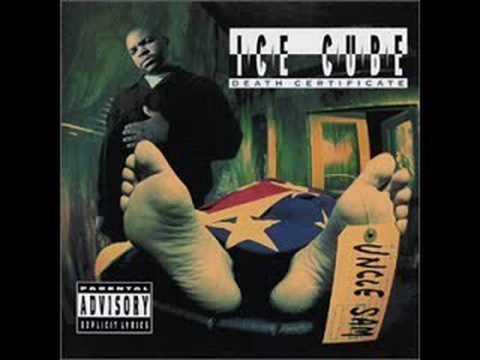
Album: Death Certificate (1991)
Play Video

Songfacts®:

  • Written shortly before the LA riots of April 29 to May 4, 1992, Ice Cube rails against people who can't speak English properly. He is resentful of their apparently suspicious attitude towards him and his fellow African Americans.

    He ends the song with the threat of burning down the stores of Korean shopkeepers if they try to turn the "ghetto" into "Black Korea." >>
    Suggestion credit:
    Alexander Baron - London, England
  • The specific inspiration for this song was the shooting of 15-year-old Latasha Harlins by the Korean shopkeeper Soon Ja Du. After accusing Harlins, an African-American, of trying to steal a bottle of orange juice, they got in an altercation that led to the shooting. Harlins was unarmed.

    Facing 16 years in prison, Du was sentenced instead to five years' probation, enraging many who felt that discounted the death of Harlins, and inflaming tensions between the African-American and Korean-American communities in Los Angeles.
  • A number of groups, including the Southern Christian Leadership Conference, accused Ice Cube of racism over this song and called for a boycott. His UK label, Island, left "Black Korea" and another incendiary song, "No Vaseline," off the Death Certificate album.
  • The controversy surrounding this song didn't dampen Ice Cube's career. He was just 22 when it was released; that same year, he starred in his first film, Boyz N The Hood. He became a huge box office draw, starring in the Friday and Ride Along franchises.

Comments: 3

  • Alexander from London, United KingdomIf you really want to understand why Korean shopkeepers and so many white people regard law-abiding black as potential muggers or worse I suggest you ask women why when they travel alone at night they regard all men as potential rapists. Or you might check out Chris Rock's "Black People v Ni--ers" routine.
    Re police brutality, you are WAY off-beam. Never heard of Liddle Towers? Check out the songfacts. Check out too the many videos on Youtube of white people, some elderly or under-age, being tasered, beaten up or simply abused by uniformed thugs? Or the black police officer who assaulted Nicola Fischer at the 2009 London protests. Police brutality is not and never has been about "racism", a disease that doesn't exist anyway, and I would refer you to my researches on this chimera to enlighten your darkness.
    A Baron
  • Hugh from Liverpool, United KingdomOnce again Ice-Cube has recorded a racist song.
  • Matthew from Atlanta, GaI have to diagree with Mr. Baron on many points. The riots following the Rodney King assailant trial were inevitable well before the cops' eventual acquittal. Police brutality was/is a fact of life in Los Angeles, and much of Ice Cube's body of work deals with that issue.
    "Black Korea" gives voice to the daily frustration that some blacks experienced in the 1990s when they spend what little money they have in poor neighborhoods in shops where the owners treat you like a criminal as soon as you walk in the door. When even law abiding black citizens are wary of the wrath of white cops and Asian disdain daily - it becomes even harder to avoid looking at life through a racial prism.
    As for the $75K contract... had Ice Cube accepted it, he would have had to forfeit any rights to the songs he performed or wrote with NWA. Jerry Heller, who wrote the contract, figured some teenagers from the hood would never turn down that kind of money. Of course, Ice Cube saw that situation through a racial prism as well that he discussed in "No Vaseline" on the same album.
see more comments

Editor's Picks

Trans Soul Rebels: Songs About Transgenderism

Trans Soul Rebels: Songs About TransgenderismSong Writing

A history of songs dealing with transgender issues, featuring Pink Floyd, David Bowie, Morrissey and Green Day.

Melanie

MelanieSongwriter Interviews

The singer-songwriter Melanie talks about her spiritual awakening at Woodstock, "Brand New Key," and why songwriting is an art, not a craft.

90210 to Buffy to Glee: How Songs Transformed TV

90210 to Buffy to Glee: How Songs Transformed TVSong Writing

Shows like Dawson's Creek, Grey's Anatomy and Buffy the Vampire Slayer changed the way songs were heard on TV, and produced some hits in the process.

Robert DeLeo of Stone Temple Pilots

Robert DeLeo of Stone Temple PilotsSongwriter Interviews

Stone Temple Pilots bass player Robert DeLeo names the songs that have most connected with fans and tells the stories behind tracks from their Tiny Music album.

Matthew Wilder - "Break My Stride"

Matthew Wilder - "Break My Stride"They're Playing My Song

Wilder's hit "Break My Stride" had an unlikely inspiration: a famous record mogul who rejected it.

David Sancious

David SanciousSongwriter Interviews

Keyboard great David Sancious talks about his work with Sting, Seal, Springsteen, Clapton and Aretha, and explains what quantum physics has to do with making music.