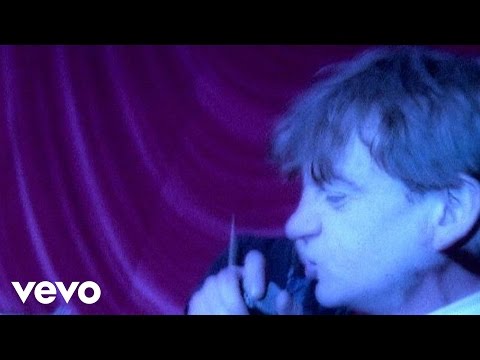

I Want You

Album: The Singles (1994)
Charted: 18
Play Video

Songfacts®:

  • In the spring of 1994, Inspiral Carpets released a track that was unlike anything else in their back catalog. The song in question, "I Want You," featured Mark E. Smith of The Fall, a man whose voice was less melodic instrument, more blunt force object. Smith's delivery was as distinct as it was delightfully unpredictable, a sort of punk poetry barked over whatever tune happened to be in the vicinity. Naturally, pairing him with the more measured tones of Inspiral Carpets frontman Tom Hingley made for a fascinating contrast.
  • Lyrically, "I Want You" explores the challenges of love and longing, with lines that convey a sense of urgency and emotional depth. Notably, the opening lines set the tone for the song's exploration of relationships:

    No one ever said
    It was gonna be easy
    A pain to tease me
  • The Inspirals' bassist Martyn Walsh penned "I Want You." He told Uncut magazine, "When I wrote 'I Want You,' it sounded more like The Prodigy or Chemical Brothers. I wrote the opening line on a flight from Japan to Australia. We were joking about traveling and the line 'nobody said it was going to be easy' seemed to fit."

    Tom Hingley added, "It's basically a three and a half minutes drum solo. For the vocal, I tried to emulate my idea of Ian Astbury. The other idea I had came from 'Stuck In The Middle With You.' That always comes back to the same note to underline the theme of the song. I did the same with 'I Want You' because the song basically always comes back to the central idea of lust and sexuality, which all of Martyn's songs are about."
  • Initially, "I Want You" was intended to be an album track on Devil Hopping, the band's 1994 release, and indeed the original version, without Smith's vocal shenanigans, opens the album. But somewhere along the way, someone had the bright idea to let Smith loose on it, perhaps for a B-side. Smith was a fan and so agreed, spending a Friday night and Saturday morning in the studio laying down ad-libbed vocals.

    "He (Smith) did a couple of takes where he sang along with Tom or across Tom's main vocal," keyboardist Clint Boon told Uncut. "Then he did a couple of takes where he sang lead, or just shouted things."

    As Boon recalls, the hard part was deciding which of the seven or eight "types of Mark E. Smith" to piece together for the final cut. Engineer Clif Norrell had to do plenty of "cutting and pasting to assemble a vocal that worked with the song."
  • The band's label, Mute, wasn't exactly thrilled with this oddball creation, but the public, ever willing to embrace a bit of Mancunian madness, were. The single version, featuring Smith's chaotic brilliance, peaked at a respectable #18 on the UK Singles Chart, earning the band the last of four Top 20 hits.
  • This modest chart success earned Inspiral Carpets an appearance on Top of the Pops, where Smith, true to form, caused a minor ruckus by clashing with Elvis Costello and hurling abuse at the cast of EastEnders in the studio bar.
  • The cherry on top was the song's crowning as the #1 track on John Peel's 1994 Festive Fifty, a revered annual countdown compiled from the votes of Peel's loyal Radio 1 listeners. "The Inspirals came to prominence through John Peel and The Fall were Peel's favorite band so there was a lot of synchronicity," said Boon.

Comments

Be the first to comment...

Editor's Picks

Facebook, Bromance and Email - The First Songs To Use New Words

Facebook, Bromance and Email - The First Songs To Use New WordsSong Writing

Where words like "email," "thirsty," "Twitter" and "gangsta" first showed up in songs, and which songs popularized them.

Stand By Me: The Perfect Song-Movie Combination

Stand By Me: The Perfect Song-Movie CombinationSong Writing

In 1986, a Stephen King novella was made into a movie, with a classic song serving as title, soundtrack and tone.

Adele

AdeleFact or Fiction

Despite her reticent personality, Adele's life and music are filled with intrigue. See if you can spot the true tales.

Ian Anderson: "The delight in making music is that you don't have a formula"

Ian Anderson: "The delight in making music is that you don't have a formula"Songwriter Interviews

Ian talks about his 3 or 4 blatant attempts to write a pop song, and also the ones he most connected with, including "Locomotive Breath."

John Lee Hooker

John Lee HookerSongwriter Interviews

Into the vaults for Bruce Pollock's 1984 conversation with the esteemed bluesman. Hooker talks about transforming a Tony Bennett classic and why you don't have to be sad and lonely to write the blues.

Al Jourgensen of Ministry

Al Jourgensen of MinistrySongwriter Interviews

In the name of song explanation, Al talks about scoring heroin for William Burroughs, and that's not even the most shocking story in this one.