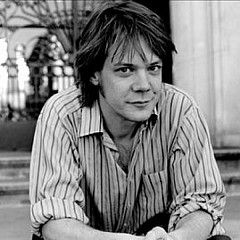
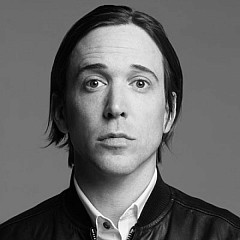
April 8, 1929 - October 9, 1978
Jacques Brel was born Jacques Romain Georges Brel in Schaerbeek, a district of Brussels, Belgium. His family were of Flemish stock but had switched comfortably to French; their roots lay near Ypres in West Flanders. Brel's father, Romain, worked in import-export - including a stint in the Belgian Congo - before co-founding a profitable cardboard company called Vanneste & Brel. The household was comfortably bourgeois and largely insulated from the economic chaos of the Great Depression that arrived the same year Brel did.
Brel attended several prestigious Catholic schools in Brussels, including the Institut Saint-Louis. Academically he was a curious mix: he struggled with arithmetic and Dutch and repeated school years, yet excelled in French, history, and writing. Teachers frequently read his essays aloud as model compositions. At school he helped launch a drama club and threw himself into early stage performances while also writing short stories, poems, and plays with friends. In 1944, at age 15, he began teaching himself guitar.
Looking back later, Brel summed up his upbringing with typical dry understatement: "I had a childhood where almost nothing happened... it was calm and inevitably morose."
He was particularly close to his mother Lisette, whom he credited with giving him his generosity and sense of humor. The household itself was austere and heavily shaped by Catholic values - an environment Brel would later push back against sharply in songs that often skewered hypocrisy and middle-class complacency.
Both Brel and his older brother Pierre were active Boy Scouts, and he loved summer camps and trips to the North Sea coast. In 1947, during his final school year, he published a short story titled "Frederic" in the school magazine
Le Grand Feu under a pseudonym. The tale - about a dying man urging his grandson to slip away while relatives make funeral arrangements - already showed the darkly comic storytelling instinct that would later fuel songs like "
Amsterdam" and "
Ne Me Quitte Pas."
In August 1947, when he was 18, Brel went to work at his father's cardboard factory. His duties involved fixing prices and meeting customers, and he found the routine mind-numbing. To escape the monotony, he joined a Catholic youth organization called La Franche Cordée, whose motto was "More is within you." Brel delivered food and clothing to orphanages and old people's homes - often using the family company van - and it was there that he began writing and performing his first songs. He also met Thérèse "Miche" Michielsen, who would later become his wife.
When Brel eventually moved to Paris in the early 1950s, impresario Jacques Canetti famously greeted him with brutal honesty, reportedly declaring that Brel was "too ugly to be a star." Canetti signed him anyway.
The early years were rough: Brel lived in cheap, cockroach-infested rooms and sometimes played up to seven shows a night just to survive.
Although he is usually labeled a chanson singer, Brel's musical instincts were shaped by classical composers like Franz Schubert and Maurice Ravel. His longtime collaborators, pianists Gerard Jouannest and Francois Rauber, helped transform his songs from simple cabaret pieces into richly orchestrated mini-dramas during the late 1950s and '60s.
Brel's influence eventually spread far beyond the French-speaking world. David Bowie discovered his work in the mid-1960s and later recorded an English version of "Amsterdam." Terry Jacks scored a global hit with "
an adaptation of "Seasons in the Sun," while artists such as Scott Walker, Leonard Cohen, Bob Dylan, Iggy Pop, and Marc Almond have all cited him as a major inspiration. His devastating ballad "Ne Me Quitte Pas" has been covered by performers ranging from Nina Simone to Frank Sinatra.
At the height of his fame, Brel stunned fans by retiring from live performance in August 1966 while on tour in Vittel, France, telling his musicians he had "nothing more to give." His farewell shows at the Olympia in Paris that October were so emotional that the audience pulled him back onstage seven times for standing-ovation encores. His final concert took place on May 16, 1967, in Roubaix. Even close friends such as Charles Aznavour urged him to reconsider, but Brel never returned to the stage.
After moving on from music, Brel turned to film, acting in movies such as L'Emmerdeur and directing Franz. Meanwhile his music was reaching new audiences through the Off-Broadway revue Jacques Brel Is Alive and Well and Living in Paris, which premiered in 1968 and introduced American theatergoers to the theatrical intensity of his songs.
In 1973 Brel was diagnosed with lung cancer and underwent surgery the following year. That same year he obtained a deep-sea sailing certificate in Ostend and bought a yacht called Askoy II. Setting off on an ambitious voyage, he crossed the Atlantic, sailed through the Caribbean, passed the Panama Canal, and headed into the Pacific. The journey eventually carried him to the remote Marquesas Islands in French Polynesia. He arrived on the island of Hiva Oa in 1975 and decided to stay, drawn by its remoteness and anonymity.
Life in the Marquesas turned Brel into something of an island utility service. He renewed his pilot's license and bought a twin-engine Beechcraft D50 Twin Bonanza named Jojo, flying between Hiva Oa and Tahiti, often transporting food, medicine, and sick residents between islands that otherwise had little access to transport.
Despite failing health, Brel returned briefly to recording and released the album Les Marquises on November 17, 1977, his first new material in a decade. Without promotion, interviews, or advance radio play, the album still went to #1 in France, selling over 600,000 copies in its first six weeks.
In 1978 his cancer returned aggressively, with doctors discovering a tumor the size of a grapefruit in his left lung. Brel died on October 9, 1978, aged 49. He was buried in Atuona on Hiva Oa, just a short distance from the grave of painter Paul Gauguin; two restless artists who, in different centuries, ended up at the same remote edge of the world.