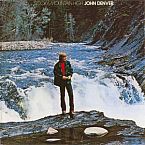
It's fitting that a guy who chose the stage name Denver (he was born Henry John Deutschendorf) wrote one of the most famous songs about Colorado. After moving around a lot when he was younger (his dad was in the military), he settled in Aspen, Colorado in 1970 and was often inspired by the scenery. He started writing "Rocky Mountain High" during the Perseid meteor shower, which happens every August. Denver was camping with friends at the tree line at Williams Lake near Windstar (his foundation in Colorado) and all of a sudden there were many shooting stars and he noticed "The shadow from the starlight"... thus the line from the song. He said that while the inspiration struck quickly, it took him about nine months to complete the song.
In Denver's autobiography, he wrote: "I remember, almost to the moment, when that song started to take shape in my head. We were working on the next album and it was to be called Mother Nature's Son, after the Beatles song, which I'd included. It was set for release in September. In mid August, Annie and I and some friends went up to Williams Lake to watch the first Perseid meteor showers. Imagine a moonless night in the Rockies in the dead of summer and you have it. I had insisted to everybody that it was going to be a glorious display. Spectacular, in fact.
The air was kind of hazy when we started out, but by 10 p.m. it had grown clear. I had my guitar with me and a fishing rod. At some point, I went off in a raft to the middle of the lake, singing my heart out. It wasn't so much that I was singing to entertain anyone back on shore, but rather I was singing for the mountains and for the sky. Either my voice gave out or I got cold, but at any rate, I came in and found that everybody had kind of drifted off to their individual campsites to catnap. We were right below the tree line, just about ten thousand feet, and we hadn't seen too much activity in the sky yet. There was a stand of trees over by the lake, and about a dozen aspens scattered around. Around midnight, I had to get up to pee and stepped out into this open spot. It was dark over by those trees, darker than in the clearing. I looked over there and could see the shadow from the starlight. There was so much light from the stars in the sky that there was a noticeable difference between the clearing and everywhere else. The shadow of the starlight blew me away. Maybe it was the state I was in. I went back and lay down next to Annie in front of our tent, thinking everybody had gone to sleep, and thinking about how in nature all things, large and small, were interwoven, when swoosh, a meteor went smoking by. And from all over the campground came the awed responses "Do you see that?" It got bigger and bigger until the tail stretched out all the way across the sky and burned itself out. Everybody was awake, and it was raining fire in the sky.
I worked on the song - and the song worked on me - for a good couple of weeks. I was working one day with Mike Taylor, an acoustic guitarist who had performed with me at the Cellar Door and had moved out to Aspen. Mike sat down and showed me this guitar lick and suddenly the whole thing came together. It was just what the piece needed. When I realized what I had - another anthem, maybe; a true expression of one's self, maybe - we changed the sequencing of the album we'd just completed, and then we changed the album title."
Some of the references in the lyrics:
"He was born in the summer of his 27th year" - John was 27 that summer.
"Coming home to a place he'd never been before" - He and Annie had just made Aspen home.
"And he lost a friend but kept his memory" - A good friend from Minnesota had come to visit and was killed riding John's motorcycle.
"Why they try to tear the mountains down to bring in a couple more" - This referred to the debate at that time about bringing the Olympics to Colorado.
On his BBC radio program The John Denver Show, he set the stage for this song by introducing it with this story: "You and I have just broken out of a huge stand of Douglas fir. The trees tower hundreds of feet above us. We've come out of the solemn, cathedral-like darkness of the trees, into the bright, early morning sunshine of a grassy slope. The grass is wet and soft with morning dew beneath our feet. The air is crisp, so crisp it sends little needles of joyful pain through the membranes of your nose. The air is so clear, it seems to purify your lungs. On both sides, above and beyond, stretch the awesome Rockies, their great, snow-capped peaks jutting out of the early morning mist. This is living. This is what man was created for: to live and work and continue what these mountains represent. This is true freedom. Being part of nature and drawing from it, and returning back to it."
Denver invoked this song when he testified at a Senate hearing in 1985 where he opposed the labeling of albums proposed by the Parents Music Resource Center (PMRC). "As an artist, I am opposed to any kind of a rating system, voluntarily or otherwise," he said. "My song "Rocky Mountain High" was banned from many radio stations as a drug-related song. This was obviously done by people who had never seen or been to the Rocky Mountains and also had never experienced the elation, celebration of life, or the joy in living that one feels when he observes something as wondrous as the Perseid meteor shower on a moonless, cloudless night, when there are so many stars that you have a shadow from the starlight, and you are out camping with your friends, your best friends, and introducing them to one of nature's most spectacular light shows for the very first time. Obviously, a clear case of misinterpretation. Mr. Chairman, what assurance have I that any national panel to review my music would make any better judgment?"
Milt Okun, who was Denver's producer, wrote in his greatest hits compilation: "'Rocky Mountain High' was obviously about John's profound love affair with Colorado and the Rocky Mountains. I always felt trepidation about being there because in the song John refers to losing a friend, which had really happened. I remember being nervous going up to John's house down those mountain roads. 'Rocky Mountain High' was a very strong record, and another important song for John's career."