"Hurt" was
originally released by the industrial band Nine Inch Nails in 1994; it was written by their leader, Trent Reznor. It's a very personal song for Reznor, dealing with his demons as he loses control of his life (the album it's on is called
The Downward Spiral).
When Johnny Cash recorded the song, he was nearing the end of his life and facing his mortality. He sounds very vulnerable in the song, but not like Reznor does in the original. Reznor sounds angry and combustible, but Cash is resigned to his fate. Cash died in 2003 about a year after the song was released. It serves as his epitaph in a way, and is heralded as one of the most transformative and powerful cover songs ever recorded.
We have Rick Rubin to thank for this cover. He's the one who convinced Cash to record it, and who checked with Trent Reznor to make sure he was OK with it. Rubin became Cash's producer and label boss in 1994 after they came to a working agreement: They would record songs of Cash's choosing in Rubin's home studio with as little accompaniment as possible - pretty much just Johnny and his guitar, with Rubin hitting record when he was ready. The result was the 1994 album American Recordings, which was mostly cover songs. It got a lot of press attention and opened up a new chapter in Cash's career - he had been floundering creatively since the '80s and didn't have a record label.
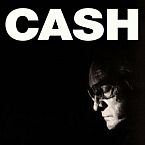
"Hurt" is part of the fourth album they made together, American IV: The Man Comes Around. By this time, Rubin was more involved in the song selection, but they kept the same minimalist aesthetic. It ended up being the last album Cash released before he died. Two more albums in the series were released after his death.
The line, "I wear this crown of thorns upon my liar's chair" in the original is "I wear this crown of s--t upon my liar's chair."
That's the only change Cash made to the song. The crown of thorns is a reference to the crucifixion of Jesus, an image that suited Cash, who was deeply religious. On the album, "Hurt" follows "
The Man Comes Around," a song Cash wrote that's based on the biblical Book Of Revelation.
Cash battled drug addiction for much of his life, and he heard those struggles in this song, which has some pretty stark references to drug use:
The needle tears a hole
The old familiar sting
According to Trent Reznor, he wasn't a heavy drug user when he wrote the song but became one later, manifesting it in a way.
The song was chosen because of the lyrics, which Rick Rubin sees as dealing with regret. "When you're 20 years old talking about regret, it's heartbreaking but it's heartbreaking in a different way because you have a whole life to figure it out," he said on the Lex Fridman Podcast. "When you're looking back at the end of your life with regret, it's brutal."
Rick Rubin had to push Cash to record this song. The Nine Inch Nails original is very intense, and the music draws an emotional reaction, but Rubin was interested in the lyrics, which he thought were very profound and could read as a poem.
Rubin would burn CDs filled with songs and send them to Cash to consider. When he included "Hurt" on one of them, he got no reaction, so he included the song as the first track on the next CD. Still no reaction, so Rubin petitioned for the song and eventually convinced Cash to record it.
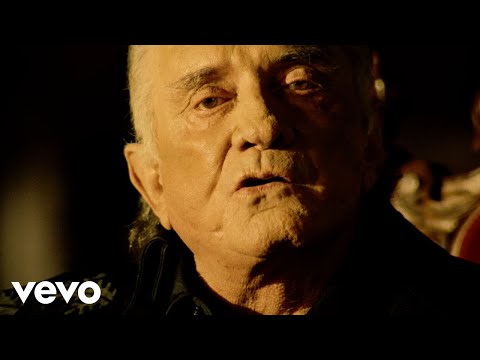
The music video gave us a very real look at Johnny Cash reflecting on his life at a time when he knew his days were numbered. He was 71 when it was shot at two locations: his home in Hendersonville, Tennessee and the nearby House Of Cash Museum, which had been closed for years.
The director, Mark Romanek, wanted an unfiltered look at Cash, so they made no effort to clean up his surroundings or put makeup on him. This, combined with archive footage, made for what amounts to a living obituary. It's powerful stuff, and it reached a huge audience, even playing on MTV, where it won the Video Music Award for Best Cinematography. (It was up for Best Male Video, which Justin Timberlake won. In his speech, he declared his win a "travesty," saying it should have gone to Cash, who like Timberlake is from Tennessee.) "Hurt" also won the Grammy for Best Short Form Video.
One of the most wrenching sections of the video is the appearance of Johnny's wife, June Carter Cash, who came down the stairs to watch the shoot. She was also very frail and died on May 15, 2003, a few months before Johnny.
In the liner notes to the album, Johnny wrote: "I am persuaded that nothing can separate me from my love of my God, my wife, and my music. Life is rich when I can come home, after hours in the studio, feeling as frayed as a hundred Big G strings, and curl up to June Carter. She's a soft, fluffy Mama Bear. That's when I give God a 'Thanks a lot, Chief.' Sometimes in the morning I'll say 'Good Morning' to the Awesome Presence, but sometimes I forget to."
Tom Petty's backing band, The Heartbreakers, were also elite session musicians (like Toto), and two of their members played on this track: Mike Campbell on acoustic guitar and Benmont Tench on organ, piano and Mellotron. Smokey Hormel also added acoustic guitar.
Rick Rubin used various Heartbreakers on many of the songs he recorded with Cash.
The music gets louder as the song progresses, so at the end it's almost downing out Cash's vocal. That was Rick Rubin's idea, making it sound like Cash was becoming overpowered by the din surrounding him as he neared the end.
The song won for Single Of The Year and Music Video Of The Year at the Country Music Association Awards (CMAs), which took place in 2003 two months after Cash died. American IV: The Man Comes Around also won Album Of The Year.