Hell Bent For Leather

Album: Hell Bent For Leather (1978)
Play Video

Songfacts®:

  • The phrase "hell bent for leather" became a maxim for Judas Priest, encapsulating their attitude that life should be lived with the throttle open. The song is about a mysterious rider who appears like a flash on his motorbike and is always faster than the rest.
  • Judas Priest guitarist Glenn Tipton was a riff-making machine when he came up with this one in the studio after laying down what would be another Priest classic, "Take On The World." When lead singer Rob Halford heard it, he hit on the phrase "hell bent for leather," which the band loved. Starting with that title, he fashioned the rest of the lyric.
  • Judas Priest was the first metal band to rock a leather-and-studs look, which came together in 1978 when they were trying to develop their image. The effort was spearheaded by lead singer Rob Halford and guitarist KK Downing, who thought a unified, signature look could help them get to the next level - they were confident their music was where it needed to be. They had leather outfits made in London for each band member, which evolved over time but were ready for prime time when they made the album. The song "Hell Bent For Leather" validated the look, which other hard rockers soon adapted.
  • The leather look is often associated with gay culture, and because Rob Halford is gay, many assume that was the intention, but it was not. "The biggest myth about this new stage gear is that I had somehow masterminded the image as a cover and a vent for my homosexuality - that I was getting a thrill from dressing onstage as I'd like to dress in the street, or the bedroom," he wrote in his memoir, Confess. "This is utter bollocks."

    It's worth noting that this was not a look most fans tried to emulate - it's expensive and totally impractical. But that was part of the point: Stage wear that you couldn't buy off the rack. You can't be Metal Gods if you're dressed like the mortals.
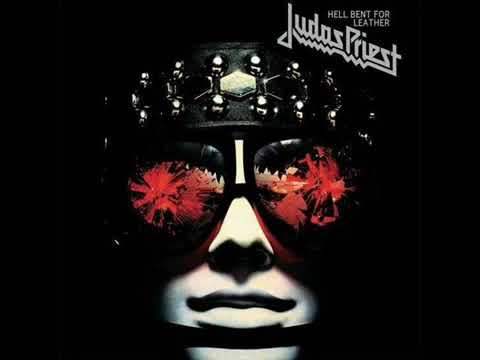
  • In America, Hell Bent For Leather is the title of the album, giving the song and the message even more heft. That wasn't the plan, though. The album was titled Killing Machine and released that way everywhere else, but the band's American label was wary of that title because of some recent school shootings, so they named it after this song. The band was steamed, but it ended up working out very well when their US fans took the phrase to heart.
  • This song is the foundation for one of the most famous set pieces in rock. In 1979, the band got more and more theatrical. Halford accessorized with a leather cap and bullwhip, which he would pretend to use on the audience. That year, he came up with the idea to enter the stage for "Hell Bent For Leather" on a motorcycle. He borrowed a bike from a Priest fan, parked it in the wings of the stage, then rode it onstage, revving it up as Tipton blasted out the riff for "Hell Bent For Leather." The crowd went bananas and it became a regular feature at Judas Priest concerts, at least those where they could get permission to do it.

    The song was never released as a single, but thanks to its place in live performances, is one of the most popular Judas Priest songs.
  • "Hell bent for leather" is a line in the 1959 Frankie Laine song "Rawhide," the theme song to the American TV series starring Clint Eastwood. It's not likely that Judas Priest saw the show, but they probably knew the song, which was a #6 hit in the UK.

Comments: 1

  • Dan Gillespy from Courtenay BcA perfect high octane Judas Priest classic biker song and a 100% pure headbanging classic and it did help inspire the thrash metal movement.
see more comments

Editor's Picks

Mark Arm of Mudhoney

Mark Arm of MudhoneySongwriter Interviews

When he was asked to write a song for the Singles soundtrack, Mark thought the Seattle grunge scene was already overblown, so that's what he wrote about.

Al Jourgensen of Ministry

Al Jourgensen of MinistrySongwriter Interviews

In the name of song explanation, Al talks about scoring heroin for William Burroughs, and that's not even the most shocking story in this one.

Robert DeLeo of Stone Temple Pilots

Robert DeLeo of Stone Temple PilotsSongwriter Interviews

Stone Temple Pilots bass player Robert DeLeo names the songs that have most connected with fans and tells the stories behind tracks from their Tiny Music album.

Carol Kaye

Carol KayeSongwriter Interviews

A top session musician, Carol played on hundreds of hits by The Beach Boys, The Monkees, Frank Sinatra and many others.

David Sancious

David SanciousSongwriter Interviews

Keyboard great David Sancious talks about his work with Sting, Seal, Springsteen, Clapton and Aretha, and explains what quantum physics has to do with making music.

Mike Campbell

Mike CampbellSongwriter Interviews

Mike is lead guitarist with Tom Petty & the Heartbreakers, and co-writer of classic songs like "Boys Of Summer," "Refugee" and "The Heart Of The Matter."