Groove Me

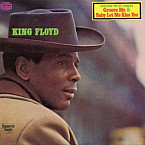
Album: King Floyd (1970)
Charted: 6
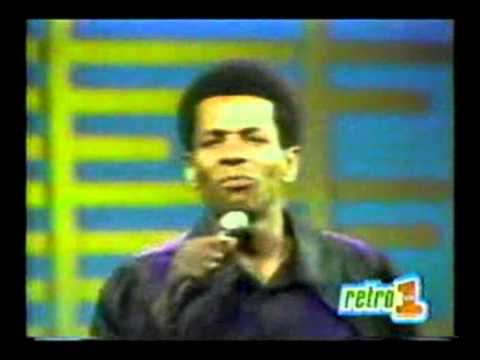
Play Video

Songfacts®:

  • If the young woman had stayed at her job, we might not have "Groove Me" today.

    Sometime in the late 1960s, King Floyd worked in a box factory in east Los Angeles. A college student worked on the floor less than 20 feet from him. She made her attraction obvious. "She'd just watch me and smile at me all day," Floyd told Rob Bowman in The Last Soul Company: The Malaco Records Story. "When I went to the water fountain, she would make it her purpose to come up to the water fountain."

    Floyd was too shy to engage the young woman, so he worked on a poem. By the time he finished it and worked up the pluck to give it to her, he discovered that she'd quit the job that very morning. But all was not lost: King Floyd adapted the poem into "Groove Me," his first single and biggest hit. His persona on the song is anything but shy: It finds him making his intentions quite clear!
  • After writing this song, King Floyd returned home to New Orleans and got a post office job. Less than a month later, he encountered Wardell Quezerque, the "Creole Beethoven," who was working as a staffer for Malaco Records. A bandleader and composer, Quezerque was also one of the city's most sought-after arrangers and producers. He kept working into the 2000s and produced Dr. John's Grammy-winning Goin' Back to New Orleans in 1992. He passed away in 2011.

    Quezerque convinced Floyd to record "Groove Me." Floyd wasn't new to the music industry, having been a house singer in a Bourbon Street bar and recording the album A Man in Love with Pulstar in 1969. The album didn't sell well, and Floyd gave up on music.

    They traveled to Jackson, Mississippi, on May 17, 1970, in a school bus. With them was Jean Knight and all the backing musicians needed to record. Malaco was on the verge of going belly-up. The group rushed into the studio and recorded several songs, among them "Groove Me" and Knight's "Mr. Big Stuff." Floyd did "Groove Me" in a single take.
  • Malaco thought the Floyd hit would come from "What Our Love Needs," another song he wrote and recorded, so they released it as a single with "Groove Me" as the B-side. A New Orleans disc jockey named George Vinnett gave airtime to "Groove Me" instead, and it caught fire across the South. Atlantic Records bought distribution rights, and a bona fide sleeper hit was born.
  • "Groove Me" spent a total of four weeks (not consecutive) weeks at #1 on the R&B chart and hit #6 on the Hot 100. Floyd's next single, "Baby Let Me Kiss You," reached #29 on the Hot 100. His last placing on that chart was "Woman Don't Go Astray" in 1972 at #53.
  • At the beginning of the song, King Floyd says, "Aw, sookie sookie now!" This is a reference to the 1966 Don Covay song "Sookie Sookie," later covered by Steppenwolf.
  • In 1978, The Blues Brothers worked Jamaican reggae into "Groove Me" and recorded a version on Briefcase Full of Blues.
  • Fern Kinney sang backing vocals on this track. She's also known for singing backup on "Misty Blue" and for her 1980 hit "Together We Are Beautiful." Kinney released a disco version of "Groove Me" in 1979 that reached #6 on the Dance chart.

Comments

Be the first to comment...

Editor's Picks

Dave Alvin - "4th Of July"

Dave Alvin - "4th Of July"They're Playing My Song

When Dave recorded the first version of the song with his group the Blasters, producer Nick Lowe gave him some life-changing advice.

Second Wind Songs

Second Wind SongsSong Writing

Some songs get a second life when they find a new audience through a movie, commercial, TV show, or even the Internet.

Jack Blades of Night Ranger and Damn Yankees

Jack Blades of Night Ranger and Damn YankeesSongwriter Interviews

Revisit the awesome glory of Night Ranger and Damn Yankees: cheesily-acted videos, catchy guitar licks, long hair, and lyrics that are just plain relatable.

Waiting For The Break of Day: Three Classic Songs About All-Nighters

Waiting For The Break of Day: Three Classic Songs About All-NightersSong Writing

These Three famous songs actually describe how they were written - late into the evening.

Jimmy Jam

Jimmy JamSongwriter Interviews

The powerhouse producer behind Janet Jackson's hits talks about his Boyz II Men ballads and regrouping The Time.

Donnie Iris (Ah! Leah!, The Rapper)

Donnie Iris (Ah! Leah!, The Rapper)Songwriter Interviews

Before "Rap" was a form of music, it was something guys did to pick up girls in nightclubs. Donnie talks about "The Rapper" and reveals the identity of Leah.