911

Album: Chromatica (2020)
Charted: 101
Play Video

Songfacts®:

  • Lady Gaga references her addictive and self-destructive behavior issues during this robotic house number.

    My biggest enemy is me ever since day one
    Pop a 911, then pop another one


    Gaga told Apple Music's Zane Lowe this song is about the antipsychotic medication she takes, which acts as an emergency reset for her. "It's because I can't always control things that my brain does," she explained. "I know that. And I have to take medication to stop the process that occurs."
  • Gaga takes a prescription drug called Olanzapine. The Mother Monster has battled mental issues since a traumatic teenage experience of being sexually assaulted by a music producer 20 years her senior. She details the mental problems that led to her taking antipsychotic medication on the song's first verse.

    Turnin' up emotional faders
    Keep repeating self-hating phrases
    I have heard enough of these voices
    Almost like I have no choice
    This is biological stasis
    My mood's shifting to manic places


    Olanzapine, sold under the trade name Zyprexa among others, is primarily used to treat schizophrenia and bipolar disorder.
  • Gaga wrote the song with:

    Her regular collaborator BloodPop, who served as Chromatica's principal producer.

    French DJ Madeon, who also worked with Gaga on her Artpop album.

    Songwriter Justin Tranter, whose other credits include Justin Bieber's "Sorry," Hailee Steinfeld's "Love Myself" and Selena Gomez's "Good For You."
  • 911 is the national emergency dial number in the United States. Other artists who have used it as a metaphor include Jordin Sparks and Tyler, the Creator.
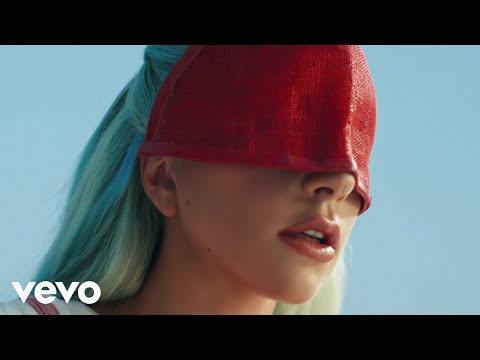
  • The video originated from director Tarsem Singh sharing a "25 year-old-idea" with Gaga, as her life story had spoken to him in a big way. The highly symbolic clip shows the singer imagining herself in a desert world. The scenes are revealed to be a hallucination and the visual ends with Gaga in the real world being treated by paramedics after being hurt in a car-bicycle accident. According to the songstress, the video concerns her "experience with mental health and the way reality and dreams can interconnect."
  • Throughout the video, Singh visually references The Color of Pomegranates, a Soviet art film about the life of a poet. Gaga explained on Instagram that the visual is "the poetry of pain."
  • Tarsem Singh's other video credits include R.E.M's "Losing My Religion" and En Vogue's "Hold On." He made his movie directorial debut in 2000 with the Jennifer Lopez film The Cell.
  • Singh told Entertainment Weekly he came up with the dream-like concept for the video in the early '90s and considered the concept for Massive Attack's 1998 single "Angel," but their schedules never worked.

    "I wanted to do it in Namibia in the sand dunes, but I'd already done The Cell [in sand], so the idea kind of went away," he said. "Then, I got '911.'"

Comments

Be the first to comment...

Editor's Picks

James Bond Theme Songs

James Bond Theme SongsMusic Quiz

How well do you know the 007 theme songs?

Dexys (Kevin Rowland and Jim Paterson)

Dexys (Kevin Rowland and Jim Paterson)Songwriter Interviews

"Come On Eileen" was a colossal '80s hit, but the band - far more appreciated in their native UK than stateside - released just three albums before their split. Now, Dexys is back.

Director Wes Edwards ("Drunk on a Plane")

Director Wes Edwards ("Drunk on a Plane")Song Writing

Wes Edwards takes us behind the scenes of videos he shot for Jason Aldean, Dierks Bentley and Chase Bryant. The train was real - the airplane was not.

Metallica

MetallicaFact or Fiction

Beef with Bon Jovi? An unfortunate Spandex period? See if you can spot the true stories in this Metallica version of Fact or Fiction.

Director Paul Rachman on "Hunger Strike," "Man in the Box," Kiss

Director Paul Rachman on "Hunger Strike," "Man in the Box," KissSong Writing

After cutting his teeth on hardcore punk videos, Paul defined the grunge look with his work on "Hunger Strike" and "Man in the Box."

Spooner Oldham

Spooner OldhamSongwriter Interviews

His keyboard work helped define the Muscle Shoals sound and make him an integral part of many Neil Young recordings. Spooner is also an accomplished songwriter, whose hits include "I'm Your Puppet" and "Cry Like A Baby."