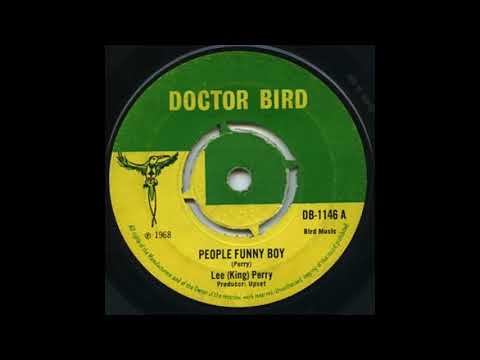
People Funny Boy

Album: People Funny Boy Various Artists (1968)
Play Video

Songfacts®:

  • Jamaican musician Lee "Scratch" Perry's musical career began in the late 1950s as a record seller for Clement Coxsone Dodd's sound system. After he recorded nearly 30 songs for the label, the pair fell out and Perry found a new home at Joe Gibbs' Amalgamated Records. Perry continued his recording career but, once again, financial problems caused conflict. After splitting with Gibbs he formed his own label, Upsetter, in 1968 and released this song as his first single. The tune was a scathing attack directed at Gibbs and it heralded a new era in Jamaican music. Though not the first reggae song to be released (musicologists often cite Larry Marshall's "Nanny Goat," from a few months earlier, as the original), this song sounded like no other record made. Featuring a fast, chuggy beat, it had an intrinsic Jamaican feel that eschewed the American soul stylings of the prevalent rock steady sound.
  • The song is also notable for its innovative use of a sample, in this case a crying baby. Perry explained in Q Magazine's 100 Songs That Changed The World how the cries coming from a Pocomania church, (an African-based religion similar to voodoo) was the inspiration. He said: "One night me walking past a Pocomania church and hear the people inside a wail. And me catch the vibration and say boy! Let's make a sound fe catch the vibration of them people!"
  • The song proved a huge hit for Perry in Jamaica and laid the foundation for him becoming the most in-demand producer in Jamaica until he suffered a breakdown in 1978. The music that The Wailers made with Perry between 1969 and 1971 and his production for such notable musicians such as Junior Murvin, The Congos and Max Romeo had everyone from Paul McCartney to Robert Palmer beating a path to his door. Perry now lives in Switzerland and continues recording and performing to enthusiastic audiences in Europe and North America.
  • Perry told the story of the song to Mojo magazine June 2010: "Me did have a friend named Andy Capp, him was working down by West Indies studio as an engineer, and me and him used to drink rum together at that time, and we share thoughts. Somewhere along the line we decided to make a song together, and we make 'People Funny Boy'; him used to do the radio jingles, and him have a record with a baby crying, so he want me to hear it, and when we listen to it, it's exactly like whilst we were talking about in the song, 'cos we was hungry, didn't have no food a yard, and the baby need food. So we used the baby crying in the song 'cos it matched with what goes on. It was a foreign recording, Andy was a jingle collector, so when me hear it, me say, 'It's really too serious, it's all about the song we're singing here now, ' funny people, and kids who are crying who don't have nothing."
  • Perry explained to Mojo the inspiration behind the rhythm, which some claim made it the first reggae record: "People who deal with spiritual vibration, like me, the spirit tell me exactly what to do, what instrument to use and how to play the bass line, so you tell the musicians exactly what you're hearing; when me hear it from the spirit world, me just tell the musicians what me hear, and it works. So that makes things very easy, when you're communicating with spiritual vibrations."

Comments

Be the first to comment...

Editor's Picks

Graham Parker

Graham ParkerSongwriter Interviews

When Judd Apatow needed under-appreciated rockers for his Knocked Up sequel, he immediately thought of Parker, who just happened to be getting his band The Rumour back together.
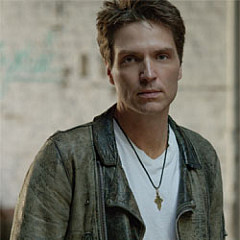
Richard Marx

Richard MarxSongwriter Interviews

Richard explains how Joe Walsh kickstarted his career, and why he chose Hazard, Nebraska for a hit.
Bob Dylan Lyric Quiz

Bob Dylan Lyric QuizMusic Quiz

Think you know your Bob Dylan lyrics? Take this quiz to find out.

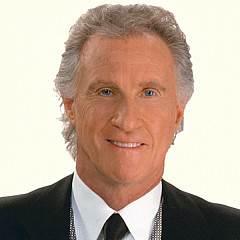
Bill Medley of The Righteous Brothers

Bill Medley of The Righteous BrothersSongwriter Interviews

Medley looks back on "Unchained Melody" and "You've Lost That Lovin' Feelin'" - his huge hits from the '60s that were later revived in movies.
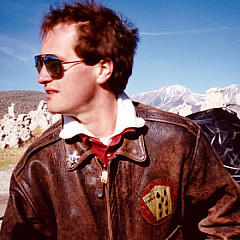
Director Nick Morris ("The Final Countdown")

Director Nick Morris ("The Final Countdown")Song Writing

Nick made some of the biggest videos on MTV, including "The Final Countdown," "Heaven" and "Don't Know What You Got (Till It's Gone)."
Lace the Music: How LSD Changed Popular Music

Lace the Music: How LSD Changed Popular MusicSong Writing

Starting in Virginia City, Nevada and rippling out to the Haight-Ashbury, LSD reshaped popular music.