Green Sand

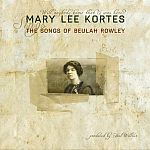
Album: Will Anybody Know That I Was Here: The Songs of Beulah Rowley (2023)
Play Video

Songfacts®:

  • According to Mary Lee Kortes, Beulah Rowley was a songwriter from the 1930s who died in a house fire when she was just 21. She wasn't recorded, but the sheet music from her songs ended up in a piano bench that Kortes' family bought at a flea market. Mary Lee discovered it when she was 10 years old and found them fascinating.

    Kortes, who was the frontwoman in the band Mary Lee's Corvette before going solo, created an entire album in the spirit of Rowley called Will Anybody Know That I Was Here: The Songs of Beulah Rowley. "Green Sand" is one of the tracks, written from Rowley's perspective.
  • Mary Lee Kortes told Songfacts the story behind "Green Sand":

    "This song was born in the Songs of Beulah Rowley creative playground. I was working on a number of songs and recordings for the project when Stephen Butler, a songwriting partner of mine, sent me a piece of music. I was absolutely captivated by it. The mood and chord changes immediately brought a melody to mind. I surrendered and started my favorite songwriting process.

    When I'm writing words to a melody I'm already hearing, I tend to believe in and be led by the intelligence and truth in the unconscious mind. (I do that when I don't have music too, just a few lyrics or a phrase or idea.) So I let myself free associate to Steve's chord progression and feel. For reasons I couldn't know, certain words and phrases having to do with envy and coveting — things we all feel at some point or another, or even regularly! — just poured out of me and felt true. The image "green sand" took hold.

    Putting it through the Beulah filter, it ended up being inspired by and alluding loosely to the story of Bonnie and Clyde. That's what started forming in my head as I was writing, images from that classic film. I never felt like this song wanted to be too literal or specific. It seemed to me that evoking an idea and feeling was more the mission for this tune."
  • Joe Jackson played piano on this song. "I wanted Joe Jackson to guest somewhere on the album because he'd been so supportive of the project, even played on my early demos," Kortes said. "This song ended up being the one. Lucky song! I love Joe's harmonies and piano playing on this. It added new dynamics to the unfolding of the music and story."
  • The song was produced by Hal Willner, who worked on many eclectic projects before dying from COVID in 2020. "When I got into the studio with Hal Willner and we started exploring arrangements and feels for all the Beulah songs, this one changed the most," Kortes said. "It had been a bit slower and darker, but Hal took it in a brighter direction."

Comments

Be the first to comment...

Editor's Picks

Jon Foreman of Switchfoot

Jon Foreman of SwitchfootSongwriter Interviews

Switchfoot's frontman and main songwriter on what inspires the songs and how he got the freedom to say exactly what he means.

Adele

AdeleFact or Fiction

Despite her reticent personality, Adele's life and music are filled with intrigue. See if you can spot the true tales.

Lori McKenna

Lori McKennaSongwriter Interviews

Lori's songs have been recorded by Faith Hill and Sara Evans. She's performed on the CMAs and on Oprah. She also has five kids.

Donnie Iris (Ah! Leah!, The Rapper)

Donnie Iris (Ah! Leah!, The Rapper)Songwriter Interviews

Before "Rap" was a form of music, it was something guys did to pick up girls in nightclubs. Donnie talks about "The Rapper" and reveals the identity of Leah.

Dave Edmunds

Dave EdmundsSongwriter Interviews

A renowned guitarist and rock revivalist, Dave took "I Hear You Knocking" to the top of the UK charts and was the first to record Elvis Costello's "Girls Talk."

Andy McClusky of OMD

Andy McClusky of OMDSongwriter Interviews

Known in America for the hit "If You Leave," OMD is a huge influence on modern electronic music.