Neil Sedaka

Neil Sedaka Artistfacts

  • March 13, 1939 - February 27, 2026
  • A Brill Building pop craftsman turned international comeback king, Neil Sedaka was born to Sephardic Jewish parents: his father was of Lebanese-Jewish descent and worked as a taxi driver, while his mother, an Ashkenazi Jew of Polish and Russian heritage, encouraged his musical talent from an early age. The household blended immigrant discipline with artistic aspiration.
  • Neil Sedaka showed musical promise so early that his second-grade choral teacher sent a note home urging his mother to get him piano lessons. His mother didn't have the money, so she took a part-time job at an Abraham & Straus department store for six months just to pay for a secondhand upright piano. It worked. In 1947, at age 8, Sedaka auditioned successfully for a scholarship to the Juilliard School of Music's Preparatory Division for Children, attending the prestigious school every Saturday.
  • While a student at Abraham Lincoln High School, Sedaka formed a doo-wop group called the Linc-Tones, later renamed The Tokens. Sedaka left in 1958 to focus on songwriting and a solo career, three years before The Tokens hit #1 with "The Lion Sleeps Tonight" in 1961 with a largely different lineup.
  • His songwriting partnership with Howard Greenfield began with Tin Pan Alley aspirations. They wanted to be the next Gershwin and Irving Berlin, writing polished, urbane songs, not rock and roll. That changed when they heard "Earth Angel (Will You Be Mine)" by The Penguins on a jukebox. "We were both turned on at the same time because we thought writing rock and roll songs would make us look cool," Sedaka admitted, "because I played Bach I was never popular."

    Greenfield initially thought the record sounded off-key. Eventually he came around, and the two became foundational architects of the Brill Building sound.
  • They were the first songwriters signed to Aldon Music by Don Kirshner and Al Nevins, launching what became the Brill Building hit factory. Between 1959 and 1963, Sedaka and Greenfield were responsible for around 40 million records sold, including "Calendar Girl," "Happy Birthday Sweet Sixteen," and "Stupid Cupid," which Connie Francis took into the Top 20.
  • When RCA was close to dropping Sedaka after a string of modest sellers, he did something very un-rock-and-roll: he studied the charts like homework. Analyzing what made the biggest hits tick, he wrote "Oh! Carol," addressing a former high school girlfriend named Carole Klein, later known as Carole King. Sedaka joked years later that they "dated for a few minutes." King answered with her own "Oh! Neil," but his version became the hit.
  • "Breaking Up Is Hard To Do" remains one of pop's rarest chart feats. Sedaka first recorded it as an uptempo hit in 1962. Years later, after singer Lenny Welch slowed it down in concert, Sedaka reimagined it as a ballad. His 1975 slow version reached the Top 10 again, making it the only song in pop history to hit the Billboard Top 10 twice in two entirely different arrangements by the same artist.
  • Shortly after the original release of "Breaking Up Is Hard To Do," Sedaka married his longtime sweetheart, Leba Strasberg. According to Rich Podolsky's Don Kirshner: The Man with the Golden Ear, when Sedaka proposed over the phone, Leba didn't believe him and asked to speak to Howard Greenfield. Greenfield got on the line and solemnly confirmed that yes, Neil was serious. They married on September 11, 1962. They remained together until his death in 2026.
  • The British Invasion nearly erased Sedaka from the American charts. By the late 1960s, his style seemed out of step with the Beatles era. The comeback came from an admirer: Elton John, who had grown up on Sedaka's records, signed him to Rocket Records in 1973, promising to make him a star again. The result was "Laughter In The Rain," which hit #1 in early 1975 after more than a decade away from the top.
  • Even when his voice wasn't on the radio, his pen often was. Captain & Tennille's "Love Will Keep Us Together," written by Sedaka and Greenfield, became one of the biggest singles of 1975 and won the Grammy for Record of the Year.
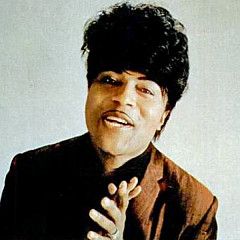
  • Sedaka embodied the clean-cut teen idol of the early '60s, with dark hair, tailored suits and narrow ties. By his '70s comeback, he'd loosened the look with open collars and softer stagewear, adapting visually as smoothly as he did musically.
  • Initially a dedicated pianist and songwriter, Sedaka only fell into singing at 19; an "afterthought" that anchored his presence on the Top 40 charts for four decades.
  • For Sedaka, his motivation ran deeper than chart positions. He said he believed his music healed people "emotionally and physically," describing letters from fans who treated his songs like medicine during hard times. For a songwriter who penned over 500 songs and contributed to hits across generations, that sense of service - melody as remedy - may be the most revealing fact of all.

Comments

Be the first to comment...

Editor's Picks

The Untold Story Of Fiona Apple's Extraordinary Machine

The Untold Story Of Fiona Apple's Extraordinary MachineSong Writing

Fiona's highly-anticipated third album almost didn't make it. Here's how it finally came together after two years and a leak.

Brian Kehew: The Man Behind The Remasters

Brian Kehew: The Man Behind The RemastersSong Writing

Brian has unearthed outtakes by Fleetwood Mac, Aretha Franklin, Elvis Costello and hundreds of other artists for reissues. Here's how he does it.

Glen Phillips of Toad the Wet Sprocket

Glen Phillips of Toad the Wet SprocketSongwriter Interviews

The "All I Want" singer went through a long depression, playing some shows when he didn't want to be alive.

Marvin Gaye

Marvin GayeFact or Fiction

Did Marvin try out with the Detroit Lions? Did he fake crazy to get out of military service? And what about the cross-dressing?

Steve Morse of Deep Purple

Steve Morse of Deep PurpleSongwriter Interviews

Deep Purple's guitarist since 1994, Steve talks about writing songs with the band and how he puts his own spin on "Smoke On The Water."

Songs in Famous Movie Scenes: '80s Edition

Songs in Famous Movie Scenes: '80s EditionMusic Quiz

You know the scenes - Tom Cruise in his own pants-off dance off, Molly Ringwald celebrating her birthday - but do you remember what song is playing?