Calendar Girl

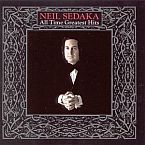
Album: All Time Greatest Hits (1960)
Charted: 8 4
Play Video

Songfacts®:

  • "Calendar Girl" was written by Neil Sedaka and his Brill Building songwriting partner Howard Greenfield, and became one of Sedaka's signature hits. It was also, at the time, his highest-charting hit on the Billboard charts, a personal record that would not be broken until 1962's "Breaking Up Is Hard To Do."

    "Calendar Girl" follows the very simple premise of linking each of the 12 months of the year to an endearing thing about your lover - the holidays associated with each month are featured prominently.
  • One of the things that might have limited the song's appeal in other countries was that the holidays and cultural themes are very US-specific. They don't celebrate Thanksgiving or July 4th outside the US, so there goes those two. Easter isn't always associated with bunnies in other countries. And not all countries graduate students in June. Surprisingly, even the birthday reference ("Light the candles at your sweet sixteen") is US-specific: in North America birthdays tend to be evenly distributed throughout the year except for a spike in late September and early October. Count nine months back from that and you get both Christmas and the longest nights of the year, when nobody wants to be alone and so even the scrungiest of us have a chance at romance, even if it's just for one night...
  • The idea of a "calendar girl" comes from pin-up calendars. Pin-up models are an old media form common to North America throughout the 20th century, starting from about 1890 and panning out about in the 1970s, when mass-produced media and more liberal social standards meant both that we could freely share images of women in a lot less than a swimsuit, and the resulting fare would not be something you could pin over your desk at work (unless your boss is extremely open-minded). There's a direct relation between pin-ups and centerfolds, too, with the earliest centerfolds being intended for use as pin-ups. Of course, commercial sponsorship and pin-ups go hand in hand, so early models would typically be sporting some brand of product. You still see this in some trades and industries. Next time your car's in the shop, check out the wall decorations around your mechanic's toolbench and there'll probably be a poster of some scantily clad model brandishing an impact wrench like she's going to change your fuel pump and won't mind getting greasy while she's at it.
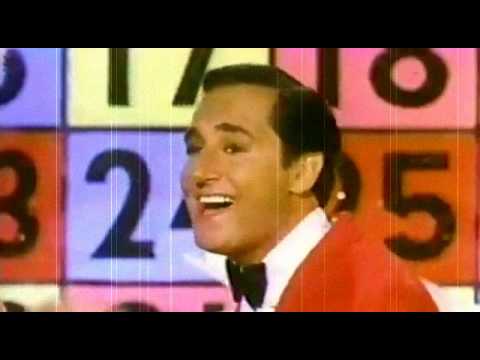
  • One of the very first music videos was the one Sedaka make for "Calendar Girl." Many movies staged performance numbers that could qualify as videos, and Ricky Nelson sang "Travelin' Man" over travel footage on The Adventures Of Ozzie And Harriet, but Sedaka's video was a standalone production made for video jukeboxes that were showing up around Europe. The company that made these machines, Scopitone, commissioned the videos so they would have something to show. Sedaka's was one of the most intricate, and certainly one of the most entertaining.

    Scopitones didn't didn't show up in America until 1964. They were placed in bars, so footage of beautiful women went over well. Sedaka's video, made in 1966, is pure cheesecake, with four blonde beauties playing the calendar girls for each verse, dressed in male-fantasywear like showgirl or Playboy bunny (for April, because Easter). Sedaka does a lot of leering in the video, but it's far more campy than lascivious. Late in his career, Sedaka played the video at his concerts, which always went over well with his audience.
  • "Calendar Girl" has been an absolute standard for oldies' radio stations, seemingly playing once a day at least. It's also popped up in various media including a variation of "calendar cat" for Purina Cat Chow commercials.

Comments: 1

  • Barry from Sauquoit, NyOn February 13th 1961, "Calendar Girl" by Neil Sedaka peaked at #4 (for 1 week) on Billboard's Hot Top 100 chart; it had entered the chart on December 13th, 1960 at position #100 and spent 15 weeks on the Top 100 (and for 5 of those 15 it was on the Top 10)...
    Between 1958 and 1980 he had thirty Top 100 records; with nine making the Top 10 and three reaching #1 ("Breaking Up Is Hard To Do" for 2 weeks in 1962, "Laughter In The Rain" for 1 week in 1975, and "Bad Blood" for 3 weeks also in 1975)...
    Mr. Sedaka will celebrate his 75th birthday next month on March 13th (2014).
see more comments

Editor's Picks

Sarah Brightman

Sarah BrightmanSongwriter Interviews

One of the most popular classical vocalists in the land is lining up a trip to space, which is the inspiration for many of her songs.

Al Kooper

Al KooperSongwriter Interviews

Kooper produced Lynyrd Skynyrd, played with Dylan and the Stones, and formed BS&T.

Reverend Horton Heat

Reverend Horton HeatSongwriter Interviews

The Reverend rants on psychobilly and the egghead academics he bashes in one of his more popular songs.

90210 to Buffy to Glee: How Songs Transformed TV

90210 to Buffy to Glee: How Songs Transformed TVSong Writing

Shows like Dawson's Creek, Grey's Anatomy and Buffy the Vampire Slayer changed the way songs were heard on TV, and produced some hits in the process.

Van Dyke Parks

Van Dyke ParksSongwriter Interviews

U2, Carly Simon, Joanna Newsom, Brian Wilson and Fiona Apple have all gone to Van Dyke Parks to make their songs exceptional.

Richard Marx

Richard MarxSongwriter Interviews

Richard explains how Joe Walsh kickstarted his career, and why he chose Hazard, Nebraska for a hit.