Albuquerque

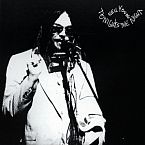
Album: Tonight's the Night (1975)
Play Video

Songfacts®:

  • "The most noticeable feature of this track is how disciplined Young's vocal sounds," Johnny Rogan writes in The Complete Guide to the Music of Neil Young. "It's as if he's sobered up completely, even though the lyrics would have sounded equally appropriate if he had sung them completely out of tune."

    Rogan's comments are looking at the song within the context of the rest of Tonight's The Night. Most of the album is filled with rough instrumentation and angry, grief-filled vocals - that's the album's cherished calling card to this day. Compared to those other roughhewn tracks, "Albuquerque" is clean and measured.
  • The song sees Young returning to a theme that has filled his music from very early on: the vapidity of fame. It's something he seems to struggle with even more than most other musicians. Or, at least, it's something he's chosen to sing about more often than most. It may in fact be the most common theme of all his music, besides obvious stuff like heartbreak and love.

    In "Albuquerque," Young is thinking about renting a car and driving from Albuquerque, New Mexico, to Santa Fe, just to be alone and "independent from the scene." He never tells us why he's in Albuquerque to begin with, but he does tell us he wants to roll a joint and rent a car and stop to eat some "fried eggs and country ham."

    The "country ham" bit is kind of interesting, because country ham is a food popular in the southeast, not so much in the southwest. It's probably just a simple oversight on Young's part, but it may also reveal another common thread in Young's music: the escape into rural simplicity as a cure for the craziness and fakeness of modern day life.
  • Though there's nothing directly tying it to this song, Neil Young has an interesting history with Albuquerque that predated the recording of Tonight's the Night by eight years. In 1967, his band The Mynah Birds (which included Rick James) broke up, and he headed south from Toronto in a hearse with bass player Bruce Palmer. He was looking for, among other things, Stephen Stills, with whom he wanted to start a band. This was no fun-times journey. They took turns driving around the clock in a vehicle of uncertain reliability.

    The drive filled them with so much anxiety that Young had a sort of nervous collapse in Albuquerque. He was bedridden for three or four days in the house of some sympathetic college students, according to his account in Don't Be Denied by John Einarson. He finally recovered, and they continued on to Los Angeles. Then, not finding Stills there, they went to San Francisco, where Young and Stills did indeed find each other and birth the Buffalo Springfield, the band that stepped Young up to a higher tier and left a powerful imprint on '60s music.

Comments

Be the first to comment...

Editor's Picks

Stephen Christian of Anberlin

Stephen Christian of AnberlinSongwriter Interviews

The lead singer/lyricist for Anberlin breaks down "Impossible" and covers some tracks from their 2012 album Vital.

Emilio Castillo from Tower of Power

Emilio Castillo from Tower of PowerSongwriter Interviews

Emilio talks about what it's like to write and perform with the Tower of Power horns, and why every struggling band should have a friend like Huey Lewis.

Art Alexakis of Everclear

Art Alexakis of EverclearSongwriter Interviews

The lead singer of Everclear, Art is also their primary songwriter.

Graham Bonnet (Alcatrazz, Rainbow)

Graham Bonnet (Alcatrazz, Rainbow)Songwriter Interviews

Yngwie Malmsteen and Steve Vai were two of Graham's co-writers for some '80s rock classics.

They Might Be Giants

They Might Be GiantsSongwriter Interviews

Who writes a song about a name they found in a phone book? That's just one of the everyday things these guys find to sing about. Anything in their field of vision or general scope of knowledge is fair game. If you cross paths with them, so are you.

Who's Johnny, And Why Does He Show Up In So Many Songs

Who's Johnny, And Why Does He Show Up In So Many SongsSong Writing

For songwriters, Johnny represents the American man. He has been angry, cool, magic, a rebel and, of course, marching home.