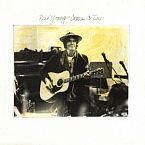


Four Strong Winds

Album: Comes A Time (1978)
Charted: 57 61
Play Video

Songfacts®:

  • "Four Strong Winds" is a song written by Canadian singer Ian Tyson. This is his most famous song, and perhaps Neil Young's performance of it is the most famous version. However, don't neglect the fact that Tyson has had a well-rounded career in his own right, scoring many charting hits on the Canadian country charts from 1979 through 1996.
  • This song, being a mostly melancholy meditation on love lost with a fleeting hope for reunion but a pessimistic expectation, is an uncharacteristic downer for Neil Young at this stage. The album Comes A Time was a return to Young's Harvest style of folk/country rock.
    Ironically, Young had just split with Nicolette Larson when he began touring the album, but he was to meet Pegi Morton while she was waitressing at a diner near his ranch. They got married and at last Young had the woman he would settle down with. Some of the story of how they met is covered in "T-Bone."
  • Young was at the height of his eccentricity (well, one of them, anyway) around the time of this album's release; he discovered a flaw in the album after it was released and paid out of his own pocket to have the 200,000 LPs recalled. His father, Scott Young, reminisces in his memoir Neil and Me about the recalled LPs stacked in a storage building: "Each case of albums had been fired at with a rifle, piercing each record and making it unusable."

    In a March 2014 interview with Rolling Stone, Young revealed that he used the huge pile of Comes a Time albums as shingles for a barn roof.
  • The book Neil Young: Long May You Run: The Illustrated History gives us another Neil Young anecdote: When he was putting together the film Human Highway, he wanted the members of the band Devo to take part. Devo bassist Gerald Casale remembers, "When we met him, we just thought he was the grandfather of granola. And as soon as we talked to him, we realized all our perceptions of him were wrong. He was really far out. I mean really loopy, almost like a mad scientist." Now picture Devo at the height of their "Whip It" fame, in the Energy Dome hats and black wifebeater shirts, describing somebody else as "far out" and "loopy."
  • A Top 10 single for Ian Tyson and his then-fiancé Sylvia in Canada in October 1963, this became the title song of Ian and Sylvia's album the following year.
  • Other successful covers include a country version by Bobby Bare in 1964, which reached #3 on the country chart in early 1965, a Norwegian version: "Mot ukjent sted" by The Vanguards and a Swedish version: "Mot okänt land" by The Hep Stars, featuring keyboardist Benny Andersson later of ABBA. The latter two were both big hits in their native countries in the mid 1960s.

    In 2005 a recording of the song by Johnny Cash was posthumously released on his American V album.

Comments: 1

  • Stephen from Calgary, Alberta CanadaLet's not forget that Neil learned the song from a jukebox in Falcon Lake, Manitoba CANADA. A Canadian classic since the 1960s!
see more comments

Editor's Picks

Stephen Christian of Anberlin

Stephen Christian of AnberlinSongwriter Interviews

The lead singer/lyricist for Anberlin breaks down "Impossible" and covers some tracks from their 2012 album Vital.

Emilio Castillo from Tower of Power

Emilio Castillo from Tower of PowerSongwriter Interviews

Emilio talks about what it's like to write and perform with the Tower of Power horns, and why every struggling band should have a friend like Huey Lewis.

Art Alexakis of Everclear

Art Alexakis of EverclearSongwriter Interviews

The lead singer of Everclear, Art is also their primary songwriter.

Graham Bonnet (Alcatrazz, Rainbow)

Graham Bonnet (Alcatrazz, Rainbow)Songwriter Interviews

Yngwie Malmsteen and Steve Vai were two of Graham's co-writers for some '80s rock classics.

They Might Be Giants

They Might Be GiantsSongwriter Interviews

Who writes a song about a name they found in a phone book? That's just one of the everyday things these guys find to sing about. Anything in their field of vision or general scope of knowledge is fair game. If you cross paths with them, so are you.

Who's Johnny, And Why Does He Show Up In So Many Songs

Who's Johnny, And Why Does He Show Up In So Many SongsSong Writing

For songwriters, Johnny represents the American man. He has been angry, cool, magic, a rebel and, of course, marching home.