Album: The Firstborn Is Dead (1985)
Play Video

Songfacts®:

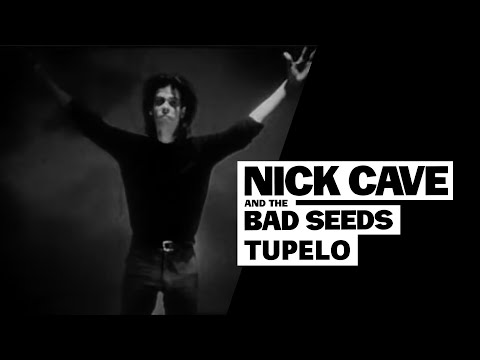
  • Nick Cave & the Bad Seeds' "Tupelo" tells the story of Elvis Presley's birth in the strangest way possible. In other words, the only way Nick Cave & the Bad Seeds know how to do anything.

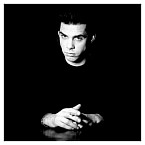
    Elvis was born in Tupelo, Mississippi, in 1935 along with a stillborn twin named Jesse Garon. That twin is referenced in the title of the album on which this song appears: The Firstborn is Dead. It was the Seeds' second album.
  • In "Tupelo," the pre-Elvis city of Tupelo is presented as a place assailed by an apocalyptic storm that may be Satan himself in weather form:

    And black rain come down
    The black rain come down
    The black rain come down
    Water, water everywhere
    Where no bird can fly, no fish can swim
    Where no bird can fly, no fish can swim
    No fish can swim
    Until the King is born
    Until the King is born


    Only the birth of the King can save them. Elvis was known as the King of Rock and Roll. Eventually, just "the King."

    Cave is having fun with this hyperbolic song, but there's a measure of truth to it. Elvis was both a cultural sledgehammer and a beacon, depending on your starting perspective. His overt sexuality and blood-thumping performances were Satanic to conservative-leaning folks, a threat to their Christian ethos of self-restraint and chastity. To the youth, Elvis was a liberator. And, to the rock stars of the '60s, Elvis was the one who started it all. Bob Dylan had a breakdown of sorts when Elvis died, if that's anything of an indication of his significance to rock.

    The Greatest Generation won World War II through self-sacrifice, personal discipline, and pragmatism. Those qualities felt oppressive to their children, the Boomers, who simultaneously inherited the greatest store of discretionary wealth that any American generation had ever seen. Those kids saw Elvis as a savior showing the way out of the dark, passionless lives their towns promised, and they had pocket money to bring him home.
  • Cave based the song on "Tupelo Blues" by John Lee Hooker. Hooker's version is a straightforward tale about a flood in Tupelo.
  • Songwriting credits go to Cave and his Seeds collaborators Mick Harvey and Barry Adamson.
  • "Tupelo" was the Seeds' second single. It carried forward the theme of their first, a cover of Elvis' "In The Ghetto."
  • A 1986 interview by Mat Snow for New Musical Express states that Cave came to find fault with the gruffness of his vocals on this song. Snow doesn't give any detail beyond that.
  • This was the only single released off The Firstborn is Dead album. The B-side was "The Six Strings That Drew Blood."
  • "Tupelo" hit #1 on the UK Indie Chart. One of Cave's earlier efforts, it remains one of his most lauded. New Musical Express, with whom Cave long had something of a rivalry (or at least a resentment), ranked it the fifth best song of 1985. Mojo ranked it as his fourth best, and Far Out as his sixth.

Comments

Be the first to comment...

Editor's Picks

Graham Nash

Graham NashSongwriter Interviews

Graham Nash tells the stories behind some of his famous songs and photos, and is asked about "yacht rock" for the first time.

Ralph Casale  - Session Pro

Ralph Casale - Session ProSongwriter Interviews

A top New York studio musician, Ralph played guitar on many '60s hits, including "Lightnin' Strikes," "A Lover's Concerto" and "I Am A Rock."

Rob Halford of Judas Priest

Rob Halford of Judas PriestSongwriter Interviews

Rob Halford dives into some of his Judas Priest lyrics, talking about his most personal songs and the message behind "You've Got Another Thing Comin'."

Corey Hart

Corey HartSongwriter Interviews

The Canadian superstar talks about his sudden rise to fame, and tells the stories behind his hits "Sunglasses At Night," "Boy In The Box" and "Never Surrender."

Incongruent Opening Acts

Incongruent Opening ActsSong Writing

Here's what happens when an opening act is really out of place with the headliner, like when Beastie Boys opened for Madonna.

Edwin McCain

Edwin McCainSongwriter Interviews

"I'll Be" was what Edwin called his "Hail Mary" song. He says it proves "intention of the songwriter is 180 degrees from potential interpretation by an audience."