Crazy Love, Vol. II

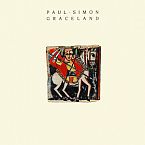
Album: Graceland (1986)
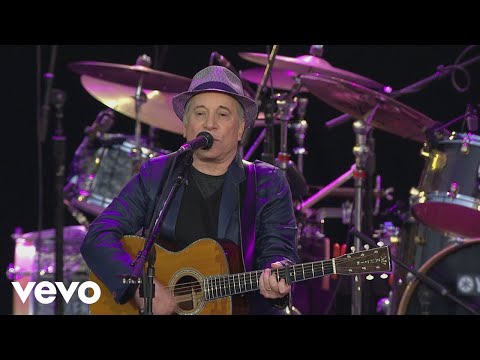
Play Video

Songfacts®:

  • Paul Simon started recording this song when he went to South Africa in 1985. He had been listening to a bootleg tape of music from the country, and wanted those sounds for his Graceland album. He recorded with dozens of musicians in his 17 days there, and he had a great experience with members of a popular South African group called Stimela - drummer Isaac Mtshali and guitarist Ray Phiri. When Simon returned to America, Mtshali and Phiri joined him for more recording sessions (this time at The Hit Factory studios) and a Saturday Night Live appearance. Bits of the South African sessions were edited together with the New York recordings to complete the track. Simon says that the song ended up sounding more like the music of Malawi and Zimbabwe, rather than South Africa.
  • Paul Simon isn't big on political lyrics, so despite the myriad political issues he saw in South Africa, he wrote lyrics for the Graceland tracks that told little stories (this one about a love gone bad), and more importantly, matched the music. This wasn't easy, and Simon became frustrated when he couldn't get the lyrics to fit. The breakthrough came when he listened to the tracks again. In the Under African Skies documentary, he said, "I realized that the guitar part was playing a different symmetry than I assumed, and the bass was doing something that was much more important, and I might be better off following what the bass was doing. I started thinking about the lyrics and what effect that would have on storytelling, and I began to raise the bar on my own writing."
  • As Simon explained in an interview with SongTalk magazine, there are two reasons for the "Vol. II" in the title. One is that Simon wanted to differentiate his "Crazy Love" from the Van Morrison song of the same name. The other is that he is talking about a love that has started and stopped more than once.
  • The same guy who played the pennywhistle on "You Can Call Me Al" played soprano saxophone on this song. His name is Morris Goldberg, and he's a white South African who had moved to New York.
  • The opening line mentions Fat Charlie the Archangel. This character came completely out of nowhere. Says Simon: "It doesn't represent anyone."
  • In the US, this was released as the B-side to "The Boy in the Bubble." In the UK, it was the B-side to "Graceland."

Comments: 4

  • AnonymousI agree with John from Guildford, England. I think this song is totally autobiographical. Graceland came out in the wake of his and Carrie Fisher’s divorce (“the way she brushed her hair from her forehead”). The lyrics seem to suggest a guy who himself doesn’t understand exactly what’s happening to him (“somebody could walk into this room and say your life is on fire”). I don’t mind if Paul doesn’t want to own up to being Charlie- in fact, there’s a lot about Charlie that I myself can relate to.
  • John from Guildford, EnglandI wonder whether Fat Charlie The Archangel is partly Paul. If you look at pictures and videos of him around this time, he had certainly put on weight! And an archangel is a being next to God, which might be the opinion of some! (Or maybe it's a joke reference to Paul's opinion of himself!). And then there's the reference to his life being all over the evening news, which would apply to Paul. But I'm probably wrong about all this...!
  • Randi from West Boylston, MaConsidering his love life, he had good fodder for this song!
  • Dave from Cardiff, WalesActually, "The Boy In The Bubble" did chart - it peaked at No.21 in the UK in late 1986 as the follow-up to "You Can Call Me Al"
see more comments

Editor's Picks

Pam Tillis

Pam TillisSongwriter Interviews

The country sweetheart opines about the demands of touring and talks about writing songs with her famous father.

Rock Stars of Horror

Rock Stars of HorrorMusic Quiz

Rock Stars - especially those in the metal realm - are often enlisted for horror movies. See if you know can match the rocker to the role.

Frankie Valli

Frankie ValliSong Writing

An interview with Frankie Valli, who talks about why his songs - both solo and with The Four Seasons - have endured, and reflects on his time as Rusty Millio on The Sopranos.

Part of Their World: The Stories and Songs of 13 Disney Princesses

Part of Their World: The Stories and Songs of 13 Disney PrincessesSong Writing

From "Some Day My Prince Will Come" to "Let It Go" - how Disney princess songs (and the women who sing them) have evolved.

Kip Winger

Kip WingerSongwriter Interviews

The Winger frontman reveals the Led Zeppelin song he cribbed for "Seventeen," and explains how his passion for orchestra music informs his songwriting.

Stephen Christian of Anberlin

Stephen Christian of AnberlinSongwriter Interviews

The lead singer/lyricist for Anberlin breaks down "Impossible" and covers some tracks from their 2012 album Vital.