

The Words That Maketh Murder

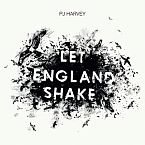
Album: Let England Shake (2011)
Play Video

Songfacts®:

  • This bluesy meditation on the horrors of war is a single from Let England Shake, the eighth studio album by English singer-songwriter PJ Harvey. The songs were written between late 2007 and 2008, recorded over a five-week period and were motivated by the ongoing conflicts in the world.
  • The lyrics are a harrowing portrait of the obscenity of war and are awash with brutal scenes. "I've seen and done things I want to forget," Harvey sings, "I've seen soldiers fall like lumps of me-ee-eat." At the end of the song she and collaborator John Parish question, "What if I take my problem to the United Nations?" "My whole proviso for my viewpoint for this record came about from wondering if there was such a post as Official War Song Correspondent," Harvey told NME. "Because I know there are war poets and war artists, and I thought well, where are the war songwriters."
  • Much of the lyrical content on Let England Shake is very descriptive, even shocking, Harvey told The Sun about her writing process for the album: "I come from a visual arts background and I still paint and draw a lot. All of the songs have a filmic quality and that comes from the fact I almost see the song I'm trying to write. The image comes first. I just have to look at it and write down what I'm seeing."
  • The "What if I take my problem to the United Nations?" line was inspired by by Eddie Cochran's 1958 song "Summertime Blues," where he sings, "Gonna take by problem to the United Nations." Cochran's lyric was hyperbole, but in Harvey's song it becomes sincere, as the United Nations is exactly the place to address a global conflict.
  • Like other tracks on the album, the upbeat music contrasts the dark lyrical content. "I knew that I wanted the music to offset the weight of the words," Harvey told Pitchfork. "That was very important. I wanted the music to be full of energy and to be very uplifting and unifying, almost insightful in its creation of energy. It took me a long time to find out how to sing such words because to sing it in the wrong voice would have given it the wrong feeling-- maybe too self-important and dogmatic. I wanted the songs to be much more ambiguous than that. This was the way that the language was best moved from lip to ear."

Comments

Be the first to comment...

Editor's Picks

Facebook, Bromance and Email - The First Songs To Use New Words

Facebook, Bromance and Email - The First Songs To Use New WordsSong Writing

Where words like "email," "thirsty," "Twitter" and "gangsta" first showed up in songs, and which songs popularized them.

Stand By Me: The Perfect Song-Movie Combination

Stand By Me: The Perfect Song-Movie CombinationSong Writing

In 1986, a Stephen King novella was made into a movie, with a classic song serving as title, soundtrack and tone.

Adele

AdeleFact or Fiction

Despite her reticent personality, Adele's life and music are filled with intrigue. See if you can spot the true tales.

Ian Anderson: "The delight in making music is that you don't have a formula"

Ian Anderson: "The delight in making music is that you don't have a formula"Songwriter Interviews

Ian talks about his 3 or 4 blatant attempts to write a pop song, and also the ones he most connected with, including "Locomotive Breath."

John Lee Hooker

John Lee HookerSongwriter Interviews

Into the vaults for Bruce Pollock's 1984 conversation with the esteemed bluesman. Hooker talks about transforming a Tony Bennett classic and why you don't have to be sad and lonely to write the blues.

Al Jourgensen of Ministry

Al Jourgensen of MinistrySongwriter Interviews

In the name of song explanation, Al talks about scoring heroin for William Burroughs, and that's not even the most shocking story in this one.