Soul Bossa Nova

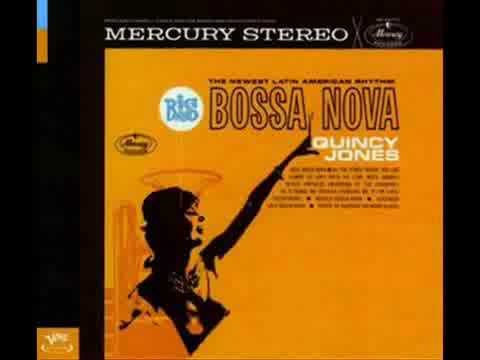
Album: Big Band Bossa Nova (1962)
Play Video

Songfacts®:

  • Bossa nova music was trending in the early '60s, with many artists blending the style with their chosen genres; Ella Fitzgerald did "Stardust Bossa Nova," Lou Monte did "Bossa Nova Italiano," and Quincy Jones did an entire album called Big Band Bossa Nova. The first track was "Soul Bossa Nova," which despite the title, is more of a mashup of classical music than soul.
  • This is best known as the theme song for the Austin Powers movies, which star Mike Myers as a spy from the '60s who emerges in modern times. The trilogy of films (International Man of Mystery - 1997, The Spy Who Shagged Me - 1999, Goldmember - 2002) are spoofs on the James Bond movies, with "Soul Bossa Nova" standing in for the iconic orchestral theme by John Barry.

    The first James Bond movie was Dr. No in 1962, the same year "Soul Bossa Nova" was released. And just as Barry's theme became associated with the debonair James Bond, Jones' song instantly evokes the frolicsome Austin Powers and his many catch phrases.
  • Quincy Jones recalled in a 2010 interview with Billboard magazine: "I wrote that in 1962 in 20 minutes for the Big Band Bossa Nova album right after we left Brazil with Dizzy Gillespie, when the bossa nova first started. And it won't go away."
  • Even in 1962, Quincy Jones had access to many top-tier musicians. For "Soul Bossa Nova," he called in Roland Kirk for the flute solo and Lalo Schifrin for piano (Schifrin did the theme song for the 1966 Mission: Impossible TV series). Other musicians on the track are:

    Chris White - bass
    Rudy Collins - drums
    Jerome Richardson - flutes, woodwinds
    Carlos Gomez, Jack Del Rio, José Paula - percussion
  • Quincy Jones got his first soundtrack gig two years later when he was hired by director Sidney Lumet for the 1964 film The Pawnbroker, starring Rod Steiger. "Soul Bossa Nova" was included in that film, which set Jones up as a soundtrack superstar. He worked on about two dozen more movies, including The Italian Job (1969) and The Color Purple (1985).
  • Jones recorded this at Phil Ramone's A&R Studios in Manhattan, where "The Girl From Ipanema" was recorded the following year. Ramone served as engineer at these sessions; he went on to produce most of Billy Joel's albums.
  • "Soul Bossa Nova" was used as the theme to a Canadian game show called Definition, which ran from 1974 to 1989.
  • This track has been sampled a number of times, including by The Dream Warriors for their 1991 track "My Definition Of a Boombastic Jazz Style," and by Ludacris for "Number One Spot" in 2004.
  • Jones recorded an updated version called "Soul Bossa Nostra" for his 2010 album Q Soul Bossa Nostra with the help of Ludacris, a cappella group Naturally 7, and R&B singer-songwriter Rudy Currence.

Comments: 3

  • Graham from Windsor, Nsw, AustraliaThe Dream Warriors were Canadian, which explains where they heard the piece, as the intro for the "Definition" TV show
  • Max from Madrid, SpainI remember it simply for being Austin Powers' theme music.
  • Cj from Stockholm SwedenIt is a great peace of music. Pls mind you the first soundtrack gig Mr Jones had was a film by director Arne Sucksdorf "The boy in the tree" in 1961 in Sweden.
see more comments

Editor's Picks

Randy Newman

Randy NewmanSongwriting Legends

Newman makes it look easy these days, but in this 1974 interview, he reveals the paranoia and pressures that made him yearn for his old 9-5 job.

Ralph Casale  - Session Pro

Ralph Casale - Session ProSongwriter Interviews

A top New York studio musician, Ralph played guitar on many '60s hits, including "Lightnin' Strikes," "A Lover's Concerto" and "I Am A Rock."

Gary Louris of The Jayhawks

Gary Louris of The JayhawksSongwriter Interviews

The Jayhawks' song "Big Star" has special meaning to Gary, who explains how longevity and inspiration have trumped adulation.

Tim McIlrath of Rise Against

Tim McIlrath of Rise AgainstSongwriter Interviews

Rise Against frontman Tim McIlrath explains the meanings behind some of their biggest songs and names the sci-fi books that have influenced him.

Is That Song Public Domain?

Is That Song Public Domain?Fact or Fiction

Are classic songs like "Over The Rainbow" and "Take Me Out to the Ballgame" in the public domain?

George Harrison

George HarrisonFact or Fiction

Did Eric Clapton really steal George's wife? What's the George Harrison-Monty Python connection? Set the record straight with our Fact or Fiction quiz.