This incendiary song makes the point that some members of the US police force were, and possibly still are, members of the Ku Klux Klan ("Some of those who wear forces are the same that burn crosses"). How legitimate can a power structure or a religion be when the people that compose the operation are in a dark, warped mindset?
>>>
Suggestion credit:
Tim - Pittsburgh, PA
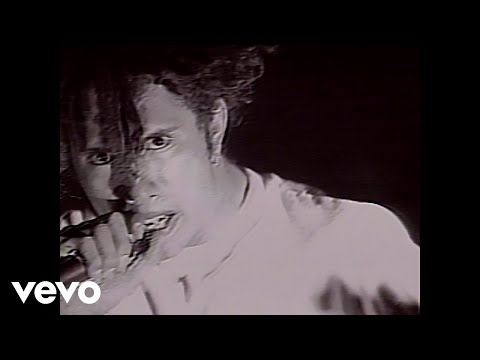
Rage Against The Machine were built on rebellion and riffs. "Killing In The Name" was their first single and remains their best-known song; it's a great example of what they stood for.
The four members were aligned in activism, with lead singer Zack de la Rocha articulating their anger through his lyrics. When they got together in 1991, they quickly made a 12-song cassette tape they sold at shows, which included an early version of "Killing In The Name." Thanks to the grunge movement, rock bands with chips on their shoulders were
all the... rage, so they got lots of offers. They chose Epic because the label offered creative freedom, which they used on their 1992 self-titled debut album - it's filled with furious protest songs.
Their live shows were very intense and built a buzz, particularly after they played Lollapalooza in September 1992. By the summer of 1994 the album crossed a million in sales. Rage stuck to their guns with an equally provocative second album,
Evil Empire, in 1996, which debuted at #1. After two more albums, Zack de la Rocha left the band in 2000 over conflict with the other members. They vowed to replace him, but their replacement, Chris Cornell (from Soundgarden), insisted they become a new band, thus Audioslave was formed.
Rage never released more new music but were active again as a live act from 2007-2011 and again in 2022. They made the Rock And Roll Hall Of Fame in 2023 and officially disbanded in 2024.
The song is very repetitive, with two sections where Zack de la Rocha repeats the line, "Now you do what they told ya," 12 times. At the end, he rises up to fight the power, screaming, "F--k you, I won't do what you tell me," 16 times. His stance on authority is pretty clear.
When police ordered the crowd to disperse after a free Rage concert in Los Angeles in protest of the 2000 Democratic National Convention, many didn't do what they told them, and the riot cops moved in, violently scattering the concertgoers with rubber bullets and pepper spray. Rage closed their set with this song, so it's not too surprising there was a confrontation.
Rage Against The Machine closed their set at Woodstock '99 with a performance of "Killing In The Name" where they burned an American flag onstage. It wasn't the only thing to burn at the festival, which devolved into mayhem by the last day (Rage played the second-to-last day).
Rolling Stone put "Killing In The Name" #24 on their 2008 list of the Greatest Guitar Songs. In that issue, they explained the song's backstory.
Tom Morello was giving a guitar lesson, demonstrating drop-D tuning using a Ibanez bass, when he came up with the riff. He stopped the lesson, recorded the riff on cassette, and resumed teaching.
The next day he brought the tape to the studio and the band worked up the song. Morello credits Tim Commerford's "magmalike bass," Brad Wilk's "funky, brutal drumming" and Zack de la Rocha's lyrical conviction for bring the song to fruition.
"We were melding hard rock, punk and hip-hop, and I was the DJ," he said. "It allowed me to emulate a lot of noises that I heard on Dr. Dre and Public Enemy records."
The song was originally an instrumental. Rage Against the Machine opened their first-ever live performance on October 23, 1991, at the Quad of California State University, Northridge with
that instrumental version. Tom Morello told the
Rolling Stone Music Now podcast that Brad Wilk's "crowd-bouncing beat is there from the very, very beginning."
Thanks to Facebook campaign, "Killing In The Name" was the 2009 Christmas #1 in the UK.
The previous four years, that coveted Christmas chart-topper was claimed by winners of the show
X-Factor (the British version of
American Idol, also run by Simon Cowell). In 2009,
X-Factor champion Joe McElderry's
cover of Miley Cyrus "The Climb" was being foisted on the British public, who couldn't take it anymore and rebelled. The Rage campaign mobilized almost a million members and outsold McElderry's ballad by 52,000 copies to take the top spot. It was reported that Cowell offered Jon and Tracy Morter, who organized the campaign, a job at his record label.
"I love the independent spirit of the British rock fans," Tom Morello said. "Your country has a great rich history of cutting-edge, exciting rebel music. Whether it's the early Stones and The Who, or The Clash and The Sex Pistols, or Prodigy and Muse, I think that people are just fed up with being represented every Christmas holiday, being spoon fed some overblown, sugary ballad that sits at the top of the charts."
Morello donated some of his earnings from the re-release to Youth Music, a scheme helping young musicians in the UK. He told BBC 6music: "My hope is that one of the results of this whole Christmas season is there'll be a new generation of rockers who will take on the establishment with the music they write." Rage Against The Machine also donated a portion of profits from the track to the homeless charity Shelter.
The following summer, Rage Against The Machine played a free thank-you concert for 40,000 fans at Finsbury Park in London.
When the UK campaign to get this song to #1 was heating up in 2009, Rage Against The Machine
performed it live on BBC's 5Live breakfast show with the promise that they wouldn't sing the curse words. Perhaps they should have heeded the lyrics. Zack de la Rocha let loose on the line, "F--k you, I won't do what you tell me," getting it in four times before they were faded out.
Presenter Shelagh Fogarty told listeners: "Sorry. We needed to get rid of that because that suddenly turned in to something we were not expecting. Well, we were expecting it and asked them not to do it and they did it anyway - so buy Joe's record."
The 2009 UK re-release came in that time before the rise of streaming services when downloads were big. It sold 502,000 copies, notching up the biggest one-week download sales total in British chart history. It was also the first single to reach the UK Christmas #1 spot on downloads alone.
The Rage Against The Machine album went on to sell over 3 million copies in America but none of the songs charted on the Hot 100. That's because only the most daring radio stations played them, and fans bought the album, not the singles.
In the UK, though, three of the songs hit the Top 40, including "Killing In The Name," which went to #25.
"Killing In The Name" is the most intense song we know of to deploy a cowbell, which you can hear at the beginning. Drummer Brad Wilk kept a cowbell on his kit and used it in other songs as well, including "
Take The Power Back" and "
Freedom."
The radio edit cuts out the last section, shortening the song to eliminate all the F-bombs. There have been incidents of DJs mistakenly playing the uncensored version, including Bruno Brookes on the BBC Radio 1 Top 40 Chart show.
The song's Christmas #1 victory over Joe McElderry cost the UK betting industry over £1 million in payouts. Gary Burton of Coral told the Daily Telegraph that it originally opened with odds of 150-1 to reach the top position in the Christmas week.
"It's the biggest Christmas shock of all time," the Coral spokesman explained, "and although it has cost the industry over £1 million, it at least now keeps the interest going, after The X Factor dominance almost killed off the festive chart betting forever."
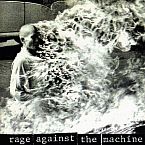
The burning figure on the Rage Against The Machine album cover is a Mahayana Buddhist monk named Thich Quang Duc who set himself on fire in June 1963 to protest the South Vietnamese government's religious policies. It was part of a series of protests known as the "Buddhist Crisis" in South Vietnam.
The iconic photo was taken by Malcolm Browne and won a Pulitzer Prize.
In concert, Zack de la Rocha would often introduce this song with a quote from Black Panther member Eldridge Cleaver: "They use force to make you do what the deciders have decided you must do."
The outlaw comedian Bill Hicks, who died in 1994, was known to close his shows with "Killing In The Name," which Tom Morello considered "a badge of honor."
The song was featured on Guitar Hero II for Playstation 2 and Xbox 360 with modified lyrics to censor the end of the song. It was also on one of the rock radio stations in the video game Grand Theft Auto: San Andreas.
Tom Morello explained how he relates to this song in a talk with People's Party with Talib Kweli: "To me it it it relates to something in the Frederick Douglass autobiography where Frederick Douglass said he was freed from slavery not the moment when he was released from his physical bonds, but when Master said 'yes' and he said 'no.' That's 'f--k you I won't do what you tell me.' It's standing up against illegitimate authority wherever it rears its ugly head."
At 6 a.m. on June 29, 2022, the Vancouver pop station KiSS Radio 104.9 FM played "Killing In The Name" on a loop for 10 consecutive hours. The day before, two popular DJs at the station were fired, fueling speculation that the remaining staff members were playing the song in protest.
Hardly. It was actually a publicity stunt to herald a new corporate alt-rock format at the station: SONiC. The ploy worked, as publications like Rolling Stone and Esquire breathlessly reported the news of what seemed like an insurrection but was all part of a marketing plan.