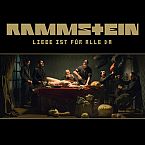
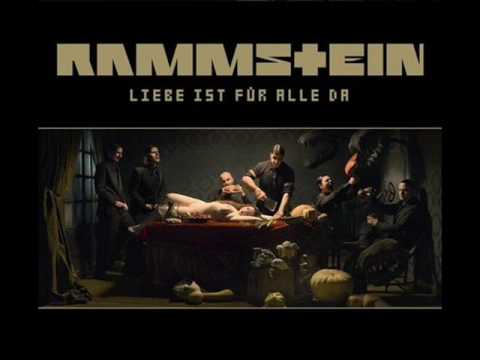
Frühling in Paris

Album: Liebe ist für alle da (2009)
Play Video

Songfacts®:

  • The English translation of this acoustic ballad is "Springtime in Paris" and it marks the first time Rammstein have ever sung in French.
  • The line "Oh non je ne regrète rien" is taken from French singer Edith Piaf's famous song.
  • One interpretation of this song is that it's about taking a woman's virginity. There's some wordplay with the similar sounds of blutet (bleeds) and blühte (flourished). >>
    Suggestion credit:
    Sam - winston-salem, NC

Comments: 4

  • Mike K from Moscow, RussiaI would like to add MHO from what I have read and thought. My guess is that the World War II version is closest to what this song is based on, and what's more, there may also be a reference to the novels "Zeit zu leben und Zeit zu sterben" (A Time to Live and A Time to Die) and “Im Westen nichts Neues” (“All Quiet on the Western Front”) by E.M. Remarque. Both novels are about a young German soldier experiencing the miracle of love in a moment of peace outside the war, followed by a sad end. Also in both books there are metaphors and phrases similar to those in the song, so I'm sure this is it.
  • Vinca from Sunny Preston, LancashireFirstly, many thanks to Alex from Germany for the "blühte" (flourished) and "blutet" (bleeds) info. It help inform and deepen the meaning and analysis of this song.

    I'd always associated this song with invasion of Paris in WWII, but not the prostitute angle. As with many Rammstein lyrics, there's layers and ambiguity, so a single narrative of what the song is about - just aint gonna happen (IMO)! I question the prostitute angle - "She shouted words into my face", could be a angry and resistant Parisian. "The tongue bristled with lust. It was only her language I didn’t understand, I didn’t regret it", could be a person forcing themselves upon 'her'; the lust his projection and or misunderstand interpretation of the rtesistant aggression. That could be Rammstein's lead into their usual critique of perverted / non-normalitive (for the want of a better word an description) German sexuality (and by implication, general). Within the song, 'her' could reference both Paris the city, and an individual. What's uppermost in the meaning of the song to me, are the ideas of invasion, resistance, lack of regret for what happened re parts of German history during WWII as well as the subtler sexual critique. I hope i have expressed myself clearly enough : my intension is to discuss and inform. Thank you.
  • 3rdreich from United StatesThanks to Alex for taking the time to explain. Rammstein Rules!
  • Alex from GermanyHi,

    this is my first time posting here but I am a huge Rammstein fan from Germany and especially Rammstein has many ambiguous songs, but this song is all about the defloration by an experienced, older woman, even if you think "blutet" is something about the defloration from a Woman this is misleading.

    THIS IS WHAT I AM GUESSING:
    I'm GUESSING (there is no official statement at this theory):
    this song is about a young Soldier (WW2), where the Germany falls in Paris, according to my grandfather, the prostitutes in Paris offered partly their services for low money / food and other goods (Cigarets) for the German Soldiers, so there was often Opertunieties for young soldiers to loose their virginity or just have a nice night with an France Woman.

    On June 14, marched associations of the 18th Army in Paris, which is late late Spring, Summer starts around the 20th June "blühte" (flourished) is related to spring and "blutet" (bleeds) is related to the War in France/Paris
    Here is a very ambiguous line which should harden this:
    [
    Der Frühling blutet in Paris
    The Spring bleeds in Paris
    ]
    you have to read this word by word, the spring bleeds in Paris, not the Woman bleeds, or in other shorter words: Paris bleeds (while there is Spring)
    [
    Verstand nur ihre Sprache nicht
    Not understood her language
    ]
    So clearly its a Woman not in speaking German (maybe france, i guess so, because its about Paris)

    Here some translated lines (the best I can ;) ) wich will make this more clearly that its a defloration of a man/boy not a Woman
    [
    Ich war so jung hab mich geniert,
    Doch hab es nie bereut.
    I was so young and embarrassed,
    But I never regretted it.
    ]
    [
    non rien de rien non je ne regrette rien
    I regret nothing (with more Not and no and no)
    ]
    [
    Ich kannte meinen Körper kaum,
    Den Anblick so gescheut,
    Sie hat Ihn mir bei Licht gezeigt,
    Ich hab es nicht bereut.

    I didn't know my Body,
    shied of the sight,
    She showed him to me by light
    I didn't regretted it.
    ]

    and here is something wich will support my guess of her beeing a prositiute
    [
    Die Lippen oft Verkauft doch weich
    The lips often sold yet soft
    ]


    So Hopefully Iam not way of my guesses and I hope also you can read my German English :)

    greetings Alex a.k.a. Syli from Germany
see more comments

Editor's Picks

Graham Nash

Graham NashSongwriter Interviews

Graham Nash tells the stories behind some of his famous songs and photos, and is asked about "yacht rock" for the first time.

Ralph Casale  - Session Pro

Ralph Casale - Session ProSongwriter Interviews

A top New York studio musician, Ralph played guitar on many '60s hits, including "Lightnin' Strikes," "A Lover's Concerto" and "I Am A Rock."

Rob Halford of Judas Priest

Rob Halford of Judas PriestSongwriter Interviews

Rob Halford dives into some of his Judas Priest lyrics, talking about his most personal songs and the message behind "You've Got Another Thing Comin'."

Corey Hart

Corey HartSongwriter Interviews

The Canadian superstar talks about his sudden rise to fame, and tells the stories behind his hits "Sunglasses At Night," "Boy In The Box" and "Never Surrender."

Incongruent Opening Acts

Incongruent Opening ActsSong Writing

Here's what happens when an opening act is really out of place with the headliner, like when Beastie Boys opened for Madonna.

Edwin McCain

Edwin McCainSongwriter Interviews

"I'll Be" was what Edwin called his "Hail Mary" song. He says it proves "intention of the songwriter is 180 degrees from potential interpretation by an audience."