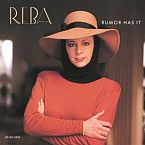


Fancy

Album: Rumor Has It (1990)
Play Video

Songfacts®:

  • Crippled by extreme poverty and abandoned by her husband, the woman in this song sends her 18-year old daughter to work as a prostitute. The daughter (Fancy) is very successful at her work, but is haunted by the memory of her sad and desperate mother.
  • "Fancy" was written by Bobby Gentry and first appeared on her 1969 album Fancy. Gentry is known for her 1967 hit "Ode To Billie Joe."
  • Reba McEntire had wanted to record the song since 1984 but her producer at the time, Jimmy Bowen, was against it because he believed the song was too closely associated with Gentry.

    In 1990 McEntire changed producers to Tony Brown. She and Brown had almost finished recording Rumor Has It when Brown asked her if there were any other songs she wanted on the album. McEntire told him she wanted to cover "Fancy," and the two set about creating what would become one of her signature songs.
  • Gentry's original reached #26 on the Country chart and #31 on the Hot 100. McEntire's version surpassed the original on the Country tally, reaching #8 in 1991.
  • CMT ranked McEntire's version of "Fancy" at #27 on its list of the 100 Greatest Country Songs in 2003.
  • Jack Cole directed the video, which though set in wintry southern Louisiana was actually filmed on a cold, rainy, January day in the outskirts of Franklin, Tennessee. The clip stars McEntire as Fancy, Jonna Kae Volz as "Young Fancy" and Norman Woodel as the "Gabby Cabbie." It follows the lyrical content, but tells the story of the song in more detail.
  • McEntire explained to American Songwriter regarding the visual's predominant theme of women's liberation: "Even though she was a prostitute, her and her mother realized this is how you're going to be able to survive in this world," she said. "You get your toe-hold and then go on and be bigger and better, and also take care of yourself and help others."
  • Kellie Pickler sang this on the 2005 season of American Idol.
  • In a commercial for Fritos, Reba shows up at a closed convenience store to buy a bag of Texas Grill corn chips and sings "Fancy" to get the owner to let her in.

Comments: 9

  • Hepsheba from IowaIn the original lyrics was Fancy 18? It seems she was younger?
  • Alyssa Ferrera from Louisiana Just watched the video for the first time in a long time. When she visits the graveyard there are two graves, the mama and someone else. The dad had run off, so it’s not him. The welfare people had taken the baby, so it’s not the baby. Who is it??
  • William Lee from DixieIs that a 53 ford in the video?
  • Brenda L Johnson from Shorewood, IlReba McEntire performs "Fancy" superbly!! Listening to Reba sing it never gets old!!
  • Camille from Toronto, OhIn the telling of this fictional autobiography, incredibly rhythmic lyrics are chosen and placed like strands of silk, woven together to create the finest pictorial tapestry. The sung words sound exactly as though a real life Fancy was reminiscing right beside you. The subject matter could be discussed and dissected endlessly; much is divulged in a few short minutes in the telling of this tale. The songwriter, Bobby Jo Gentry, crafted a compelling story so rich in description and perfect in delivery we are immediately transported to the run down, rickety shack outside of New Orleans. Fancy's mother is desperate to propel her daughter out of a life of abject poverty, but at what cost? Are the mother's actions justified? Exactly what is the mother's background? Does her mother truly see her daughter's potential, or is it merely desperate thinking? Fancy is excited to see the red satin dress in all its finery--something so colorful, luxurious and frivolous would be a striking contrast to her dreary surroundings. She witnesses her own striking transformation as she struggles to comprehend the ramifications of her mother's instructions on how to break free from the oppression she's lived in. The listener wants Fancy to rise above her circumstances and is glad to find out that she does, but it means being glad that she found success as a prostitute or kept woman. A part of us wants to believe that being in the presence of powerful men and amassing personal wealth via this profession is better than living in poverty and is a happy existence, even if it meant selling her body. Is that something to be happy about? There is room for discussion because as iconic as the song is, most young women who turn to this lifestyle have no power and live a miserable, bleak existence. The listener struggles with these issues. Fancy sums her success up with the words: "And I ain't done bad." Does that mean she has done well for herself? Or does it mean that she sees nothing morally wrong with the way she survived and thrived? In the end, Fancy's driving force remains the memory of desperation in her mama's voice telling her she's got one chance to make it out of hell.
  • Barry from Sauquoit, NyOn November 16th 1969, the original version of "Fancy" by Bobbi Gentry entered Billboard's Hot Top 100 chart at position #94; and on February 1st, 1970 it peaked at #31 {for 2 weeks} and spent 14 weeks on the Top 100...
    And on February 8th, 1970 it reached #1 {for 2 weeks} on the Canadian RPM Top Country Singles chart...
    Between 1967 and 1976 she entered the Top 100 eleven* different times; three of those times with the same song, "Ode to Billie Joe", it reached #1 {for 4 weeks} in 1967, re-entered the chart in 1976 & peaked at #54, then she re-recorded it for the Warner Bros. movie of the same name, and that version reached #65...
    * Also three of those eleven entries were duets with Glen Campbell; "Mornin' Glory" {#74 in 1968}, "Let It Be Me" {#36 in 1969}, and "All I Have to Do Is Dream" {#27 in 1970}...
    Ms. Gentry, born Roberta Lee Streeter, will celebrated her 71st birthday come next July 27th {2015} and may God bless and watch over Mr. Campbell.
  • Betty from Dayton, OhI sung this song for karaoke back in 94' when karaoke was not big like it is now....i still love it to this day!
  • Daniel from Toledo, OhThis song was a big hit for Bobbie Gentry in 1969-1970. Despite being banned on many radio station, it had a four month run on the Billboard hot 100 pop singles chart going #31 pop for two weeks. It also went #26 country and #8 adult contemporary. It earned Bobbie both an acm and grammy nomination for top female vocal of 1970. In Canada, the song went #1 country and #26 pop for Bobbie.
  • Brit from Nashville, TnThis song never became a #1 hit for Ms. McEntire. Although, she still considers it her "career" song.
see more comments

Editor's Picks

Does Jimmy Page Worship The Devil? A Look at Satanism in Rock

Does Jimmy Page Worship The Devil? A Look at Satanism in RockSong Writing

We ring the Hell's Bells to see what songs and rockers are sincere in their Satanism, and how much of it is an act.

Bryan Adams

Bryan AdamsSongwriter Interviews

What's the deal with "Summer of '69"? Bryan explains what the song is really about, and shares more of his songwriting insights.

Rush: Album by Album - A Conversation With Martin Popoff

Rush: Album by Album - A Conversation With Martin PopoffSong Writing

A talk with Martin Popoff about his latest book on Rush and how he assessed the thousands of albums he reviewed.

Spooner Oldham

Spooner OldhamSongwriter Interviews

His keyboard work helped define the Muscle Shoals sound and make him an integral part of many Neil Young recordings. Spooner is also an accomplished songwriter, whose hits include "I'm Your Puppet" and "Cry Like A Baby."

Gary Brooker of Procol Harum

Gary Brooker of Procol HarumSongwriter Interviews

The lead singer and pianist for Procol Harum, Gary talks about finding the musical ideas to match the words.

Who's Johnny, And Why Does He Show Up In So Many Songs

Who's Johnny, And Why Does He Show Up In So Many SongsSong Writing

For songwriters, Johnny represents the American man. He has been angry, cool, magic, a rebel and, of course, marching home.