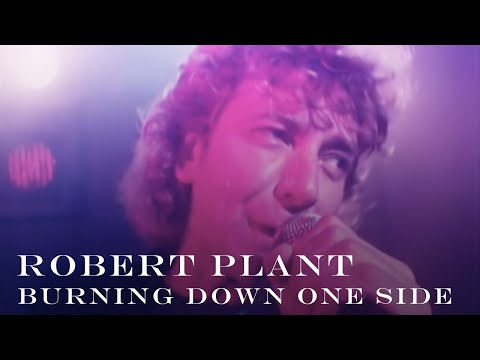
This is a song of unrequited love. Robert Plant wants his lover back, but she's not interested. In fact, she's outright avoiding him. No backstory is shared. We're just given a slice of Plant's fruitless attempts to get his lady back. The title doesn't appear in the lyric, which was not uncommon for Plant.
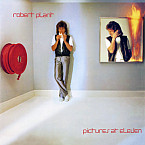
"Burning Down One Side" is Robert Plant's first single as a solo artist. It was also the most successful track on his debut solo album Pictures at Eleven, which he recorded roughly two years after Led Zeppelin disbanded.
The song's subject matter isn't particularly inventive nor the lyrics particularly memorable, which was one of the criticisms by journalists at the time. The consensus was that the song and the album were pretty good, but forgettable. A large part of that reception undoubtedly resulted from the high expectations set by Plant's status as former frontman of the legendary Led Zeppelin.
Even the song's chart success was considered something of a letdown because of Plant's background - it peaked at #64 on October 1, 1982, and fared even worse in his homeland, reaching #73 in the UK on October 9.
Even Plant's friend and former bandmate, Zeppelin bassist John Paul Jones, expressed dissatisfaction. After listening to the copy of the album that Plant sent, he responded, "Well, ah, I thought you could have done something a little better than that, old chap" (Robert Plant: A Life by Paul Rees, p. 210).
Plant was bothered by the bad feedback, of course, but he'd already been through quite a bit of trouble just making the album. Most in his inner circle wanted him to do something like Zeppelin and wanted him to work with other superstars. At that point in his life, though, Plant was more driven by the desire for creative satisfaction and freedom of expression. He'd tasted more than a little of the big time while in Zeppelin, and his motivations had changed. This transformation was set in motion years earlier by the 1977 death of his 5-year-old son, Karac, a tragedy that made him reconsider his entire life, including the kind of music he was making with Zeppelin.
Plant was also driven by a desire to prove he could be a true leader. Though he was the frontman of Zeppelin, he'd spent most of his career being written off as "the voice," with Jimmy Page considered the primary creative engine. Plant felt he had a lot more to offer than just singing and looking good bare-chested in tight jeans.
Guitarist Robert Blunt and keyboardist Gerald "Jezz" Woodroffe co-wrote the song with Plant. Blunt co-wrote all the songs on Pictures at Eleven while Woodroffe co-wrote this one, "Fat Lip," and "Far Post."
"Burning Down One Side" is 3:55 long, which is at the longer end of the usual range for pop singles, but it's actually the shortest song on Pictures at Eleven. Along with "Moonlight in Samosa," it's the only song on the original tack listing that's under 4:00.
As with all but two tracks on Pictures at Eleven, Phil Collins plays drums on this song. Collins laid down all of that drum work in only three days.
Collins played an even more important role in the release of this song. Phil Carson, head of the UK Atlantic Records office, didn't want Pictures at Eleven released. Neither did Plant's manager, Peter Grant, who had also managed Zeppelin. They both felt that Pictures at Eleven should be tossed entirely and that Plant should do something more like Zeppelin. Basically, they didn't want to get off that gravy train and wanted Plant to start a supergroup with other big names.
In Robert Plant: A Life, author Paul Rees writes that Plant struggled with this issue. He thought that Grant, who he'd once considered a close ally, was trying to tank his solo career before it could even begin. Plant went to Collins for some advice, and Collins helped convince him to stick to his guns and release the album. Without Collins, this song may have never seen the light of day, and Plant's solo career may never have manifested at all.
Regarding the line:
Fire down the Boulevard d'Amour
The Belgian singer Fud Leclerc released a song titled "Boulevard d'Amour" in 1961 in Germany, but it's not clear if Plant is referencing this with these lyrics.
The B-side of the single's US release was "Moonlight In Samosa," while the UK release had both "Moonlight In Samosa" and "Far Post."
"Far Post" wasn't included on the original 1982 release of Pictures at Eleven, but it was included as a bonus track on the 2007 re-release.