I Believe

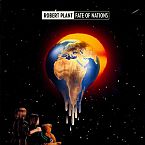
Album: Fate Of Nations (1993)
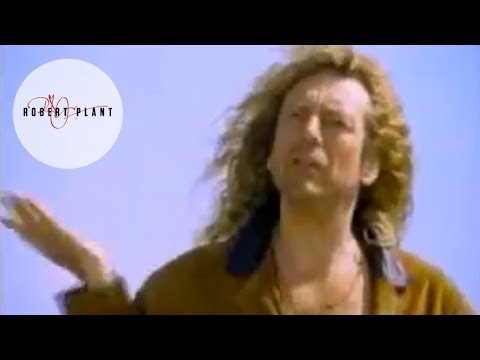
Play Video

Songfacts®:

  • Robert Plant wrote "I Believe" about his son, Karac, who died from a stomach virus on July 26, 1977, at five years old. Plant explained this to journalist Dan Rather during a 2018 episode of Rather's series The Big Interview.

    Karac's death devastated Plant, of course. It also spelled the beginning of the end for Plant's band, the legendary Led Zeppelin.

    Plant received the news shortly after arriving in New Orleans, where Zeppelin was supposed to play a show. He later claimed that he gave up all drugs in that precise moment and never looked back - he didn't want the party lifestyle anymore and lost interest in being a rock star. He just wanted to be with his family.

    During the soul searching that followed, Plant considered teaching at a Rudolph Steiner Waldorf school. Zeppelin guitarist Jimmy Page ended up talking Plant out of retiring from music altogether.

    The band only lasted a couple more years, however. The 1980 death of drummer John Bonham sparked the final breakup, but in many ways Plant never fully invested himself back into the group.
  • Plant also wrote the Led Zeppelin song "All My Love" for Karac. He told Dan Rather that Karac has popped up at other times in his songs, but didn't specify which.
  • Phil Johnstone wrote this song with Plant. Johnstone worked with Plant throughout much of his solo career, also co-writing the hits "Heaven Knows," "Hurting Kind (I've Got My Eyes on You)," and "Tall Cool One."
  • Robert Plant released the song as a single off his sixth album, Fate of Nations, which was an important work for him personally and artistically. He looked at the album as a fresh start; he'd left the Atlantic record label he'd been with for over 20 years and signed with Mercury. He also hired a new producer in Chris Hughes, who was best known for producing Tears For Fears.

    Plant was also grasping for something artistically with Fate of Nations. He dove into the work of early '60s bands that had political, philosophical, or spiritual messages in their songs, bands like the Grateful Dead, Moby Grape, Jefferson Airplane, and Quicksilver Messenger Service. He wanted his music to mean something more than flexing his libido and machismo. Most Zeppelin fans would probably object with that characterization of Zeppelin's music, but to some extent that's how Plant saw it at the time he made Fate of Nations.

    The resulting recording experience wound up a bit chaotic, as Plant searched for what he wanted and ended up employing a huge number of musicians. He used four drummers, six guitarists, a classical violinist (Nigel Kennedy), and a hurdy gurdy player named Nigel Eaton.

    In Paul Rees' book Robert Plant: A Life, Hughes is quoted as saying the experience left him with the impression that Plant isn't a "born bandleader." He felt Plant was haphazardly picking people and mashing them together without a clear vision or method to get the best out of them. He didn't say this derisively - he complimented Plant's passion and willingness to be inventive. He just didn't see him as being an authoritative or commanding leading figure.

    Despite all of the complications, Plant got Fate of Nations done and felt he accomplished his mission of making meaningful music. The "I Believe" single peaked at #9 on the Mainstream Rock Chart and #64 on the UK Singles Chart.

Comments

Be the first to comment...

Editor's Picks

Donnie Iris (Ah! Leah!, The Rapper)

Donnie Iris (Ah! Leah!, The Rapper)Songwriter Interviews

Before "Rap" was a form of music, it was something guys did to pick up girls in nightclubs. Donnie talks about "The Rapper" and reveals the identity of Leah.

Timothy B. Schmit

Timothy B. SchmitSongwriter Interviews

The longtime Eagle talks about soaring back to his solo career, and what he learned about songwriting in the group.

Boz Scaggs

Boz ScaggsSongwriter Interviews

The "Lowdown" and "Lido Shuffle" singer makes a habit of playing with the best in the business.

Best Band Logos

Best Band LogosSong Writing

Queen, Phish and The Stones are among our picks for the best band logos. Here are their histories and a design analysis from an expert.

Philip Cody

Philip CodySongwriter Interviews

A talented lyricist, Philip helped revive Neil Sedaka's career with the words to "Laughter In The Rain" and "Bad Blood."

Billy Steinberg - "Like A Virgin"

Billy Steinberg - "Like A Virgin"They're Playing My Song

The first of Billy's five #1 hits was the song that propelled Madonna to stardom. You'd think that would get you a backstage pass, wouldn't you?