
Pledge Pin

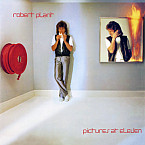
Album: Pictures At Eleven (1982)
Charted: 74
Play Video

Songfacts®:

  • "Pledge Pin" was the second single of Robert Plant's solo career, following "Burning Down One Side." He released it off his debut solo album, Pictures at Eleven, two years after the official breakup of Led Zeppelin. The single's B-side was "Fat Lip."

    The song is about a woman who callously uses men and abuses their feelings until finally growing old and becoming victim of her own game. She can no longer find love in a partner and is left alone.
  • The novel '80s sound has become a target of mockery pretty much from the '90s onwards, and a lot of the music from the era suffers for it. That is the case with Pictures At Eleven, which is no surprise considering that the icon of the '80s sound, Phil Collins, drums on it (more on his contribution later). Looked at in the context of Plant's life, though, the sound of "Pledge Pin" and the rest of the album is an admirable show of Plant's artistic integrity.

    Everyone in the world wanted Plant to do something similar to Zeppelin. Plant knew this and resisted it. He risked his own status to do something that felt right to him and that broke new ground for him personally, even if it didn't quite do so musically. Plant insisted on staying true to his own course.

    Besides, of all the songs on the album, "Pledge Pin" may have aged the best. No one would have any trouble picking it out of an '80s-songs lineup, but there's still a catchy song there, and it uses the peculiarities of its time as well as any.
  • A "pledge pin" is worn by members of fraternities and sororities as a display of membership. The pins have also been used to display political affiliation.

    It's not really clear how these pins relate to the song's theme (the phrase never appears in the lyric), but that's pretty consistent with most the songs on Pictures at Eleven. The titles seem to have been chosen at random.
  • Plant wrote the song with guitarist Robbie Blunt, who was a co-writer on every track of Pictures At Eleven and nearly every song to appear on Plant's first three studio albums. Blunt had a tough role, filling the shoes of Plant's previous guitarist and songwriting collaborator, the inimitable Jimmy Page.

    By all accounts, Blunt never allowed himself to be intimated by his task or by Plant's status. He stood by his own style and creative insights and quickly gained Plant's respect. His contribution to the sound of Plant's first three albums was significant.
  • Phil Collins played drums on this song and on all but two Pictures At Eleven tracks ("Slow Dancer" and "Like I've Never Been Gone"), entering the studio just after wrapping up his Hello, I Must Be Going tour, which was his first solo tour. The tour supported Collins' first two solo albums, Face Value and Hello, I Must be Going!, both of which had been wildly successful right out of the gate.

    Collins recorded those albums while dealing with a lot of pain from his divorce, so he wasn't in a place to celebrate the big victories. It was a frenetic period for him all around. During this time he also persuaded Plant to stick with his own creative vision rather than buckle to the record label's pressure to do something more like Zeppelin.

Comments

Be the first to comment...

Editor's Picks

Gary Lewis

Gary LewisSongwriter Interviews

Gary Lewis and the Playboys had seven Top 10 hits despite competition from The Beatles. Gary talks about the hits, his famous father, and getting drafted.

Jack Tempchin - "Peaceful Easy Feeling"

Jack Tempchin - "Peaceful Easy Feeling"They're Playing My Song

When a waitress wouldn't take him home, Jack wrote what would become one of the Eagles most enduring hits.

Keith Reid of Procol Harum

Keith Reid of Procol HarumSongwriter Interviews

As Procol Harum's lyricist, Keith wrote the words to "A Whiter Shade Of Pale." We delve into that song and find out how you can form a band when you don't sing or play an instrument.

Richie Wise (Kiss producer, Dust)

Richie Wise (Kiss producer, Dust)Songwriter Interviews

Richie talks about producing the first two Kiss albums, recording "Brother Louie," and the newfound appreciation of his rock band, Dust.

Donald Fagen

Donald FagenSongwriter Interviews

Fagen talks about how the Steely Dan songwriting strategy has changed over the years, and explains why you don't hear many covers of their songs.

Don Dokken

Don DokkenSongwriter Interviews

Dokken frontman Don Dokken explains what broke up the band at the height of their success in the late '80s, and talks about the botched surgery that paralyzed his right arm.