Worse Than Detroit

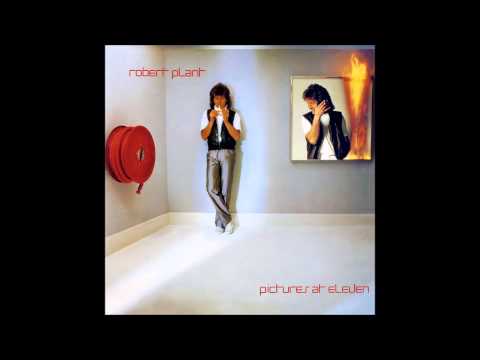
Album: Pictures At Eleven (1982)
Play Video

Songfacts®:

  • A signature quality of the Pictures At Eleven album is that the song titles seem to have nothing to do with the lyrics of the songs. "Worse Than Detroit" is no different.

    The song starts with Robert Plant calling an operator to patch him through to an unnamed lover at "Central Central." Telephone operators were still common in the '80s, though many people born in the 2000s probably have no idea what the term means. They were phone-company employees you could call to find phone numbers, place collect calls (calls charged to the recipient rather than the sender), or get other technical assistance. They were generally located at the provider's central office, which is what "central central" in the "Worse Than Detroit" lyric is referring to.

    Because of their importance to communication in the pre-cell-phone era, operators used to pop up in song lyrics pretty often. Some examples are "Operator (That's not the Way it Feels)" by Jim Croce and "Operator" by the Grateful Dead.

    The opening line in "Worse Than Detroit" - "Operator, give me Central Central" - harks, specifically, to "Give Me Central 209" by the blues great Lightnin' Hopkins. That song starts with, "Hello Central, Please give me 209."

    In "Worse than Detroit," Plant can't remember his lost lover's name. It's not clear if the operator ever successfully helps because the rest of the song is just him gushing poetically about all the things this woman can do. That's how the song ends, with no resolution to the story, just Plant gushing to the phone operator about all the great things his woman can do ("she can shift more gold than the king of Peru") while also feeling uncertain about what he's going to do without her.
  • The song seems particularly wimpy coming from one of history's certifiable rock gods and is definitely not the sort of thing Jimmy Page or John Bonham would have stood for in the Led Zeppelin days. Pictures At Eleven was Plant's solo debut album, however, and he was determined to strike out on his own artistic path. Though his sexual exploits of the '60s and '70s are legendary, Plant was always a romantic at heart, and the old-fashioned love song suited him.

    Somewhat paradoxically, Plant's determination to explore his softer romantic side in his music took a lot of courage. Everyone at his record label wanted him to stick with the old Zeppelin sound, or at least something close to it, but Plant wanted to do something different.
  • Pictures At Eleven was released under Swan Song Records, which was the label Zeppelin started after the band's contract with Atlantic Records ran out in 1974. It is the only one of Plant's solo albums released on that label, as Swan Song folded completely the next year.
  • The song was heavily influenced by Robbie Blunt, who co-wrote and played guitar on all the songs on the album. Blunt's contributions have been widely noted, especially because he was put in such a difficult role by taking the place of the legendary Jimmy Page as Robert Plant's guitarist and collaborator. The pressure was all on Blunt to defer to Plant, but he stood his ground and inserted his own influence into the music. His integrity and courage in doing so has been noted by many, including Plant.
  • The single reached #10 on the Billboard Mainstream Rock chart but didn't break into the Hot 100.
  • Woman gets some when the honeydripper's on his way

    In 1981 Plant formed a band called the Honeydrippers that included Jimmy Page, Jeff Beck of the Yardbirds, Ernest Chataway of Judas Priest, and a revolving lineup of friends. The group had one release with the 1984 EP The Honeydrippers: Volume One, which was a collection of cover songs.

    The band took its name from the great bluesman Roosevelt Sykes, who was nicknamed the Honeydripper.
  • Phil Collins played drums on this track, as he did for all but two songs on Pictures At Eleven. Collins was important to this album and to the direction of Plant's solo career, as he was one of the strongest voices urging Plant to stick with his own vision and not cave to pressure to replicate Zeppelin. Collins was also one of the hottest names in popular music at the time, riding the success of Face Value (1981) and Hello, I Must Be Going! (1982).
  • On July 7, 1982, Plant performed this song at Prince's Trust Rock Gala #2 with Pete Townshend of The Who playing guitar. This was a collaboration of one of the great voices of rock with one of its great guitarists - the type of rock duo teenagers of the '70s would fantasize about (along with wondering who would win in a fight between Superman and the Incredible Hulk). Townsend earlier played his own tunes at the gala in promotion of his third solo album, All the Best Cowboys Have Chinese Eyes, which came out earlier that year. Phil Collins played drums with them.

Comments

Be the first to comment...

Editor's Picks

Donny Osmond

Donny OsmondSongwriter Interviews

Donny Osmond talks about his biggest hits, his Vegas show, and the fan who taught him to take "Puppy Love" seriously.

Mike Love of The Beach Boys

Mike Love of The Beach BoysSongwriter Interviews

The lead singer/lyricist of The Beach Boys talks about coming up with the words for "Good Vibrations," "Fun, Fun, Fun," "Kokomo" and other classic songs.

Emilio Castillo from Tower of Power

Emilio Castillo from Tower of PowerSongwriter Interviews

Emilio talks about what it's like to write and perform with the Tower of Power horns, and why every struggling band should have a friend like Huey Lewis.

How "A Rolling Stone Gathers No Moss" Became Rock's Top Proverb

How "A Rolling Stone Gathers No Moss" Became Rock's Top ProverbSong Writing

How a country weeper and a blues number made "rolling stone" the most popular phrase in rock.

Bill Withers

Bill WithersSongwriter Interviews

Soul music legend Bill Withers on how life experience and the company you keep leads to classic songs like "Lean On Me."

Lou Gramm - "Waiting For A Girl Like You"

Lou Gramm - "Waiting For A Girl Like You"They're Playing My Song

Gramm co-wrote this gorgeous ballad and delivered an inspired vocal, but the song was the beginning of the end of his time with Foreigner.