The song was written by
Jeff Fortgang, whose name you won't see on any other credits. In 2023, he told Songfacts the story behind the song.
"In 1972 or '73, I was living in Connecticut (having graduated Yale in '71, where I was the musical director of the undergraduate a cappella group called the Whiffenpoofs) and making meager living playing 5-6 nights/week with my post-college band, The News (before we heard of Huey Lewis). As directed by our agents, we played Top 40 covers and dressed alike. Although I was by then probably involved with my then girlfriend (who had a great voice and sang in our band), I was apparently in a single mindset as I visited a happily married college friend in Cambridge. It felt as if he, and many of my peers, had their lives worked out. It was in the spirit of feeling alone and envious that, as I drove back to Connecticut, this song took shape in my head, and I probably jotted it down at a rest stop. In retrospect, I think my best songs came to me while driving alone. This was quite a while ago – at present, I've been married 42 years.
I finished putting it together either back at the apartment on my Hohner electric piano or at my manager's house on a real piano, and it was one of the few songs that generated enthusiasm from the rest of the group. Most of my songs were ballads, as was this one, so it didn't sound like the recordings that became successful, but it had the same melody and hook. (My manager was Top 40-oriented, so he pointed me in that direction.)
We recorded a demo in my manager's basement, and later got some studio time to record it. I think that was in New York, funded by a record label that initially showed interest and also sprung for adding some strings. So now we had a better demo, even though the record label didn't make a serious offer, and my manager brought it to a nice guy named Wally Gold at Don Kirshner Publishing. (Most of the time our forays to NYC were filled with rejection; I found that discouraging, and eventually stopped joining my manager as he took my shopped my songs around the city.) My manager, by the way, whom I had met when he ran New Haven's Dynamic Recording Studio, was Marty Kugell, who had previously managed the Five Satins and produced their hit record, '
In The Still Of The Nite.'
'Luck' was the only song of mine that we ever sold, other than some musical public service radio spots. Some time after Kirshner had assumed the publishing (which was later acquired by other publishers), we got a call from Wally Gold, who had arranged for it to be recorded by the Persuaders. He played their version of it to us over the phone, and apologized for the fact that they had modified some of the lyrics. This was without my permission, but I got over that, pleased to have it become an actual record. Their version made it to somewhere in the Top 10 of the Soul chart, and I think something like #39 on the Top 40, though I rarely met anyone who'd heard it, and the royalties were tiny – my recollection, which could be a slight exaggeration, is that some of the period checks were for less than the cost of the postage. In contrast to what people had told me, having one song hit the charts did not create any kind of interest in my other work. Three years after my foray into the music business, I wanted a more predictable and less me-focused career, and went to grad school in clinical psychology (playing piano in dive bars on weekends to help pay my way). I continued to write for a while, but there was no interest, and I realized I'd been lucky on that one song.
I think it was at my 5-year Yale reunion that I somehow heard that the song had been recorded by an American (white) reggae group called the Shakers; I recall buying the album at Cutler's Records in New Haven. Somehow, it then made its way to Jamaica, where it was recorded by several reggae artists. None of these recordings yielded noticeable royalties. Apparently because of his interactions with other artists on Island Records, some years later Robert Palmer recorded his version of the song. Apparently it was through Palmer that Rod Stewart encountered the song, and developed a whole new arrangement that helped it become a hit.
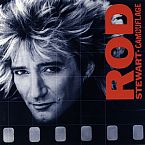
I do really like both the Persuaders and Stewart versions. By then, it was a decade since I'd written it, and I was already well into my career as a psychologist in the Boston area, where I had moved for my internship. I only learned of this recording in advance because some guy from New York called me claiming that he had introduced Mr. Stewart (whom I've never met) to the song. This claim turned out not to be true, but it led me to find the
Camouflage album at a record store in Harvard Square, and there was the song! I didn't know that it had been released as a single until my wife and I heard it piped into our hotel room in Portugal during a cheapo European vacation. That was rather exciting. I think it was about a year later that, because that version of the song had sold well, I got to attend an annual ASCAP awards dinner in Los Angeles. My manager had passed away by then, but his widow was in L.A., attended the ASCAP affair,and somehow finagled a chance for me to shake the hand of Burt Bacharach, whom she knew I greatly admired. So that was my brush with fame.
I still never sold another song, but honestly I think that the world of clinical services (in which I still work full-time) turned out to be a better match for me than the music business, at least in the form that it took back in those days. Still, having even one song become well-known was a thrill."