
Déjà Vu

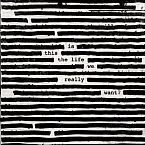
Album: Is This the Life We Really Want? (2017)
Play Video

Songfacts®:

  • Roger Waters shines a light on greed during this sweeping orchestral acoustic ballad:

    The temple's in ruins
    The bankers get fat
    The buffalo's gone and the mountain top's flat
  • Waters also discusses the US election, which voted in the Republican Donald Trump.

    The trout in the streams are all hermaphrodites
    You lean to the left but you walk to the right
    And it feels like déjà vu


    This represents a familiar lyrical device of Waters, anthropomorphising animals to represent aspects of human behaviour. Interestingly, the song has a similar acoustic riff to that of the Animals track "Pigs On The Wing."
  • Producer Nigel Godrich removed two verses from the song on the final cut to make the record fit the run time of 54 minutes. Waters recalled to Uncut:

    "Half of the song is on the record. Half of it is on the cutting room floor at the moment - it didn't fit Nigel's image of what this record was going to be like. So I've acquiesced to it not being on the record - I almost feel like saying 'Somewhat against my better judgement.' And it is. But so is a lot else. I'm not being disparaging. I think what Nigel has done in this record is really, really good."
  • The track was previously known as "Lay Down Jerusalem (If I Had Been God)" when played live before its official release. Waters recalled:

    "I always have a guitar with me, which goes to my hotel room wherever I am. I play it a bit, from time to time. Towards the end of The Wall tour, I wrote 'If I Had Been God - which is called Deja Vu on this record."
  • This was the song that made Waters realize he wanted to record a whole album. He explained:

    "I think when I'd written 'If I Had Been God,' I realized that there was something I definitely wanted to put out. I think it's a question maybe all human beings might do well to ask themselves if you had any part at all, how would you do things differently?

    From that, I thought, maybe there's more to this than meets the eye. Originally the album started out as a long radio play with some old songs, quite a few new songs, about an old Irish bloke and his grandson going off on a global quest to find an answer to the question, why are we killing the children?"

Comments: 1

  • Maged Selim from Cairo- Egypt there're two hidden verses in Deja Vu song :
    nd if I were a Muslim
    And you were a Jew
    If I were a Mennonite
    And you were an Hindu
    Would we exchange
    The weight of these chains
    Chains of belief
    And the carnage on the trains to turn over a new leaf

    [Verse 2]
    If I had been god
    I would not have chosen anyone
    I would have laid an even hand
    On all my children everyone
    Would have been content
    To forgo Ramadan and Lent
    Time better spent
    In the company of friends
    Breaking bread and mending nets
see more comments

Editor's Picks

Stephen Christian of Anberlin

Stephen Christian of AnberlinSongwriter Interviews

The lead singer/lyricist for Anberlin breaks down "Impossible" and covers some tracks from their 2012 album Vital.

Emilio Castillo from Tower of Power

Emilio Castillo from Tower of PowerSongwriter Interviews

Emilio talks about what it's like to write and perform with the Tower of Power horns, and why every struggling band should have a friend like Huey Lewis.

Art Alexakis of Everclear

Art Alexakis of EverclearSongwriter Interviews

The lead singer of Everclear, Art is also their primary songwriter.

Graham Bonnet (Alcatrazz, Rainbow)

Graham Bonnet (Alcatrazz, Rainbow)Songwriter Interviews

Yngwie Malmsteen and Steve Vai were two of Graham's co-writers for some '80s rock classics.

They Might Be Giants

They Might Be GiantsSongwriter Interviews

Who writes a song about a name they found in a phone book? That's just one of the everyday things these guys find to sing about. Anything in their field of vision or general scope of knowledge is fair game. If you cross paths with them, so are you.

Who's Johnny, And Why Does He Show Up In So Many Songs

Who's Johnny, And Why Does He Show Up In So Many SongsSong Writing

For songwriters, Johnny represents the American man. He has been angry, cool, magic, a rebel and, of course, marching home.