Mambo Italiano

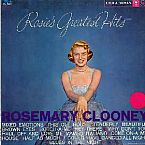
Album: Rosie's Greatest Hits (1954)
Charted: 1 9
Play Video

Songfacts®:

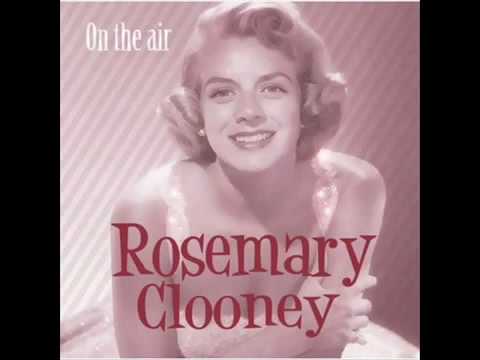
  • "Mambo Italiano" was written by the songwriter Bob Merrill and first performed by Rosemary Clooney. Merrill, a lyricist, screenwriter, and theatrical composer, was more of a fixture of stage than radio, with a long string of Broadway hits to his credit including Funny Girl, Carnival!, and Breakfast at Tiffany's. He also wrote for the silver screen and television, ranging from W.C. Fields and Me to Mister Magoo's Christmas Carol.
  • Allegedly, Bob Merrill literally scribbled the song on a napkin while dining at an Italian restaurant and phoned it in over the pay phone, humming the tune and everything. He was on deadline.
  • Clooney herself was no stranger to the big or small screen, with her own share of film and TV credits including White Christmas, The Lux Show Starring Rosemary Clooney, Red Garters, Radioland Murders, and even commercials for Coronet brand paper towels (she sang their jingle).
  • Performers to cover this song include Dean Martin, Bette Midler, and Renato Carosone.
  • The song was banned by New York's WABC radio because of its suggestive lyrics. The radio station didn't understand them and thought they might be suggestive. Clooney's label was forced to counter with statements from a professor of romantic languages and a Catholic priest, both of whom confirmed that the Italian lyrics were "in no way offensive or vulgar."
  • Clooney sang this in the same mock Italian accent as in her 1951 #1 "Come-On-A My House."
  • The Clooney family's connection with Italy has continued to this present day. Rosemary's nephew, the actor George Clooney, spends much of his time in the Lake Como area in northern Italy, where he owns a villa.
  • According to the online version of Webster's Dictionary the song's origins lie in a traditional, danceable folk-like Italian song, but it was Merrill who put it on paper and made the song popular worldwide.
  • "Mambo" was remixed and re-released by production team Shaft in 2000, reaching #12 on the UK singles chart.
  • This was used in the opening credits of the 1988 comedy Married To The Mob, starring Michelle Pfeiffer as a mobster's widow who tries to leave the Mafia family after her husband's murder.

    It was also used in these movies:

    Bridget Jones's Baby (2016)
    Searching For Bobby D (2005)
    School For Seduction (2004)
    The Crew (2000)
    Mickey Blue Eyes (1999)
    Big Night (1996)
    Mermaids (1990)

    And these TV shows:

    Raising Hope ("Throw Maw Maw from the House, Part One" - 2012)
    Criminal Minds ("Proof" - 2011)
    Drop Dead Diva ("Change Of Heart" - 2011)
    Happy Endings ("Like Father, Like Gun" - 2011)
    The Simpsons ("The Italian Bob" - 2005)
  • Dean Martin's 1955 recording was used in an Italian-themed commercial for Airbnb in 2022.

Comments

Be the first to comment...

Editor's Picks

Facebook, Bromance and Email - The First Songs To Use New Words

Facebook, Bromance and Email - The First Songs To Use New WordsSong Writing

Where words like "email," "thirsty," "Twitter" and "gangsta" first showed up in songs, and which songs popularized them.

Stand By Me: The Perfect Song-Movie Combination

Stand By Me: The Perfect Song-Movie CombinationSong Writing

In 1986, a Stephen King novella was made into a movie, with a classic song serving as title, soundtrack and tone.

Adele

AdeleFact or Fiction

Despite her reticent personality, Adele's life and music are filled with intrigue. See if you can spot the true tales.

Ian Anderson: "The delight in making music is that you don't have a formula"

Ian Anderson: "The delight in making music is that you don't have a formula"Songwriter Interviews

Ian talks about his 3 or 4 blatant attempts to write a pop song, and also the ones he most connected with, including "Locomotive Breath."

John Lee Hooker

John Lee HookerSongwriter Interviews

Into the vaults for Bruce Pollock's 1984 conversation with the esteemed bluesman. Hooker talks about transforming a Tony Bennett classic and why you don't have to be sad and lonely to write the blues.

Al Jourgensen of Ministry

Al Jourgensen of MinistrySongwriter Interviews

In the name of song explanation, Al talks about scoring heroin for William Burroughs, and that's not even the most shocking story in this one.