"Trash," the lead single from Roxy Music's sixth album, Manifesto, pays homage to trash culture. Popularized by pop-art pioneers such as Andy Warhol and Roy Lichtenstein, trash culture celebrates lowbrow art, fashion, and consumerism.
The Twisted Tale of Glam Rock author Stuart Lenig referred to Bryan Ferry as "a prolific miner of cultural trash." The song finds Ferry singing about a teenage representation of trash culture.
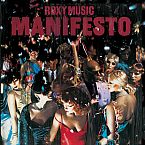
"Trash" also mentions Plaza, the London boutique owned by British fashion designer Antony Price, who helped to design the album cover for Manifesto.
This song arrived two years after the explosion of punk. It showcased Ferry and co. experimenting with an edgier sound inspired by the likes of Sex Pistols and Buzzcocks, who have cited Roxy Music as an influence. "We always said that we inspired amateurs, and it's exactly what the punks were doing, and if you come up with something like that at a time when everything else is just a bit vague in the music business, you can be successful," Roxy Music guitarist Phil Manzanera said in an interview with BBC Radio 2 on January 17, 2011. "One of the tracks that I co-wrote, 'Trash,' I had a riff, and I thought, 'Well this could be a sort of punky type track.'"
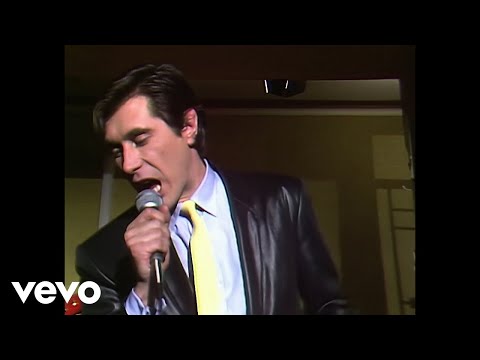
The video for this song takes place in a rundown abandoned theater. It begins with Ferry strolling through a hall lined with mannequins similar to those on the album cover for
Manifesto. A microphone is then thrown to the Roxy Music frontman, and the band begins performing "Trash." The clip was directed by Michael Lindsay-Hogg, the American filmmaker who famously helmed the 1970 Beatles documentary
Let It Be. Lindsay-Hogg also directed the video for fellow
Manifesto single "
Dance Away."
"Trash" was on regular rotation at Blitz Club in London. The club, which was located at 4 Great Queen Street in Covent Garden, is frequently hailed as the birthplace of the New Romantic subculture that defined the early '80s. Open every Tuesday from 1979 to 1980, Blitz Club helped launch the careers of British new-wave bands, including Spandau Ballet and Visage. The venue also attracted a star-studded crowd of "Blitz Kids" such as Sade, Boy George of Culture Club, and Siobhan Fahey of Bananarama.
The American band Pansy Division recorded a cover of "Trash" for their 1993 EP Touch My Joe Camel. It also appears on their 1995 compilation album Pile Up. Formed in San Francisco in 1991 by predominantly gay musicians, Pansy Division is among the most commercially successful queercore acts.
"Trash" was Roxy Music's first new music in four years. Released alongside a slower version of the song, "Trash 2," it peaked at a disappointing #40 in the UK. "There was a moment when the first single came out and it didn't do fantastically well," Manzanera told Roxy Music biographer David Buckley. "It was the time of the punk thing, and there was the thought that perhaps it wouldn't take off again." Despite their concerns, their next single, "Dance Away," was a big hit. Reaching #2 in the UK, "Dance Away" remains one of Roxy Music's most popular songs of their career.
Following the release of Siren (1975), Roxy Music took an extended hiatus, during which time Ferry recorded three solo albums: Let's Stick Together (1976), In Your Mind (1977), and The Bride Stripped Bare (1978). However, due to the disappointing reception of the latter album, Ferry decided to reunite with Roxy Music and record Manifesto. Released on March 16, 1979, the album was divided into the Europe-influenced "East Side" and the America-influenced "West Side," with "Trash" appearing on the former side along with fellow single "Angel Eyes."