Slow Suicide

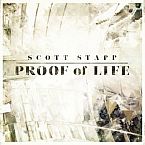
Album: Proof of Life (2013)
Play Video

Songfacts®:

  • Scott Stapp's slow suicide was his self-destructive behavior in the years after Creed became one of the most successful bands in America. He became dependent on drugs and alcohol, culminating in a 40-foot fall from a hotel room in Miami after a bout of paranoia.

    The first track on his second solo album, it finds Stapp looking back on this time and putting it behind him.
  • In our 2013 interview with Scott Stapp, he said that the Proof of Life album was his best body of work. Said Stapp: "I'm the most content that I've ever been in my 40 years on this Earth and the happiest and the most full of just peace and joy than I've ever been. And I think life reflects art, art reflects life. Just being able to make a record from an organic place, from a place of inspiration and a place free of any negativity or any forcing, brought out the best in me as an artist."
  • Stapp was encouraged by his producer Howard Benson to simplify and clarify his lyrical ideas for Proof of Life. He explained: "I've always been heavy on metaphor and symbols, even to where I might hide behind fanciful language. Howard helped me get straight to the point."

    Stapp's new approach to writing lyrics is highlighted on this song. "The point is that for years I was slowly killing myself," he said. "Drugs and booze want to kill you instantly, but they're patient and will take their time. The same is true of toxic relationships. I had to start off this story by declaring the most obvious of truths: that I had been torturing and poisoning myself in an attempt to snuff out my soul."
  • The song's music video was directed by Andrew Gant and shot in an old abandoned Los Angeles hospital. The clip draws from real life. "It's an autobiography exactly as it happened," admitted Stapp to Fuse TV. "There's no embellishment; if anything, it's toned down from reality. It was a real cathartic experience. I got to see what alcohol and drugs did to me, but I got to see it from a clear place shooting this video. I got to sit back and say, 'My god, my wife and my family were in the hospital and I looked like that [in real life].' The other scenarios were all me bringing closure to my life."
  • Stapp told the story of the song to Artist Direct: "I was with a friend of mine named Scott Stevens, formerly of The Exies, a rock band out of Los Angeles. We were jamming and sitting around with acoustic guitars. Nothing had been written for my record. I was thinking of how I wanted this album to start. I wanted to come right out at the top and address, for my perspective, honestly, what I had been doing to myself for a period of years. I wanted to open the door in the chorus to the realization that had brought me out of it. It was a way for me to confront the detractors with truth and honesty about myself and also tell my fans, 'Hey, if you've ever had any questions, this is what's been going on!'"

Comments

Be the first to comment...

Editor's Picks

Donnie Iris (Ah! Leah!, The Rapper)

Donnie Iris (Ah! Leah!, The Rapper)Songwriter Interviews

Before "Rap" was a form of music, it was something guys did to pick up girls in nightclubs. Donnie talks about "The Rapper" and reveals the identity of Leah.

David Bowie Leads the Society for Prevention of Cruelty to Long-Haired Men

David Bowie Leads the Society for Prevention of Cruelty to Long-Haired MenSong Writing

Bowie's "activist" days of 1964 led to Ziggy Stardust.

Bob Daisley

Bob DaisleySongwriter Interviews

Bob was the bass player and lyricist for the first two Ozzy Osbourne albums. Here's how he wrote songs like "Crazy Train" and "Mr. Crowley" with Ozzy and Randy Rhoads.

La La Brooks of The Crystals

La La Brooks of The CrystalsSong Writing

The lead singer on "Da Doo Ron Ron" and "Then He Kissed Me," La La explains how and why Phil Spector replaced The Crystals with Darlene Love on "He's A Rebel."

Randy Houser

Randy HouserSongwriter Interviews

The "How Country Feels" singer talks Skynyrd and songwriting.

Laura Nyro

Laura NyroSongwriting Legends

Laura Nyro talks about her complex, emotionally rich songwriting and how she supports women's culture through her art.