
Svefn-G-Englar

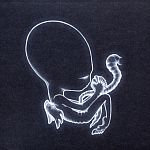
Album: Agaetis Byrjun (1999)
Play Video

Songfacts®:

  • "Svefn-G-Englar," haunting, 10-minute soundscape, is the most popular song by Sigur Rós, a band from Iceland. Even if you know Icelandic, you won't understand the lyric - it's in "Hopelandish" - a made-up language created by lead singer Jónsi Birgisson. The vocals are just there for texture.

    The title, though, is in Icelandic so we know what it means: "Sleep Angels." That fits the song's otherworldly atmosphere.
  • The track is built around a mesmerizing, repeating chord progression that creates a dreamlike state. This progression is briefly interrupted by a contrasting middle section, after which the initial musical theme returns for the remainder of the song.
  • Sigur Rós released their debut album, Von, in Iceland in 1997, but it was "Svefn-G-Englar" that introduced the band to an international audience. A lengthy, ambient track sung in a made-up language is not a likely candidate for mass appeal, but it found an audience thanks to critical acclaim and word of mouth. Maybe it's something about Iceland that intrigues listeners with highly experimental music - that's also the home of Björk.
  • Upon its release in September 1999, "Svefn-G-Englar" caught the attention of tastemakers across Europe. The influential British music magazine NME named it their Single of the Week, helping to launch Sigur Rós onto the global stage.
  • The song appears on Sigur Rós's sophomore album, Agaetis Byrjun, which became a phenomenon in Iceland. The record went Double Platinum there, selling about 20,000 copies - a staggering feat in a country of just 300,000 people at the time. To put it in perspective, one out of every 15 Icelanders owned a copy.
  • The success of Agaetis Byrjun and "Svefn-G-Englar" propelled Sigur Rós to international acclaim. The album has since sold over 130,000 copies worldwide and earned the band a coveted Shortlist Music Prize, awarded to the year's best albums that sold fewer than 500,000 copies. This success paved the way for their subsequent albums, including the critically acclaimed () in 2002 and Takk... in 2005, which further cemented their status as one of Iceland's most successful musical exports. By 2005, they had signed with EMI and were selling hundreds of thousands of albums, a remarkable feat for a band with such an experimental sound.
  • Jónsi Birgisson explained the band's approach to lyrics in a 2005 interview with The Observer: "We usually start by singing some nonsense over the songs, then I listen to that, and usually, within that gobbledigook, there is often some spark of meaning – so you take out one word and start from there, and find out what the song should be about."
  • The expansive sound of "Svefn-G-Englar" made it a natural fit for film. The track found its way onto the soundtrack of Cameron Crowe's psychological thriller Vanilla Sky (2001), introducing Sigur Rós to an even wider audience. Some footage from the band's unique studio - a converted swimming pool they used for about a decade - was used by Cameron Crowe in the film, further connecting the song to the movie's visual aesthetic.

    Other movies to use the song include:

    The 11th Hour (2007)
    California Typewriter (2016)
    Beautiful Boy (2018)
    Beetlejuice Beetlejuice (2024)
  • While many have described Sigur Rós' music as "glacial" or evocative of Iceland's dramatic landscape, the band members have a different perspective. In a 2001 interview with The Wire, bassist Georg Holm stated, "Our music is affected by the landscape. Look at the rocks and stones: they're alive. I always get goosebumps in the country. And I miss it. I miss the beauty and ugliness."

    This connection to their homeland's natural beauty is palpable in the expansive soundscape of "Svefn-G-Englar."

Comments: 6

  • Arek from PolandVideoclip contains a group of people with down syndrome dancing happily. Recognised down syndrome fetuses are aborted in Iceland.
  • Eric from Detroit, MiIt is all well and good to listen to them on your stereo, but to truly understand and appericate, just how utterly complex and awesome sigur ros's music is you must see them live. It is an artstic expression on the highest level. A sigur ros show is beyond any normal concert experince you might have. You will be moved, and the greatest part is you won't understand a single word that is being sung
  • Seth from Butler, Pathis song is spoken in plain ol' icelandic. here's a translation:
    I'm here again
    inside of you
    It's so nice in here
    but I can't stay for long

    I float around in liquid hybernation
    (in a hotel)
    drinking all the electricity
    (on board)

    tjú, tjú, tjú
    tjú, tjú, tjú

    But the wait makes me (uneasy)
    I kick the fragility away
    (and I shout), I have to go, (help)

    tjú, tjú, tjú
    tjú, tjú, tjú
    tjú, tjú, tjú

    tjú, tjú, tjú, tjú

    I explode out and the peace
    is gone

    (Bathed in new light
    I cry and I cry, disconnected)
    An unused brain is put on breasts
    and is fed by sleepwalkers

    tjú, tjú, tjú
    tjú, tjú, tjú
    tjú
  • Finnur from KÃ?pavogur, IcelandThis band is great...
    "Svefngenglar" translates to "sleep-walkers", not "sleep-talkers" like someone stated above. The last part of the title "Englar" also means "Angels".
  • Anna from Aberdeen, ScotlandHopelandic isn't technically a language to be understood. It was created by the to effectively see the voice as another instrument, rather than placing a lot of focus on the lyrical aspect of the song/s. Their third album, (), is sung entirely in Hopelandic.
  • Meg from Philadelphia, PaSigur ros is an awesome band from iceland. In my opinion they're right up there with bjork. Anyone who likes this song should listen to Untitled #1 (my favorite!). I love the symbolism in this song, and I wish I could understand hopelandish.
see more comments

Editor's Picks

Muhammad Ali: His Musical Legacy and the Songs he Inspired

Muhammad Ali: His Musical Legacy and the Songs he InspiredSong Writing

Before he was the champ, Ali released an album called I Am The Greatest!, but his musical influence is best heard in the songs he inspired.

Michael Sweet of Stryper

Michael Sweet of StryperSongwriter Interviews

Find out how God and glam metal go together from the Stryper frontman.

Devo

DevoSongwriter Interviews

Devo founders Mark Mothersbaugh and Jerry Casale take us into their world of subversive performance art. They may be right about the De-Evoloution thing.

Dennis DeYoung

Dennis DeYoungSongwriter Interviews

Dennis DeYoung explains why "Mr. Roboto" is the defining Styx song, and what the "gathering of angels" represents in "Come Sail Away."

Tom Bailey of Thompson Twins

Tom Bailey of Thompson TwinsSongwriter Interviews

Tom stopped performing Thompson Twins songs in 1987, in part because of their personal nature: "Hold Me Now" came after an argument with his bandmate/girlfriend Alannah Currie.

Evolution Of The Prince Symbol

Evolution Of The Prince SymbolSong Writing

The evolution of the symbol that was Prince's name from 1993-2000.