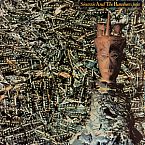
Album: Juju (1981)
Charted: 22
Play Video

Songfacts®:

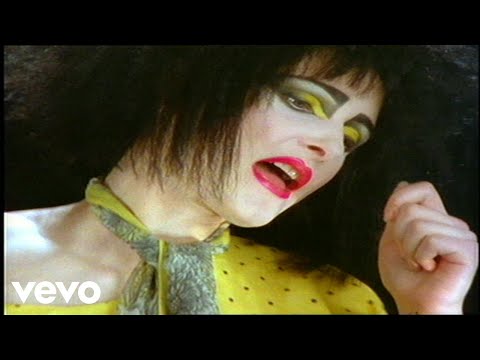
  • This thrilling post-punk pop tune opens Siouxsie and the Banshees' fourth studio album, Juju (named after a folk magic of West Africa). With guitarist John McGeoch amplifying the tension on his 12-string acoustic, Sioux sings enigmatic lyrics about a mysterious force that plagues her with auditory and visual hallucinations.
  • Taking the opposite approach of the album's studio-born predecessor, the brightly colored Kaleidoscope, the band took a month off from touring to record Juju, a collection of dark songs they perfected on the road. "If the album sounds unified, that's because it was prepared that way," bassist Steven Severin explained ahead of the album's 2006 re-release. "It was rigorously rehearsed and played."

    While Kaleiscope swirled through new sights and sounds, Juju followed a single dark thread. Severin continued: "It was the first time we'd made, for want of a better word, a 'concept' album. It drew on darker elements. It wasn't pre-planned, but we saw a thread running through the songs… almost a narrative. The African statue on the cover, which we found in the Horniman Museum in Forest Hill, was the starting point for a lot of the imagery."
  • "Spellbound" was named after Alfred Hitchcock's 1945 psychological thriller about an amnesia patient (Gregory Peck) accused of murder.
  • According to Severin, the Banshees took a cue from The Stones when they were putting the album together. "Me and McGeoch talked about Their Satanic Majesties Request - era Rolling Stones a lot while we were working on Juju," he recalled.  "We weren't necessarily going to dress up in capes and pointy hats, but we wanted that 'Stones or Small Faces go psych' feel."
  • McGeoch, who was still a member of the rock band Magazine when he first went into the studio with the Banshees in 1980, was rated by Mojo as one of the 100 Greatest Guitarists Of All Time for his inventive guitar work on "Spellbound."

    In the BBC documentary The John McGeoch Story (2008) Johnny Marr of The Smiths weighed in on McGeoch's iconic playing on the track, saying, "It's so clever… in three ways he's attacking it. He's got the sound of a 12-string acoustic, which is a great thing you didn't really hear very much on records. And then he's got this really good picking thing going on which was very un-rock'n'roll. And this actual tune he's playing is really quite mysterious."
  • The album's spooky vibe laid the groundwork for the horror-obsessed goth bands that cropped up in Juju's wake, but none of them did justice to the Banshees' vision, according to Sioux. "Juju did have a horror theme to it, but it was psychological horror and nothing to do with ghosts and ghouls. We were quite confident with the image we were putting across, and were starting to play with it a bit," she explained in 2006.

    "I've always thought that one of our greatest strengths was our ability to craft tension in music and subject matter," she continued. "Juju had a strong identity, which the goth bands that came in our wake tried to mimic, but they simply ended up diluting it. They were using horror as the basis for stupid rock 'n' roll pantomime. There was no sense of tension in their music."
  • This song closes out season 4 of Stranger Things. It plays over the end credits of the finale, "The Piggyback," after the Hawkins gang prepares to face their final challenge against a formidable demon with mind-controlling powers that threatens to take over the world.

    The show also made a reference to the group's frontwoman back in season 2 when Jonathan encountered a girl dressed like Sioux at a Halloween party.
  • This was also used in these TV shows:

    Hanna ("To The Meadows" - 2020)
    Deadly Class ("Stigmata Martyr" - 2019)
    American Horror Story ("Chutes And Ladders" - 2015)
    Gotham ("Arkham" - 2014)
    True Blood ("Spellbound" - 2011)

    And these movies:

    The Robbers (2013)
    Dorfpunks (2009)
    Doomsday (2008)

Comments

Be the first to comment...

Editor's Picks

Muhammad Ali: His Musical Legacy and the Songs he Inspired

Muhammad Ali: His Musical Legacy and the Songs he InspiredSong Writing

Before he was the champ, Ali released an album called I Am The Greatest!, but his musical influence is best heard in the songs he inspired.

Michael Sweet of Stryper

Michael Sweet of StryperSongwriter Interviews

Find out how God and glam metal go together from the Stryper frontman.

Devo

DevoSongwriter Interviews

Devo founders Mark Mothersbaugh and Jerry Casale take us into their world of subversive performance art. They may be right about the De-Evoloution thing.

Dennis DeYoung

Dennis DeYoungSongwriter Interviews

Dennis DeYoung explains why "Mr. Roboto" is the defining Styx song, and what the "gathering of angels" represents in "Come Sail Away."

Tom Bailey of Thompson Twins

Tom Bailey of Thompson TwinsSongwriter Interviews

Tom stopped performing Thompson Twins songs in 1987, in part because of their personal nature: "Hold Me Now" came after an argument with his bandmate/girlfriend Alannah Currie.

Evolution Of The Prince Symbol

Evolution Of The Prince SymbolSong Writing

The evolution of the symbol that was Prince's name from 1993-2000.