
Thirty-Three

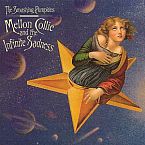
Album: Mellon Collie And The Infinite Sadness (1995)
Charted: 21 39
Play Video

Songfacts®:

  • "Thirty-Three" seems out of character for Smashing Pumpkins. For one, it stays gentle and reflective, never exploding into a wash of sound. And also, lead singer Billy Corgan seems really happy and content without a trace of irony. Back in 1993 he was battling a crippling depression on the track "Today":

    Tomorrow's much too long
    I'll burn my eyes out
    Before I get out


    But here he is in 1995 singing:

    I know I'll make it, love can last forever

    In 1994, he moved into a new house with his new wife, Chris Fabian, and he was feeling pretty good. That led him to write this song.

    "I was really hopeful with the idea that I was going to have a happy life," he said when the band appeared on VH1's Storytellers in 2000. "In my mind, I had arrived - I supposedly had everything that one would want: the wife, the cat, the house, the car, the money, and, oh yeah, the fame. But what I'm trying to say here is, all I ever really wanted was a happy home."
  • In an interview with Guitar World magazine, Corgan said, "It was the first song I wrote when I got home from the Siamese Dream Tour. I used a drum machine and the words just fell out."
  • The video was the first one lead singer Billy Corgan directed (he worked on it with Yelena Yemchuk, his girlfriend at the time). Drummer Jimmy Chamberlain had recently left the band, so only three Smashing Pumpkins are in it.
  • The title doesn't show up in the lyric. Billy Corgan named the song "33" because when was was 27, a friend gave him a tarot card reading and told him, "When you're 33 years old, your life is going to completely change."
  • The happiness and contentment Corgan sings about on this track didn't last long. His marriage fell apart at the end of 1995, and the next year his mother died and the band's touring keyboard player, Jonathan Melvoin, died of a heroin overdose while they were on tour. Their next album, Adore in 1998, didn't do nearly as well as expected, and in 2000 the band broke up.

    "To sing this song now, it doesn't bother me because I went into those situations with the best intentions, and when I found out they weren't really for me, I changed those things," Corgan explained.
  • "Thirty-Three" was the fifth and final single from the Smashing Pumpkins 1995 double album Mellon Collie And The Infinite Sadness, following "Bullet With Butterfly Wings," "1979," "Zero" and "Tonight, Tonight."

    The song peaked on Billboard's Airplay chart in February 1997, well over a year after "Bullet With Butterfly Wings" was released in October 1995.

Comments: 28

  • Paul from AustraliaI don't see any theological symbology at all personally.

    To me it's a song about a someone who's been on the road, surrounded by crowds, yet completely alone. Yearning for their partner, their friends and the familiarity of a warm dinner waiting for them on the table.... the familiarity they call home.

    The protagonist is deeply wrapped in personal reflection about relationships and promises to change (most likely the damage caused by the touring lifestyle), but, "tomorrow's just an excuse away".
  • Johanne Gaston from QuébecWhy is it call 33
  • Sage from DetroitWhy would Iiago from Brisbane assume "hooray for Christianity" is a bad thing? Unless he's a commie. The Jesus interpretation has merit.
    The song was actually quite popular, Theresa from Murfreesboro, Tn.
    And Corgan is certainly not ambivalent toward Christianity. He quite embraces it, as he as stated. Afghan guy.
  • David B from Western MassThis song is his acknowledgement in masonry. You simply can’t argue he is always conveying some arcane meaning with all the esoteric symbolism within his performances and music videos.

    33 is the highest level of masonry.
    “Speak to me in a language I can hear”. - the hidden language of their brotherhood within their meetings

    “Humor me before I have to go “ - possibly discussing their plans of how elite are controlling the masses- it’s humor to the ones enlightened.

    “Deep in thought I forgive everyone”- he doesn’t like that he has to go on with his plan but he understands it’s for the greater good.

    “As the cluttered streets greet me once again
    I know I can't be late
    Supper's waiting on the table ” - simply his walk home after these meetings. The comfort of knowing normalcy still rests at home.

    “Tomorrow's just an excuse away
    So I pull my collar up and face the cold
    On my own “ - procrastination. He has to follow his agenda So he toughens up and faces the pain.

    “The earth laughs beneath my heavy feet
    At the blasphemy in my old jangly walk
    Steeple guide me to my heart and home
    The sun is out and up and down again “
    He feels shame in following his provided plan. He hopes he has salvation.


    “I know I'll make it
    Love can last forever
    Graceful swans of never
    Topple to the earth ”

    Committing to the agenda he knows he can hold a duality that the people don’t see

    And you can make it last forever, you
    Can make it last forever, you
    Can make it last
    And for a moment I lose myself
    Wrapped up in the pleasures of the world “
    Billy benefits from the bounties of perpetuating the agenda. Utter indulgence in becoming famous.

    And you can make it last forever, you
    Can make it last forever, you
    Can make it last forever, you
    Ever you

    You the sheep, you. Can make his indulgence last forever You. Wake Up!
  • Iiago from BrisbaneI feel compelled to spell out why, in my below post, I say that certain "express references" fit the "Jesus" interpretation. Again - I am NOT saying that this makes Corgan religious or "hooray for Christianity" or whatever. You can find a story evocative or be inspired by it to write something without believing it happened. I can like my Thor comics without thinking Pagans are awesome and I should become one.

    The specific prayer I was referring to is Jesus' prayer in the garden of gethsemane, which is after the last supper and just before he's taken by the Romans.

    Anyway, the express references connect as follows:
    * "Be with me before I have to go" - prayer is considered a way of "being" with God
    * "Deep in thought I forgive everyone" - on the cross Jesus said "father forgive them, they know not what they do"
    * "Supper's waiting on the table" - the last supper, which actually happens just before this prayer. I know the timeline is a bit out, but I doubt Corgan would care (or bother getting a bible to check he's doing a 100% accurate retelling). My point is that this is an event closely linked with being just before the crucifixion. To continue my Thor analogy, in the original myths he has red hair - it doesn't make the Thor comic any less "Thor inspired" because they didn't bother with hair-colour accuracy.
    * "...on my own" - Jesus is about to be abandoned by all his friends and followers
    * "At the blasphemy in my my old jangly walk" - Jesus' crime was blasphemy
    * "I know I'll make it, love can last forever...and you can make it last forever" - in the song, this person is resigning themselves to some (implied) horrible event that is just about to happen. In Christian theology Jesus' death is said to be an act of his love, and an act that had benefits for humanity not just in the immediate term, but "forever".
    * "But in the same old haunts I still find my friends" - After his death Jesus visits a number of his followers and in particular the holy ghost (see what they did with "haunts"?) visits them at Pentecost
    * "Mysteries not ready to reveal" - prior to his death, Jesus told his followers NOT to reveal that he was the son of God (then after his death, he told them to tell everyone)
    * "Sympathies I'm ready to return" - What happen to Jesus is horrific, but within the narrative he has sympathy for humanity in that they are (in so many words and Christian theology) "lost"

    I've seen a few conflicting statements about what Corgan supposedly has said about the lyrics, including one where he supposedly says "it's about having your life all together". If it is, geeze there's nothing in the lyrics to indicate that - even ignoring all biblical references there's a strong sense that something awful is about to happen "Be with me before I have to go", "I forgive everyone", "I turn my collar up and face the cold, on my own".

    One comment I saw, which does make sense, is that Corgan (allegedly) said it's about the moment of peace and acceptance just before your life goes to absolute s--t. I think that's right. It might be an accident that it fits so neatly with the biblical narrative, but if you were Corgan and you wanted to pick a literary allusion for "being at peace with your life about to go crap" then the prayer at Gethsemane is a pretty good one.
  • Iiago from BrisbaneI always took it to be about Jesus. Specifically, his prayer on the eve of the last supper (when he was, supposedly, aged 33) when he says to God (in so many words) "I don't want to do this, but if you really want me to I will."

    It's not 100% certain of course but it's the most fitting reading I can make of it for the following reasons:
    * It fits the "one-sided conversation" nature of a lot of the lyrics
    * It fits the title
    * It fits a lot of express references in the lyrics. "Be with me before I have to go" "Deep in thought I forgive everyone", "I can't be late, supper's waiting on the table", "The earth laughs...at the blasphemy in my old jangly walk", "Steeple guide me to my heart and home", "I know I'll make it, love can last forever...and you can make it last forever", "But in the same old haunts I still find my friends, mysteries not ready to reveal, sympathies I'm ready to return".
    * It fits the music. The music has a gentle, inevitability to it - like someone being constantly pushed down a stream.

    Whether the Bible is real or not is not the point, it's poetical. I can write a song about Romeo & Juliet without believing they were real.
  • Michael from Kansas, UsaGraceful swans never topple to the earth--this is symbolic of a belief. In the context of this song and Corgan's own description of it thereof, this phrase symbolizes the belief that love lasts forever(hint--it doesn't). One's belief or ideal desire to have all he mentioned on VH1 is juxtaposed with the reality in a bittersweet epiphany. The veil is lifted but the life experience still gives you peace. Unhappily married, two kids and "successful."
  • Mike from ParamusIn an interview, Corgan said that the song was named Thirty Three because that's the number of times he face palmed himself that day over people misinterpreting his lyrics.
  • Kay from Otautahi, AotearoaWow. Sad that god types are ever hopeful to have to add tenuous meaning to their lives. Just face the facts that you can prove and learn to find meaning and peace within those. This has nothing to do with jesus in my opinion because: Corgan's already said 33 is a significant age to be ie your life will change majorly at that time. He was embracing the wife, house, $, fame and the white picket fence and (naively) expecting to be fully happy forever when he wrote this song. How about this explanation for the steeple - his new large victorian house had a steep pitched roof with those steeply things on it, or a local church helped him get his bearings when he was walking home.
    Things didn't work out, but for that brief moment when he wrote this song he (immaturely) thought he was going to be fully happy, so it's like a forward thinking type of idealism/nostalgia and being on the verge of having to realise that we are often more complex and less angelic than we had originally thought, one partner can't fix everything, be that god or a wife, and that our personalities will often determine our feelings through life to be very similar throughout our lives.
    Thank god (figuratively) for this song though. Innocence can produce such beauty.
  • Paul from Ashville, NcI completely agree with Rono. This song is like a conversation Corgan's having with "The Powers That Be" which are exemplified by Christ. This is a conversation between Billy Corgan and Jesus, but Corgan's doing most of the talking. His name for Jesus (or the "eternal one") is Forever You. And you're right, Rono, steeples do point up. Billy Corgan is an amazing songwriter! My favorite line is "Graceful swans of never topple to the earth." As if it's saying, "you can undo never and sweep away defeat." The reason Corgan's never gone into detail about this meaning, I think, is because he's not ready to in his personal life: "mysteries not ready to reveal". Or perhaps Corgan never consciously intended this meaning, but "The Powers That Be" did!
  • Karl from Ingatestone, United Kingdomi love The Smashing Pumpkins, they're my favourite band of all time, and Mellon Collie And The Infinite Sadness is one era-defining album. next time i do a 3-cd Smashing Pumpkins tribute album in my pad, i better put 'Thirty Three' as track 4 of disc 1.
    i got MCATIS last June and i still listen to it, some, including Lauren Laverne, say i shouldnt have got that album.

    thanks for making me a fan of Smashing Pumpkins
  • Rono from Chicago, AfghanistanI think 33 does refer to Jesus. The song is a bittersweet ode to Corgan's own ambivalence toward Christian spirituality, as narrated alternately by Jesus and Corgan. "Supper's waiting on the table..." refers to the open invitation. "Tomorrow's just an excuse away" refers to Corgan's undecided (but knowing) heart. Corgan, ever a poet of the moment, decides to take the plunge: "I'll make the effort" and "graceful swans of never topple to the earth". "Steeple guide me to my heart and home." Steeples point up.
  • Nicole from Plymouth, MaEverytime I hear this song it puts me in what I call a "thinking" frame of mind.
  • Theresa from Murfreesboro, TnThis song was never really popular but it's my favorite track on Mellion Collie. Billy Corgan is a talented songwriter.
  • Douglas from São Paulo, BrazilMan, that makes complete sense. First Verses refer to the Last Supper (supper's waiting on the table). THe 2nd to the Crucification (The sun is out and up and down again). It even refeers to The Last Temptation of Christ("And for a moment i lose myself wrapped up in the pleasures of the world"). And the 3rd: the ressurection ("I've journeyed here and there and back again")!! Among many other references...
  • Broc from Ass, MeOkay, just because the song is a number everyone has to connect it with Jesus. Honestly. The song has nothing to do with Jesus. Like all Smashing Pumpkins songs, the lyrics are AMBIGUOUS.
  • Matt from Houston, TxActually there are multiple theories for it,but Im going for the fortune cookie one.Asian powa baby.
  • Mark from Madison, WiI always thought this song was about a person at the age of 33 looking around at how his life had changed and realizing that, as much as they loved their older, uncommitted life, things are better now that it actually matters whether they're home for supper or not. But the music lets you know that there's a little sadness for what has been lost.
  • Chris from New York, NyThe Smashing Pumpkins seem to write some the of the most beautiful and touching songs known to man and you can add 33 to that resume
  • Derek from Chandler, Azi agree with siddartha, billy corgan was 33 when the smashing pumpkins broke up in 2000.
  • Jimmy from Jukebox, United States"Graceful Swans Of Never topple to the earth"
    Graceful S.O.N. topple to the earth, that really makes me think... Could it really be about Christ?
  • Isaac from All Over, IndiaOn Storytellers, Billy said that he wrote this song during the time he was newly married and moved into his new home with his new wife. It is a wish that this relationship will last forever. He also stated that now (the time of the taping) the song is, to him, a wish unwished.
  • Siddartha from Sarasota, FlThe title 33 ACTUALLY referring to a number given to billy corgan from a friend who was a "psychic" or terot card reader, the number 33 meant something was supposedly going to change for him at the age 33. Also, Billy was going to write two other songs called 66 and 99. Caught this info in a downloaded interview of billy on the web.
  • John from Raleigh, NcI had never even cosidered it to be about Jesus. Weird, but it might be true.
  • Matthias from Lala, FlI have heard that it is called thirty-three because billy saw the "33" on a rolling rock bottle. the idea being that the title has nothing to do with the song.
  • Susan from Scarsdale, NyThat was a messed up song and now i understand it completely, thanks.
  • Jake from Barrie, CanadaI think that this could definitely be about Jesus, but I probably would not have picked up on that without Kate's comment. The comments about love, grace and in particular the "Deep in thought I forgive everyone" definitely could indicate that it is written from the point of view of Jesus the day before he died. Gotta love the Pumpkins...
  • Kate from Union, Kyactually it is about Jesus. He was 33 when he died. the line "supper's waiting on the table" is referring to the last supper.
see more comments

Editor's Picks

Stephen Christian of Anberlin

Stephen Christian of AnberlinSongwriter Interviews

The lead singer/lyricist for Anberlin breaks down "Impossible" and covers some tracks from their 2012 album Vital.

Emilio Castillo from Tower of Power

Emilio Castillo from Tower of PowerSongwriter Interviews

Emilio talks about what it's like to write and perform with the Tower of Power horns, and why every struggling band should have a friend like Huey Lewis.

Art Alexakis of Everclear

Art Alexakis of EverclearSongwriter Interviews

The lead singer of Everclear, Art is also their primary songwriter.

Graham Bonnet (Alcatrazz, Rainbow)

Graham Bonnet (Alcatrazz, Rainbow)Songwriter Interviews

Yngwie Malmsteen and Steve Vai were two of Graham's co-writers for some '80s rock classics.

They Might Be Giants

They Might Be GiantsSongwriter Interviews

Who writes a song about a name they found in a phone book? That's just one of the everyday things these guys find to sing about. Anything in their field of vision or general scope of knowledge is fair game. If you cross paths with them, so are you.

Who's Johnny, And Why Does He Show Up In So Many Songs

Who's Johnny, And Why Does He Show Up In So Many SongsSong Writing

For songwriters, Johnny represents the American man. He has been angry, cool, magic, a rebel and, of course, marching home.