Good At Leaving

Album: Is This Heaven? (2026)
Play Video

Songfacts®:

  • On "Good At Leaving," Stella Lefty turns the spotlight on herself. Rather than blaming an ex or replaying one particular breakup, she examines her own instinct to disappear the moment a relationship starts becoming real. Across two verses and a hook, she admits she can be completely invested one day and inexplicably absent the next, not because she doesn't care, but because caring can be frightening.
  • While "Boston" was inspired by her specific relationship with fellow singer-songwriter Vincent Mason, "Good At Leaving" takes a broader view. It feels like the natural evolution of the story Lefty started in " I Know I Know," where she wrestled with second-guessing promising connections, and in "Boston," which captures the nervous excitement of opening up to love. Here, she confronts the self-sabotaging habits that threaten to derail those relationships before they even stand a chance.
  • Lefty wrote "Good At Leaving" with Riley and Conner McDonough, Jacob Kasher and Jake Torrey.

    Riley and Conner McDonough started their musical career together in College Park, Orlando, as members of the pop-rock band Before You Exit, before focusing on production and songwriting. Their credits include Joji's "Glimpse Of Us," Kane Brown's "Miles On It" and Benson Boone's Slow It Down.

    Jacob Kasher Hindlin - known professionally as Jkash - is one of pop's most prolific hitmakers, with a resumé that includes co-writes for Charlie Puth ("Attention"), Maroon 5 ("Memories") and countless others. He is also a recurring collaborator in Stella Lefty's world, having co-written "Boston" and "I Know I Know."

    Jake Torrey is a Los Angeles-based songwriter and producer whose credits stretch across contemporary pop and country-pop, with work for artists like Justin Bieber ("Off My Face"), Charlie Puth ("Light Switch") and Shaboozey ("Good News").
  • Riley and Conner McDonough produced the song alongside Joe Reeves, who was the chief architect of Lefty's sound on her Is This Heaven? project, handling production, engineering and programming. His other credits include Thomas Rhett's "Gone Country" and Morgan Wallen and Tate McRae's "What I Want."
  • The opening track on the expanded edition of Stella Lefty's May 2026 EP Is This Heaven?, "Good At Leaving" introduces a vital bit of tension to the project. While tracks like "Boston" and "Something To Lose" detail the thrill of opening up to someone, Lefty has always hinted at her fear of commitment. On "Boston," she sings:

    On the train back to Boston and we're jumpin' the gun
    And I'm tellin' you baby, this is the part where I'd run


    "Good At Leaving" explores that exact urge. It serves as a thematic prequel to the EP's more hopeful moments, capturing the old self who was "good at leaving" right before she finally figured out how to stay.

Comments

Be the first to comment...

Editor's Picks

Graham Parker

Graham ParkerSongwriter Interviews

When Judd Apatow needed under-appreciated rockers for his Knocked Up sequel, he immediately thought of Parker, who just happened to be getting his band The Rumour back together.

Richard Marx

Richard MarxSongwriter Interviews

Richard explains how Joe Walsh kickstarted his career, and why he chose Hazard, Nebraska for a hit.
Bob Dylan Lyric Quiz

Bob Dylan Lyric QuizMusic Quiz

Think you know your Bob Dylan lyrics? Take this quiz to find out.

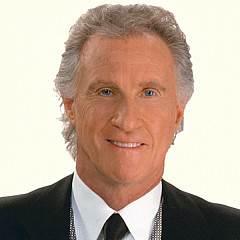
Bill Medley of The Righteous Brothers

Bill Medley of The Righteous BrothersSongwriter Interviews

Medley looks back on "Unchained Melody" and "You've Lost That Lovin' Feelin'" - his huge hits from the '60s that were later revived in movies.
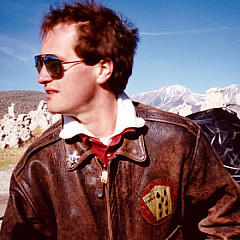
Director Nick Morris ("The Final Countdown")

Director Nick Morris ("The Final Countdown")Song Writing

Nick made some of the biggest videos on MTV, including "The Final Countdown," "Heaven" and "Don't Know What You Got (Till It's Gone)."

Lace the Music: How LSD Changed Popular Music

Lace the Music: How LSD Changed Popular MusicSong Writing

Starting in Virginia City, Nevada and rippling out to the Haight-Ashbury, LSD reshaped popular music.