Swanee River

Album: Beautiful Dreamer: The Songs of Stephen Foster (1851)
Play Video

Songfacts®:

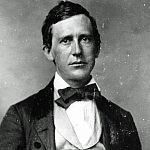
  • Stephen Foster was a prolific American songwriter known for his contributions to American music in the 19th century. He is often referred to as the "father of American music" and is best known for his popular and enduring melodies.

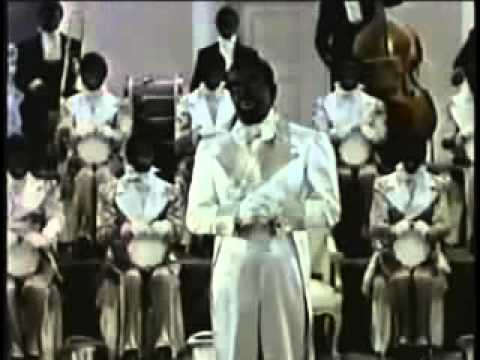
    In 1846, Foster moved to Cincinnati, Ohio, and became a bookkeeper with his brother's steamship company. By 1848, he'd achieved some success with "Oh! Susanna" and other songs, so he returned home to concentrate on his songwriting. Foster was commissioned to write songs for the Christy Minstrels, a popular minstrel troupe of the time. The best known of which is "Swanee River," also known as "Old Folks At Home."
  • The song is about a longing for home, specifically the Suwannee River in Florida. The lyrics describe the river's beauty and tranquility, and the singer's desire to return to it.
  • Foster originally wrote the song with the opening line, "Way Down Upon the Pee Dee River." His brother, Morrison Foster, told him it was a bad idea. Stephen took down an atlas from the top of his desk and Morrison helped him find the perfect name, which turned out to be "Swanee."
  • After Foster composed the song, he sold the performance rights to the Christy Minstrels. It continued under the Christy name until 1879. "Swanee River" ("Old Folks At Home") was published 1851 by Firth & Pond as an "Ethiopian Melody" that was "sung and composed by E. P. Christy."
  • The song quickly became popular after it was first published. Both black and white Americans sang it, and minstrel shows also featured it.
  • The Union army used "Swanee River" as a marching song during the Civil War.
  • "Swanee River" is the best-selling sheet music song of all time. It has sold more than 20 million copies since its publication in 1851. Despite this, Stephen Foster died penniless in 1864.
  • Stephen Foster never actually saw the Suwannee River or visited Florida, but the song became strongly associated with the state and its cultural identity. Florida adopted "Swanee River" as its state song in 1935, replacing the previous state song, "Florida, My Florida."
  • Some of the original lyrics sound racist - lines like "longing for de old plantation" and "Oh! darkies how my heart grows weary." In 1978, the Florida legislature revised the lyrics to remove any racist references. Some people still felt the song was offensive, and in 1998, the legislature adopted "Florida (Where the Sawgrass Meets the Sky)" as the new state song.
  • Many artists have covered "Swanee River" over the years, including Bing Crosby, Ray Charles and Hugh Laurie.
  • The song has featured in a number of films, including:

    1936 Mr. Deeds Goes to Town
    1982 Grease 2
    1987 Tales of Little Women
    2010 The King's Speech

    And television programs:

    1956 The Honeymooners in the episode, "The $99,000 Answer"
    1963 The Jack Benny Program in Season 13 Episode 20
    2004 Arrested Development in Season 1 Episode 14.

Comments

Be the first to comment...

Editor's Picks

Mike Campbell

Mike CampbellSongwriter Interviews

Mike is lead guitarist with Tom Petty & the Heartbreakers, and co-writer of classic songs like "Boys Of Summer," "Refugee" and "The Heart Of The Matter."

Donny Osmond

Donny OsmondSongwriter Interviews

Donny Osmond talks about his biggest hits, his Vegas show, and the fan who taught him to take "Puppy Love" seriously.

Carl Sturken

Carl SturkenSongwriter Interviews

Hitmaker Carl Sturken on writing and producing for Rihanna, 'N Sync, Christina Aguilera, Kelly Clarkson, Donny Osmond, Shakira and Karyn White.

American Hits With Foreign Titles

American Hits With Foreign TitlesSong Writing

What are the biggest US hits with French, Spanish (not "Rico Suave"), Italian, Scottish, Greek, and Japanese titles?

Mick Jones of Foreigner

Mick Jones of ForeignerSongwriter Interviews

Foreigner's songwriter/guitarist tells the stories behind the songs "Juke Box Hero," "I Want To Know What Love Is," and many more.

The Police

The PoliceFact or Fiction

Do their first three albums have French titles? Is "De Do Do Do, De Da Da Da" really meaningless? See if you can tell in this Fact or Fiction.